
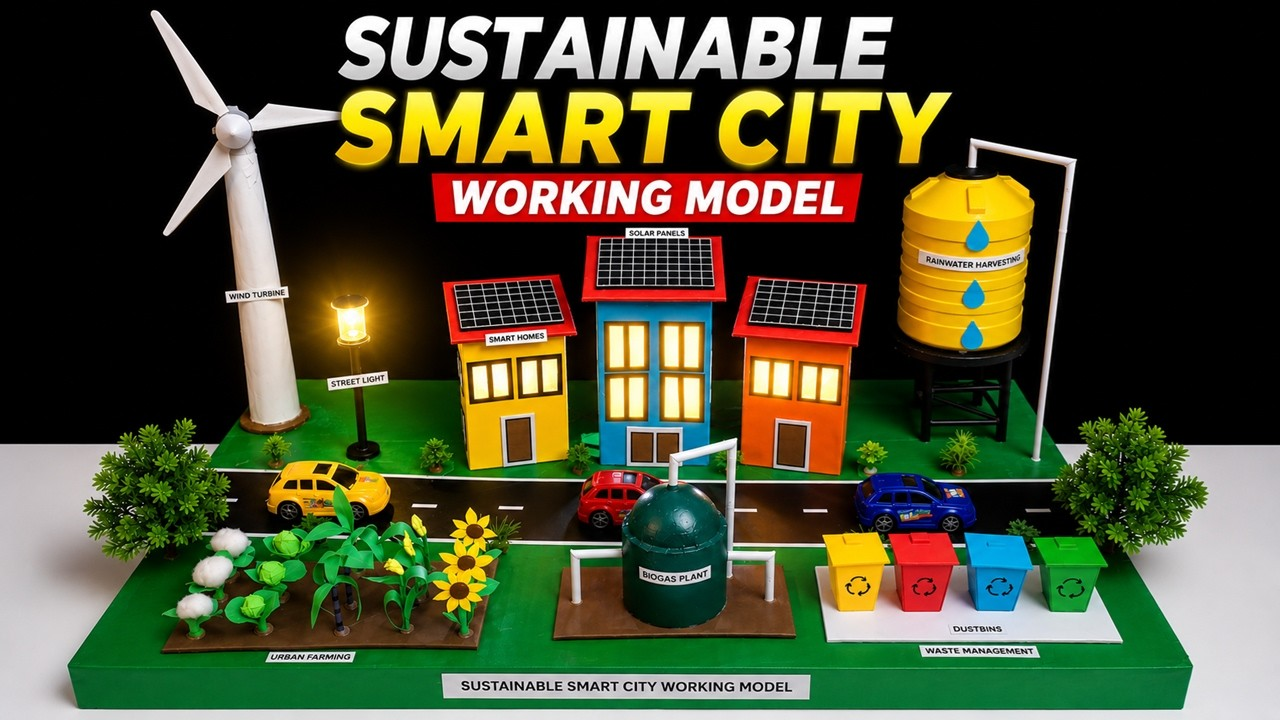
The Sustainable Smart City Working Model is an innovative and educational science exhibition project that demonstrates how modern cities can become cleaner, greener, and more efficient by using renewable energy, smart technology, and eco-friendly practices.
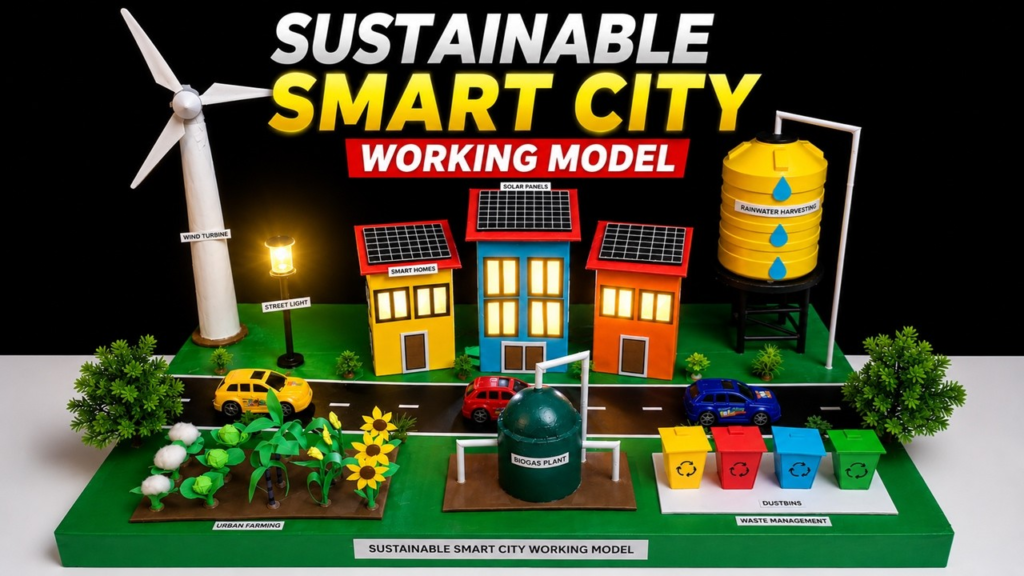
This DIY model combines several important concepts such as solar energy, wind energy, rainwater harvesting, waste management, biogas production, smart homes, urban farming, and energy conservation. It is an excellent project for school science exhibitions, STEM fairs, and Inspire Award competitions because it presents practical solutions to real-world environmental challenges.
A smart city is a city that uses modern technology and sustainable resources to improve the quality of life for its people while protecting the environment. Smart cities focus on reducing pollution, saving energy, conserving water, managing waste efficiently, and encouraging the use of renewable energy sources. This working model demonstrates how different sustainable systems can work together to build a better future.
One of the main features of this model is the solar power system. Solar panels are installed on the rooftops of smart homes to capture sunlight and convert it into electricity using photovoltaic cells. This clean electricity can be used to power lights, fans, and household appliances. Since solar energy is renewable and pollution-free, it helps reduce dependence on fossil fuels and lowers electricity costs.
Another important component is the wind turbine. Wind energy is converted into electrical energy when the turbine blades rotate due to the force of the wind. The electricity generated by the wind turbine can be used to power streetlights, homes, or other public facilities. By combining solar and wind energy, the city can generate clean electricity throughout the year under different weather conditions.
The model also includes a rainwater harvesting system, which collects rainwater from rooftops and stores it in a storage tank. Instead of allowing rainwater to flow away as runoff, it can be reused for gardening, cleaning, irrigation, and groundwater recharge. Rainwater harvesting helps conserve water resources, reduces water shortages, and promotes sustainable water management.
The biogas plant shown in the model demonstrates how organic waste such as food scraps, vegetable waste, and animal waste can be converted into clean fuel. Inside the biogas plant, microorganisms break down organic matter in the absence of oxygen, producing methane-rich biogas. This gas can be used for cooking or electricity generation, while the remaining slurry serves as an excellent organic fertilizer for farming.
Proper waste management is another essential part of a sustainable smart city. The coloured dustbins in the model represent waste segregation. Green bins are used for biodegradable waste, blue bins for recyclable materials, and other bins for different categories of waste. Segregating waste at the source makes recycling easier, reduces landfill waste, and keeps the city clean. Recycling also conserves natural resources and reduces environmental pollution.
The model also highlights urban farming, where vegetables, fruits, and plants are grown within the city. Urban farming provides fresh food, improves air quality, increases green spaces, and reduces transportation costs. It also encourages people to grow food locally using limited space, making cities healthier and more self-sufficient.
The smart homes in the model are powered by renewable energy and use energy-efficient lighting systems. Smart technologies help reduce electricity consumption by automatically controlling lighting and other electrical devices. The LED streetlights shown in the model consume less electricity while providing efficient illumination, making streets safer and more energy-efficient.
The working principle of this model is simple and easy to explain. Sunlight is converted into electricity by solar panels, while wind turbines generate additional power from wind. Rainwater is collected and stored for future use. Organic waste is converted into biogas, and recyclable waste is separated into different bins for proper recycling. Urban farms produce fresh vegetables, while energy-efficient homes and streetlights reduce electricity consumption. Together, these systems create a cleaner, greener, and more sustainable city.
This DIY project helps students understand several important scientific concepts, including renewable energy, energy conservation, water conservation, waste management, sustainable agriculture, biogas production, and environmental protection. The colourful buildings, wind turbine, solar panels, rainwater tank, biogas plant, waste bins, and urban farm make the model attractive and easy for judges and visitors to understand.
Main Components of the Sustainable Smart City
- Solar panels for renewable electricity generation
- Wind turbine for clean energy production
- Rainwater harvesting system
- Biogas plant for organic waste recycling
- Smart homes with energy-efficient lighting
- Waste segregation and recycling bins
- Urban farming for local food production
- LED streetlights for energy conservation
Advantages of This Working Model
- Promotes renewable energy and clean technology
- Saves electricity and water
- Reduces pollution and greenhouse gas emissions
- Encourages recycling and proper waste management
- Demonstrates sustainable farming practices
- Easy to build using cardboard and craft materials
- Ideal for science exhibitions, STEM projects, and Inspire Award competitions
In conclusion, the Sustainable Smart City Working Model is an excellent science exhibition project that demonstrates how modern technology and renewable energy can create cleaner, safer, and more environmentally friendly cities. By integrating solar power, wind energy, rainwater harvesting, biogas production, waste management, and urban farming, the model provides a practical example of sustainable development. It encourages students to think creatively about solving environmental challenges and inspires them to build a future where technology and nature work together for the benefit of society.