
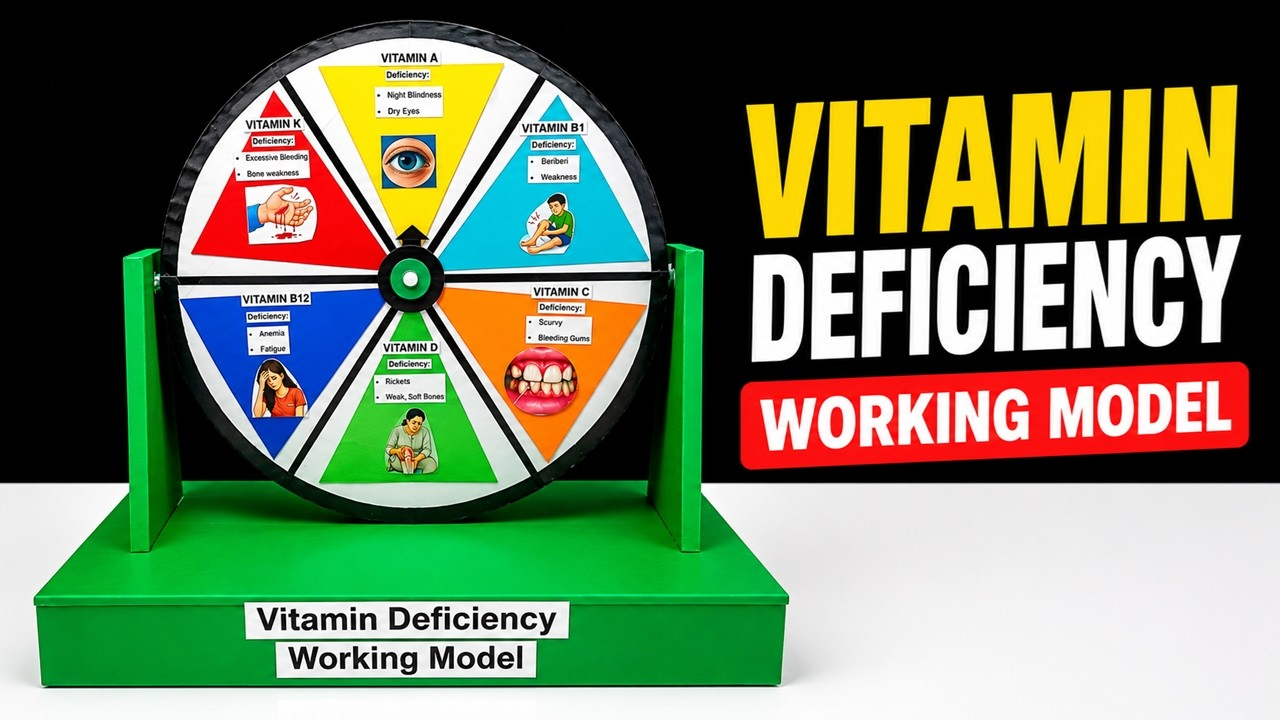
The Vitamin Deficiency Working Model is an informative and interactive science exhibition project that helps students understand the importance of vitamins in maintaining good health. Vitamins are essential nutrients required by the body in small amounts, but they play a major role in growth, immunity, vision, bone health, blood formation, and metabolism. A lack of vitamins can lead to various diseases known as vitamin deficiency disorders. This DIY project presents these concepts in a simple and engaging way using a rotating wheel made from cardboard, colour paper, printed images, and craft materials.
The rotating wheel in this model displays different vitamins and the diseases caused by their deficiency. As the wheel rotates, students can explain each vitamin, its function, the symptoms of deficiency, and the foods that provide it. This interactive design makes the project attractive for science exhibitions and helps visitors learn about nutrition in an easy and memorable manner.
The first section explains Vitamin A, which is essential for healthy eyesight, skin, and the immune system. A deficiency of Vitamin A can cause night blindness, dry eyes, and poor vision. Good sources of Vitamin A include carrots, sweet potatoes, spinach, pumpkin, mangoes, eggs, milk, and liver. Eating foods rich in Vitamin A helps maintain healthy vision and protects the eyes from infections.
The second section focuses on Vitamin B1 (Thiamine). This vitamin helps the body convert food into energy and supports the normal functioning of nerves and muscles. A deficiency of Vitamin B1 causes beriberi, which leads to weakness, fatigue, muscle problems, and nerve damage. Whole grains, legumes, nuts, seeds, milk, and meat are excellent sources of Vitamin B1.
The model also includes Vitamin B12, which is essential for the formation of red blood cells and the proper functioning of the nervous system. A deficiency of Vitamin B12 may result in anaemia, tiredness, weakness, numbness in the hands and feet, and difficulty concentrating. Foods such as milk, eggs, fish, meat, and fortified cereals provide adequate Vitamin B12.
Another important section explains Vitamin C, which is necessary for wound healing, healthy gums, strong immunity, and collagen formation. A deficiency causes scurvy, leading to bleeding gums, loose teeth, poor wound healing, and fatigue. Citrus fruits such as oranges, lemons, guavas, strawberries, tomatoes, and green vegetables are rich sources of Vitamin C.
The wheel also highlights Vitamin D, which helps the body absorb calcium and phosphorus for strong bones and teeth. Lack of Vitamin D causes rickets in children and osteomalacia or weak bones in adults. The best source of Vitamin D is sunlight, while foods like milk, eggs, mushrooms, and fatty fish also provide this vitamin.
The final section demonstrates Vitamin K, which is essential for normal blood clotting and healthy bones. A deficiency can result in excessive bleeding and slow wound healing. Green leafy vegetables such as spinach, cabbage, broccoli, kale, and lettuce are rich in Vitamin K.
This working model helps students understand that vitamins are essential for maintaining overall health and preventing nutritional diseases. A balanced diet containing fruits, vegetables, cereals, pulses, dairy products, and protein-rich foods provides most of the vitamins needed by the body. Regular exercise, adequate sunlight exposure, and healthy eating habits further improve overall health and well-being.
The model also emphasizes the importance of balanced nutrition. Instead of depending only on vitamin supplements, people should consume fresh, natural foods containing a variety of vitamins and minerals. Good dietary habits during childhood help support healthy growth, improve immunity, strengthen bones, and reduce the risk of deficiency diseases.
Students can use this project to explain important biological concepts such as nutrition, vitamins, deficiency diseases, balanced diet, immune system, bone health, and human growth. The colourful rotating wheel, labelled sections, and clear illustrations make the model attractive and easy for judges, teachers, and visitors to understand.
Vitamins and Their Deficiency Diseases
- Vitamin A – Night blindness, dry eyes
- Vitamin B1 – Beriberi, weakness
- Vitamin B12 – Anaemia, fatigue
- Vitamin C – Scurvy, bleeding gums
- Vitamin D – Rickets, weak bones
- Vitamin K – Excessive bleeding, poor blood clotting
Advantages of This Working Model
- Easy to build using cardboard and colour paper.
- Interactive rotating wheel for better learning.
- Clearly explains vitamins and deficiency diseases.
- Encourages healthy eating habits and balanced nutrition.
- Suitable for biology, health science, and nutrition projects.
- Attractive for school science exhibitions and competitions.
- Improves presentation and communication skills.
In conclusion, the Vitamin Deficiency Working Model is an excellent DIY biology project that teaches students about the importance of vitamins in maintaining good health. It demonstrates how vitamin deficiencies can affect different parts of the body and highlights the importance of eating a balanced diet rich in fruits, vegetables, cereals, dairy products, and proteins. This simple yet informative model makes learning about nutrition enjoyable and helps create awareness about healthy lifestyles, making it an ideal project for science exhibitions and school competitions.