
Introduction
A biogas plant is a system that converts organic waste into useful renewable energy. It uses materials such as cow dung, kitchen waste, food scraps, and other biodegradable waste.
In the absence of oxygen, microorganisms break down this waste and produce biogas, which mainly contains methane and carbon dioxide.
The methane-rich gas can be used for cooking, heating, and sometimes electricity generation. The remaining material, called digestate or slurry, can be used as an organic fertilizer.
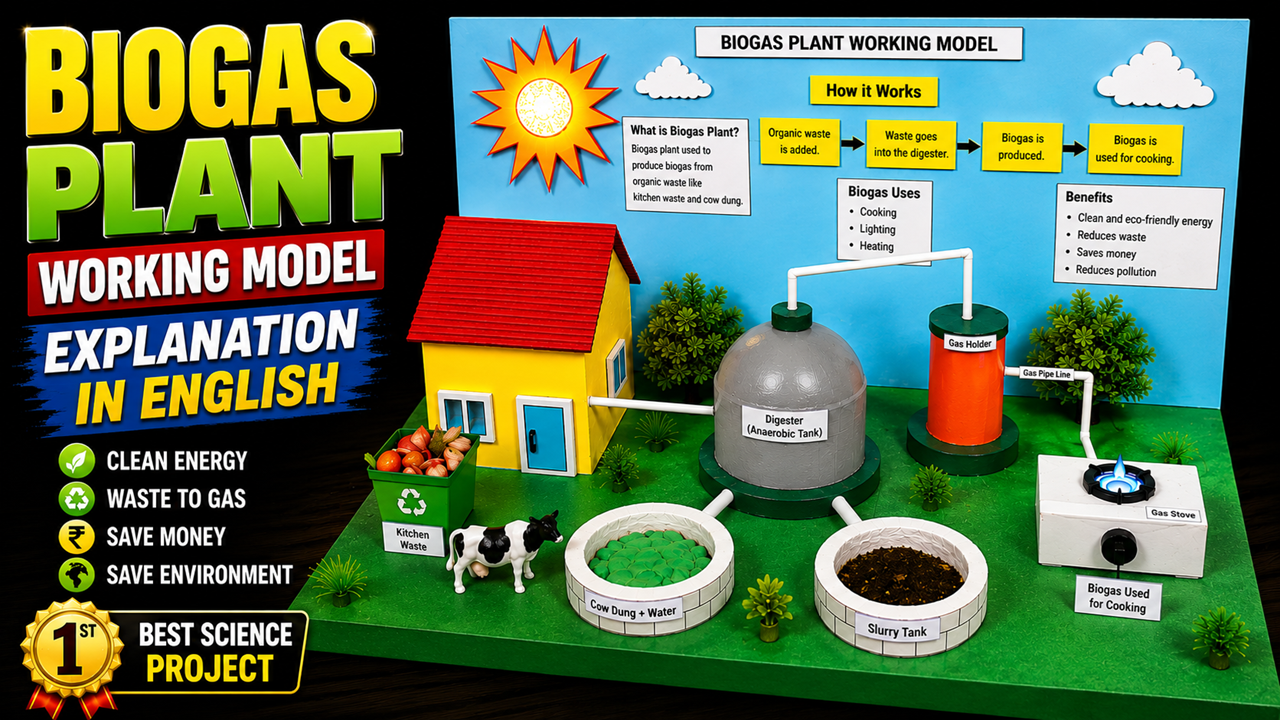
This working model demonstrates how waste from a kitchen and cow dung can be converted into biogas and then supplied to a gas stove.
Working Principle
The process begins with collecting kitchen waste and cow dung. These materials are mixed with water and fed into an airtight anaerobic digester. Inside the digester, microorganisms decompose the organic matter without oxygen. During this process, biogas is produced.
The gas rises and is collected in a gas holder. A pipe connects the gas holder to the gas stove. When the gas reaches the stove, it can be burned as a fuel for cooking. The digested material moves toward the slurry tank, where it can later be used as nutrient-rich manure for plants.
The model therefore demonstrates a useful cycle: organic waste → digester → biogas → cooking fuel + slurry → organic fertilizer.
Materials Required
For making this project, you will need a strong cardboard or foam-board sheet for the base, colored chart paper, cardboard boxes, plastic bottles or containers, a small plastic bowl, PVC pipes or flexible tubing, glue, scissors, a cutter, paints, markers, and labels. You can also use recycled containers to make the digester and gas holder. A small toy cow, artificial plants, miniature house, and a model gas stove can make the project more attractive.
How to Make the Model
First, take a rectangular cardboard sheet and cover it with green paper or paint to represent the ground. Prepare a blue cardboard sheet at the back as the background. Write “BIOGAS PLANT WORKING MODEL” at the top.
Next, make a small house from cardboard. Place a container or small box near the house and label it “Kitchen Waste.” Add small pieces of paper, vegetables, or clay to represent food waste.
For the main digester, use a large plastic container, bottle, or a suitably shaped cardboard structure. Paint it grey and label it “Digester (Anaerobic Tank).” Make an inlet pipe leading toward the digester from the waste-mixing area. Create a small container filled with colored material to represent cow dung + water and connect it to the digester.
Next, make the gas holder using a smaller cylindrical container or bottle. Connect the top of the digester to the gas holder with a plastic pipe. Then connect another pipe from the gas holder toward a miniature gas stove. This pipe represents the biogas pipeline.
Place another container beside the digester and label it “Slurry Tank.” Connect it to the digester with a pipe to demonstrate the movement of digested material. Add a small cow model, trees, and plants around the project to show the agricultural benefits of the slurry.
Finally, add arrows and labels showing Organic Waste → Digester → Biogas → Gas Holder → Gas Stove. You can also add a chart explaining the benefits: clean energy, waste reduction, lower pollution, saving money, and organic fertilizer.
Conclusion
The biogas plant is an excellent example of waste-to-energy technology. It reduces organic waste while producing useful renewable fuel. The leftover slurry can improve soil fertility and reduce the need for chemical fertilizers. This project demonstrates how waste from homes and farms can be converted into valuable resources and encourages us to adopt cleaner and more sustainable methods of energy production.