
1. Introduction
Wastewater purification is one of the most important environmental protection projects for a science exhibition. Every day, houses, schools, hospitals, factories, apartments and other buildings produce large amounts of wastewater. This water contains dirt, dust, food particles, chemicals, soap, oil and other impurities.
If wastewater is released directly into rivers, lakes and ponds without treatment, it causes water pollution and affects humans, animals, plants and aquatic life.
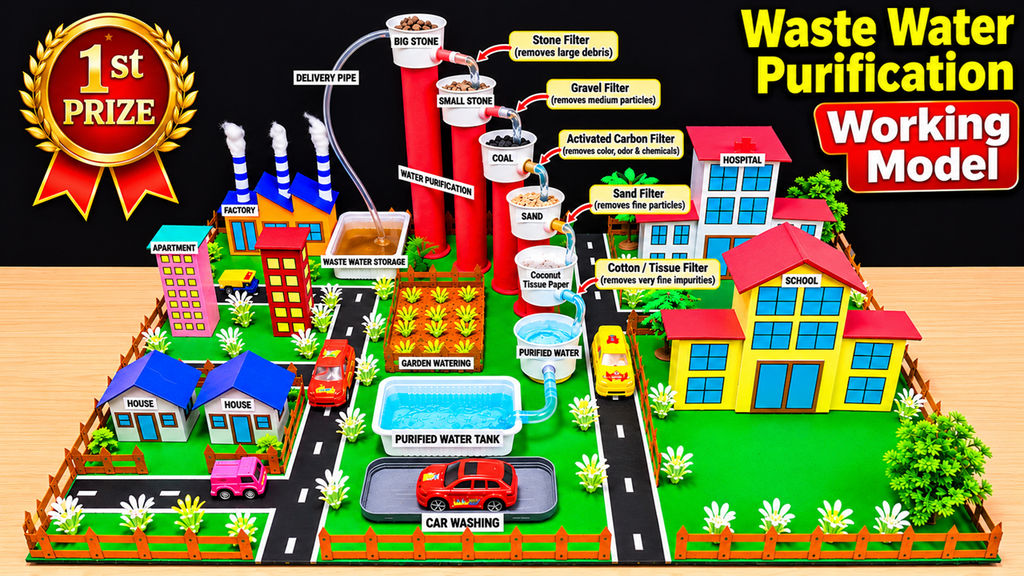
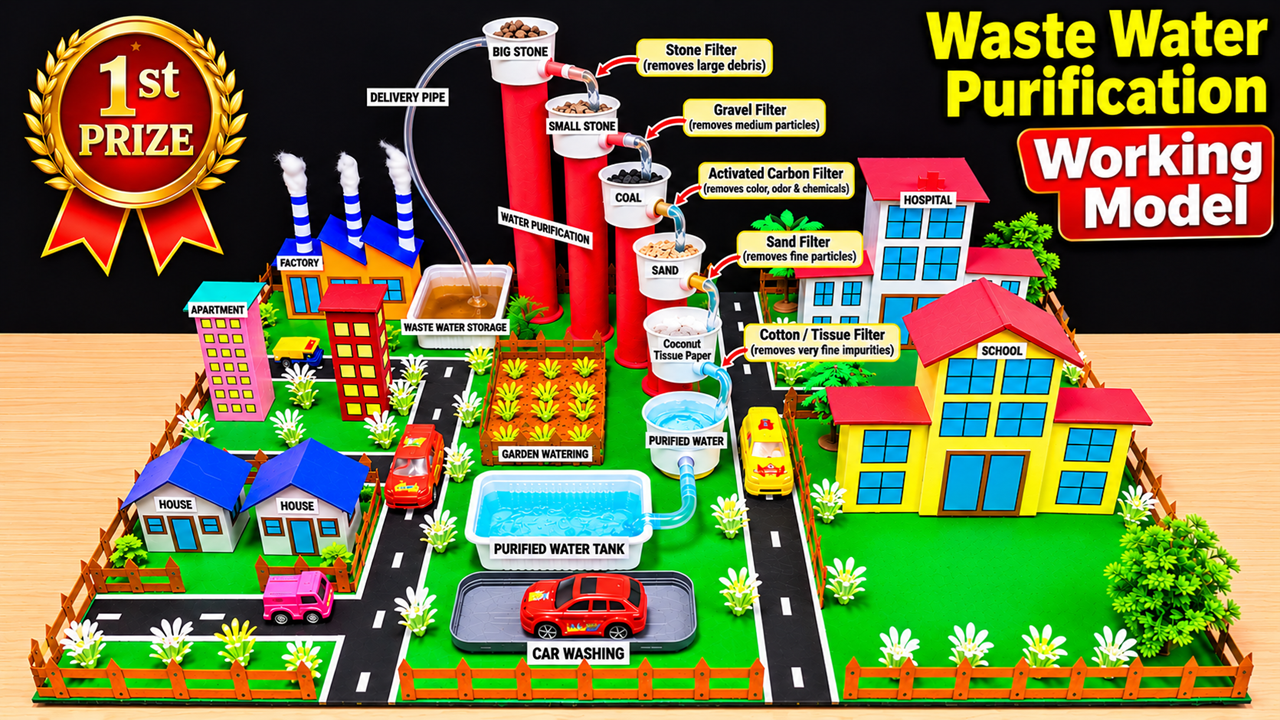
Our Waste Water Purification Working Model demonstrates how dirty water can be collected, filtered through different natural materials and stored for reuse. This project explains how we can reduce water pollution and save water through proper treatment and recycling.
2. Materials Required
To prepare this working model, we need the following materials:
- Large cardboard sheet or thermocol sheet for the base.
- Green colour paper or artificial grass for the ground.
- Black chart paper for roads.
- Small cardboard boxes for houses, schools, hospitals and factories.
- Red, yellow, blue and white colour papers for buildings.
- Five or six plastic bottles or transparent containers for filtration.
- Big stones and small stones.
- Gravel and sand.
- Activated charcoal.
- Coconut tissue paper or coconut fibre.
- Cotton and tissue paper.
- Small plastic pipes or transparent water tubes.
- One small DC water pump.
- Connecting wires and a suitable battery or power supply.
- Two small water storage containers.
- Toy vehicles, trees and decorative plants.
- Glue, scissors, cutter, tape and other craft materials.
3. How to Make the Model
Step 1: Prepare the Base
Take a large rectangular cardboard sheet or thermocol sheet. Cover the entire surface with green colour paper to represent land. Prepare roads using black chart paper and add white road markings. Divide the base into different sections for residential buildings, factories, schools, hospitals, gardens and water purification facilities.
Step 2: Prepare the Buildings
Make small houses, apartments, factories, schools and hospitals using cardboard and colour paper. Use different colours to make the buildings attractive. Place them in different locations on the base. Add small trees, gardens, toy cars and streetlights to create a miniature city.
Step 3: Make the Wastewater Collection Tank
Prepare a small rectangular container using cardboard and plastic sheets. Place it near the factory and residential area. This tank represents the wastewater collection and storage system. Connect a pipe from the collection tank towards the purification unit.
Step 4: Prepare the Filtration Unit
Take five or six plastic bottles or transparent containers. Arrange them vertically using cardboard supports.
Fill the containers with different filtering materials:
- First container: Big stones to remove large debris.
- Second container: Small stones and gravel to remove medium-sized particles.
- Third container: Activated charcoal to help reduce colour, odour and some impurities.
- Fourth container: Sand to remove fine suspended particles.
- Fifth container: Coconut fibre or tissue paper to provide additional filtration.
- Sixth container: Cotton and tissue paper to trap very fine visible particles.
Make small holes at the bottom of each container and connect them using plastic pipes. Ensure that water flows from one filtration stage to the next.
Step 5: Connect the Water Pump
Place a small DC water pump inside the wastewater collection tank. Connect the pump to a battery or suitable power supply. Attach a delivery pipe from the pump to the first filtration container.
When the pump is switched ON, it pushes wastewater into the filtration system.
Step 6: Prepare the Purified Water Tank
Place a transparent plastic container at the bottom of the filtration unit. Connect the final filtration container to this tank using a flexible pipe. This container represents the purified water storage tank.
Step 7: Add Reuse Applications
Connect the purified water tank to small demonstration areas such as a garden, car washing station and other non-drinking water applications. These sections demonstrate how treated wastewater can be reused instead of being wasted.
4. How Does the Working Model Work?
The working process starts when wastewater from houses, apartments, factories, hospitals and schools is collected in the wastewater storage tank.
First, the DC water pump pushes the collected wastewater through a delivery pipe into the filtration unit.
The water passes through different filtration stages.
Stage 1 – Big Stone Filter: Big stones help separate large materials such as leaves, plastic pieces and other visible debris.
Stage 2 – Gravel Filter: Small stones and gravel help remove medium-sized particles that remain in the water.
Stage 3 – Activated Carbon Filter: Activated carbon helps reduce unpleasant smells, colour and certain dissolved organic impurities through adsorption.
Stage 4 – Sand Filter: Sand traps smaller suspended particles and makes the water clearer.
Stage 5 – Coconut Fibre Filter: Coconut fibre or tissue paper provides another filtration layer to catch smaller particles.
Stage 6 – Cotton and Tissue Filter: Cotton and tissue paper help trap very fine visible impurities before the water reaches the final collection tank.
Finally, the filtered water flows into the purified water storage tank.
This water can be demonstrated for gardening, cleaning and other suitable non-drinking purposes after appropriate treatment and safety checks.
Important: This model demonstrates basic physical filtration. It does not remove all dissolved chemicals, harmful microorganisms or other invisible contaminants. The collected water must not be consumed or assumed safe for drinking.
5. Applications of Wastewater Purification
Wastewater treatment and reuse have many important applications:
- Gardening and watering plants.
- Cleaning roads and public spaces.
- Car washing.
- Toilet flushing after suitable treatment.
- Industrial cleaning and other industrial processes.
- Reducing freshwater consumption.
- Protecting rivers, lakes and groundwater from pollution.
- Supporting sustainable water management.
6. Advantages of This Project
- Demonstrates the importance of wastewater treatment.
- Creates awareness about water pollution.
- Explains the use of natural filtration materials.
- Encourages water conservation and recycling.
- Helps students understand environmental protection.
- Demonstrates how different filtration stages work together.
- Promotes the responsible use of water resources.
7. Conclusion
Our Waste Water Purification Working Model explains how wastewater can be collected, filtered and reused through a series of treatment stages. Each filtration material performs a different function in removing visible impurities and improving water quality.
Water is one of the most valuable natural resources on Earth. We should never waste clean water or pollute our rivers and lakes. By adopting wastewater treatment, recycling and responsible water management practices, we can protect the environment and conserve water for future generations.
Our message is simple: SAVE WATER, TREAT WASTEWATER AND PROTECT OUR FUTURE!
8. Science Exhibition – Short Presentation Script
Good morning, respected judges, teachers and my dear friends.
My project name is Waste Water Purification Working Model.
The main purpose of this project is to demonstrate how wastewater from houses, factories, hospitals and schools can be collected, filtered and reused.
Here, we have six filtration stages: big stones, gravel, activated charcoal, sand, coconut fibre and cotton.
When I switch ON the water pump, dirty water enters the filtration system. It passes through each stage, where different materials help remove different types of impurities.
Finally, the filtered water is collected in the storage tank. After proper additional treatment, wastewater can be reused for gardening, cleaning and other non-drinking purposes.
Through this project, I want to convey an important message: we should not waste water or allow untreated wastewater to pollute our environment.
LET US SAVE WATER TODAY FOR A BETTER TOMORROW!
Thank you!