
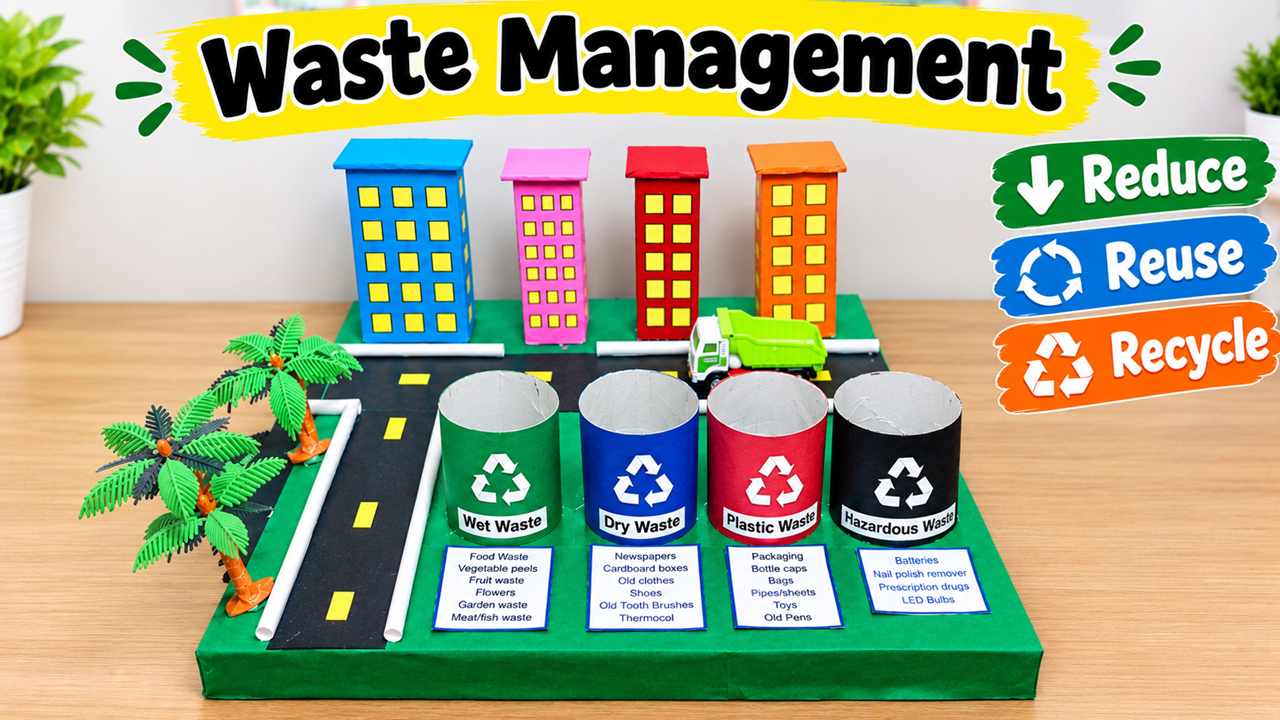
Waste management is one of the most important environmental issues faced by cities, towns, villages and communities. Every day, large quantities of waste are produced from homes, schools, offices, markets and industries. If different types of waste are mixed together, recycling and safe disposal become difficult. The Waste Management Working Model demonstrates a simple solution: segregate waste at the source and follow the principles of Reduce, Reuse and Recycle.
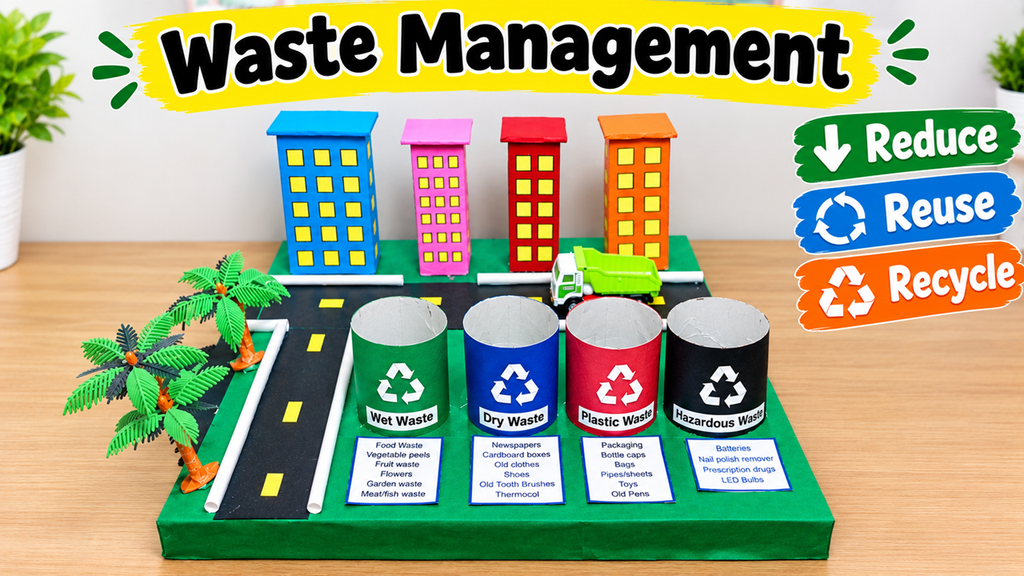
This attractive science exhibition model represents a small sustainable community with buildings, roads, greenery, a waste collection vehicle and four different waste bins. The four bins are clearly labelled Wet Waste, Dry Waste, Plastic Waste and Hazardous Waste. Each category helps people understand where different types of waste should go.
Wet Waste
The green bin represents wet or biodegradable waste. It includes food waste, vegetable peels, fruit waste, flowers, garden waste and other organic materials. Suitable organic waste can be processed through composting to produce useful compost for gardens and agriculture.
Separating wet waste also prevents food and organic materials from contaminating recyclable paper, plastic and other dry materials.
Dry Waste
The blue bin represents dry waste, including newspapers, cardboard boxes, old clothes, shoes and similar materials. Many dry materials can be reused or sent for recycling.
For example, newspapers and cardboard can become raw materials for producing new paper products. Teaching children to separate these materials helps develop responsible waste-management habits from an early age.
Plastic Waste
The red bin represents plastic waste such as packaging, bottle caps, plastic bags, pipes, toys and old plastic items. Plastic waste requires responsible collection because it can persist in the environment for a long time.
Separating plastic makes it easier to collect, sort and send suitable materials for recycling. The model also highlights the importance of reducing unnecessary plastic use and reusing items whenever possible.
Hazardous Waste
The black bin represents hazardous or special waste, such as batteries, certain chemical products, medicines and LED bulbs. These materials should be handled separately because some may contain substances requiring special collection and disposal.
Students can use this section to explain that hazardous waste should never simply be mixed with ordinary household waste.
How the Working Model Demonstrates Waste Management
The model can be made interactive by adding a small waste-collection vehicle that moves between the bins. A motorized mechanism can be used to demonstrate collection, while LEDs can indicate different waste categories.
Students can also create a simple demonstration where mixed waste is shown first and then separated into the four appropriate bins. This makes the concept easy for visitors and judges to understand.
The miniature city in the model represents how proper waste management can contribute to a cleaner community. The roads, buildings, trees and collection vehicle show that waste management is not an isolated activity—it is an important part of creating a healthy and sustainable city.
Reduce, Reuse and Recycle
The three important principles displayed on the model are Reduce, Reuse and Recycle.
Reduce means avoiding unnecessary consumption and reducing the amount of waste produced.
Reuse means using products again instead of throwing them away after one use.
Recycle means processing suitable waste materials so they can be converted into useful new products.
Together, these practices can reduce the amount of waste sent to landfills and encourage more responsible use of natural resources.
Conclusion
The Waste Management Working Model is a simple, creative and educational project for a science exhibition. It combines environmental awareness, waste segregation and basic automation in one attractive display.
The main message of the project is:
“Segregate Waste Today for a Cleaner and Greener Tomorrow.”
By encouraging every household, school and community to separate waste at the source, we can make recycling easier, reduce pollution and build cleaner, healthier and more sustainable communities.