
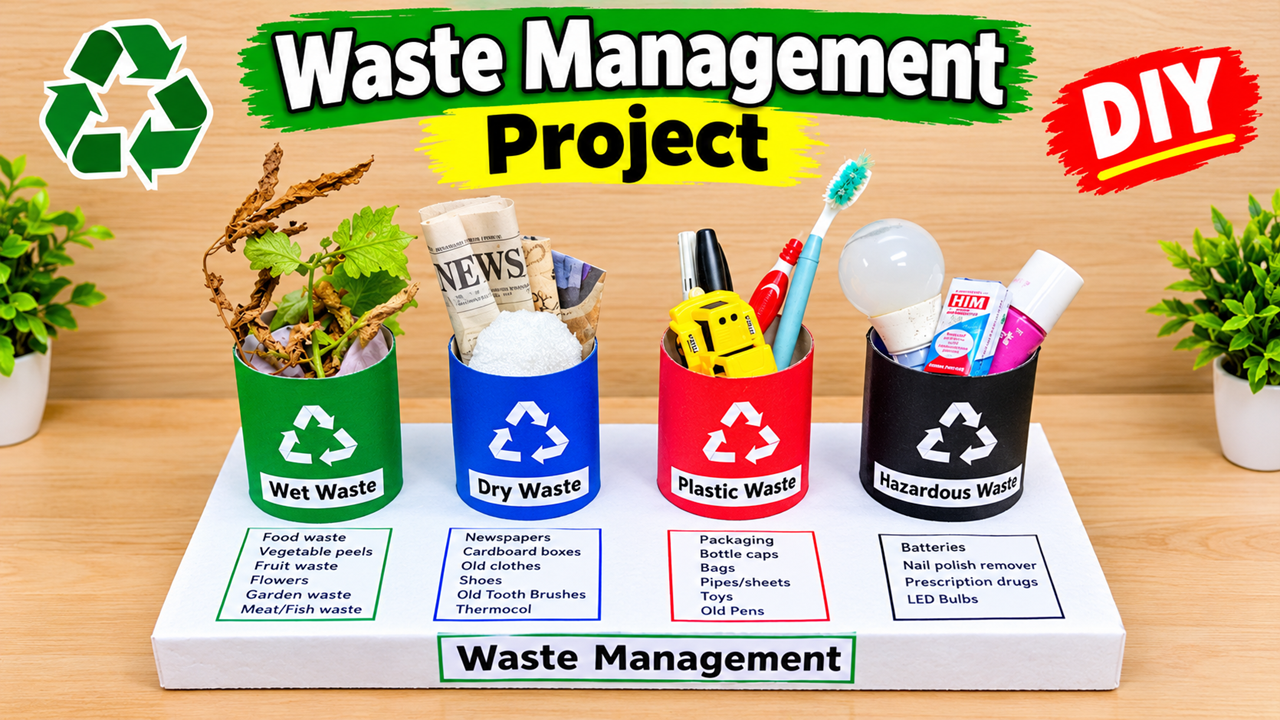
Waste management is one of the most important environmental challenges faced by homes, schools, offices and communities. Every day, different types of waste are produced, including food waste, paper, plastic, electronic items and other materials. If all these wastes are mixed together, recycling becomes difficult and harmful materials can contaminate the environment. The Waste Management Project shown here is a simple and attractive science exhibition model that demonstrates the importance of waste segregation at source.
The main idea of this project is to separate waste into different categories so that each type can be handled appropriately. The model uses four colourful cardboard dustbins labelled Wet Waste, Dry Waste, Plastic Waste and Hazardous Waste. Each bin contains examples of materials that belong to that particular category.
1. Wet Waste
The green dustbin represents wet waste, which mainly consists of biodegradable materials. Examples include food waste, vegetable peels, fruit waste, flowers, garden waste and other organic materials.
Wet waste can often be processed through composting to produce useful organic manure. Instead of sending food and garden waste to landfills, households can separate it and convert suitable organic waste into compost for gardens and agriculture.
2. Dry Waste
The blue dustbin represents dry waste such as newspapers, cardboard boxes, old clothes, shoes and other relatively dry materials.
Many dry materials can be reused or recycled. Paper and cardboard, for example, can be collected and sent to recycling facilities. Proper segregation prevents recyclable materials from becoming contaminated with food waste.
3. Plastic Waste
The red dustbin is used for plastic waste, including packaging materials, bottle caps, plastic bags, pipes, toys and old plastic items.
Plastic can remain in the environment for a very long time, making responsible disposal important. Separating plastic at the household level makes collection and recycling easier. Students can use this part of the model to explain the importance of Reduce, Reuse and Recycle.
4. Hazardous Waste
The black dustbin represents hazardous or special waste. Examples shown in the model include batteries, nail-polish remover, certain medicines and LED bulbs.
Such materials should not simply be thrown into ordinary household waste because some can contain substances that require special handling. They should be collected separately and disposed of through appropriate collection or recycling systems.
How to Make This Project
This project can be made using cardboard sheets, colour paper, glue, scissors, markers and recycled containers. Four cylindrical cardboard bins can be covered with different coloured paper. Recycling symbols and category names can then be added to each bin.
Students can place clean, safe examples or miniature representations of waste inside each container. A cardboard platform can be decorated with a large “Waste Management” title and explanatory labels.
The project becomes even more effective when students demonstrate the segregation process. For example, they can show several mixed waste items and ask visitors to place each item in the correct bin.
Why This Project Is Important
Waste segregation is a simple habit that can make waste management more efficient. It can help increase recycling, support composting, reduce contamination and encourage responsible disposal of special waste.
This model is particularly suitable for a school science exhibition because it is inexpensive, visually attractive and easy to understand. More importantly, it connects classroom learning with an everyday environmental problem.
The central message of the project is simple:
“Segregate Waste Today for a Cleaner and Greener Tomorrow.”
By teaching people to separate waste at the source, this simple project encourages everyone to participate in creating a cleaner environment and a more sustainable society.