
Lightning and Thunderstorm Working Model – Science Exhibition Explanation
Good morning everyone.
Today I am going to explain my science project on “Lightning and Thunderstorm Working Model.”
This DIY model helps us understand how lightning and thunderstorms occur in nature. It is based on a natural disaster phenomenon and explains the importance of weather safety during storms.
A thunderstorm is a weather condition that includes dark clouds, heavy rain, strong winds, lightning, and thunder. Thunderstorms are caused by the movement of warm and cold air in the atmosphere. This project demonstrates how lightning forms in clouds and how it affects the environment.
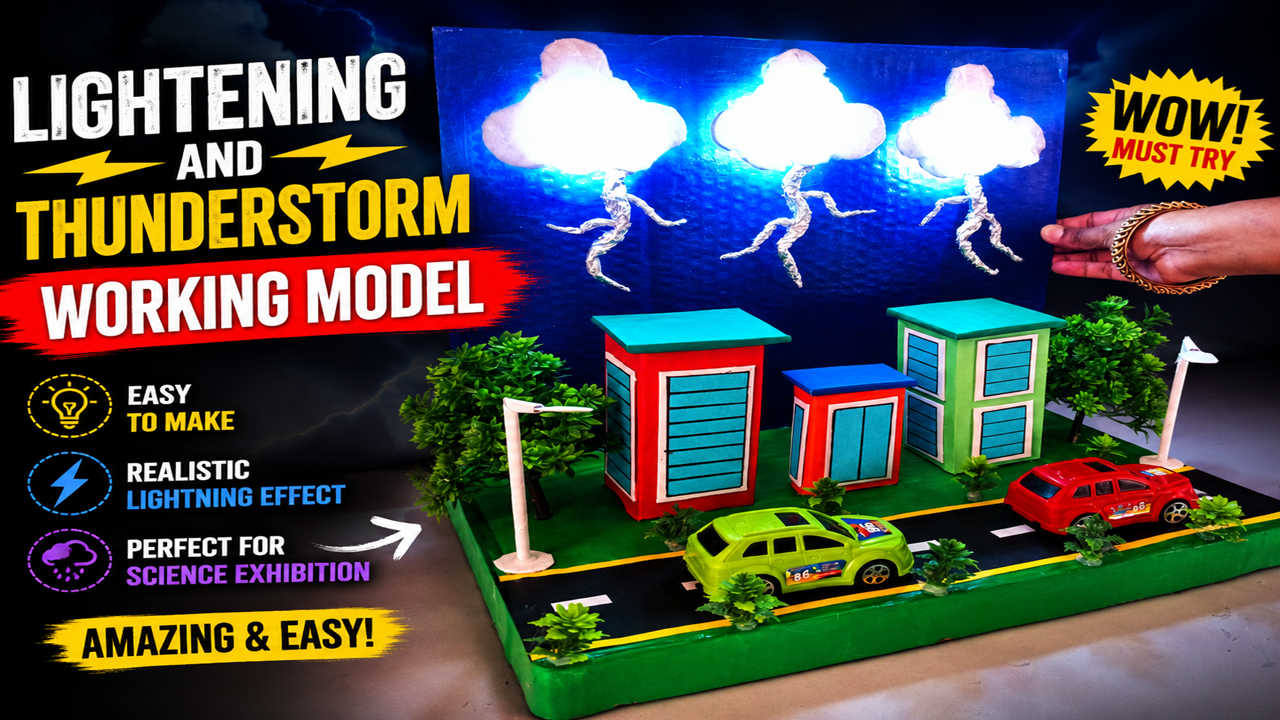
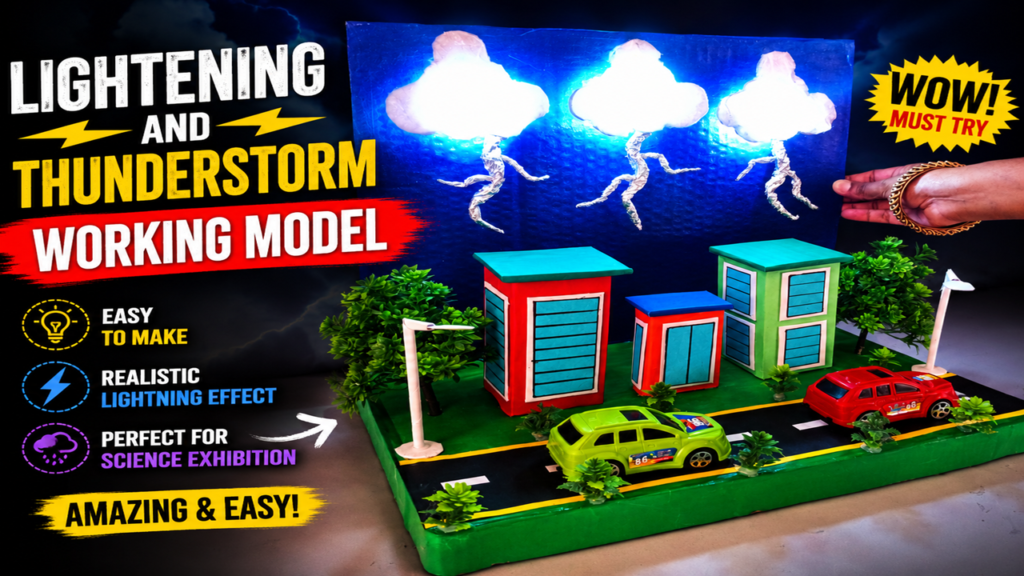
In this model, we can see clouds placed above a city with buildings, trees, roads, and vehicles. LED lights are used inside the clouds to represent lightning flashes. The glowing effect helps students easily understand the process of lightning during a storm.
How Lightning is Formed
Lightning is a sudden electric discharge that happens in the atmosphere. During a thunderstorm, clouds become charged with electricity.
- The upper part of the cloud becomes positively charged.
- The lower part becomes negatively charged.
When the electrical charge becomes very strong, it moves rapidly between clouds or between the cloud and the ground. This sudden movement of electricity creates a bright flash called lightning.
The heat produced by lightning is extremely high. It heats the surrounding air very quickly. The heated air expands rapidly and creates a loud sound called thunder.
So:
- Flash of light = Lightning
- Sound produced = Thunder
Usually, we see lightning before hearing thunder because light travels faster than sound.
Parts of the Working Model
1. Clouds
The cotton clouds in the model represent thunderstorm clouds. LED lights inside the clouds show lightning flashes.
These clouds demonstrate how electrical charges build up during storms.
2. Lightning Effect
The silver lightning strips and LED lights represent lightning strikes. When the switch is turned on, the lights glow like real lightning.
This creates a realistic thunderstorm effect for science exhibitions.
3. Buildings and City Area
The buildings represent urban areas that can be affected by thunderstorms and lightning strikes.
Tall buildings are more likely to attract lightning because electricity usually travels through the shortest path to the ground.
4. Roads and Vehicles
The roads and cars show daily life during storm conditions. Heavy rain and lightning can affect transportation and safety.
5. Trees and Environment
Trees and greenery are included to make the model realistic. Trees can also be damaged during lightning storms.
Materials Used in the DIY Model
This project is made using simple materials such as:
- Cardboard
- Cotton
- LED lights
- Battery
- Wires
- Colored paper
- Glue
- Decorative trees and toy cars
Safety Measures During Thunderstorms
This project also teaches us important safety rules during thunderstorms:
- Stay indoors during lightning
- Avoid standing under trees
- Do not use electrical appliances during storms
- Avoid open fields and water bodies
- Use lightning protection systems in buildings
These precautions help protect people from lightning accidents.
Importance of This Project
This model is useful because it:
- Helps students understand natural disasters
- Explains weather science practically
- Makes learning interactive and interesting
- Improves creativity and scientific thinking
- Creates awareness about safety during storms
Advantages of the Working Model
- Easy to understand
- Attractive lightning effects
- Educational and creative
- Suitable for school exhibitions
- Demonstrates real-life weather phenomena
Conclusion
In conclusion, this Lightning and Thunderstorm Working Model is an educational DIY science project that explains how thunderstorms and lightning occur in nature. The project uses LED lights and creative design to show the formation of lightning and thunder in an easy and practical way.
This model helps students learn about weather, electricity, natural disasters, and safety measures. It also spreads awareness about the dangers of thunderstorms and the importance of staying safe during severe weather conditions.