
Good morning everyone.
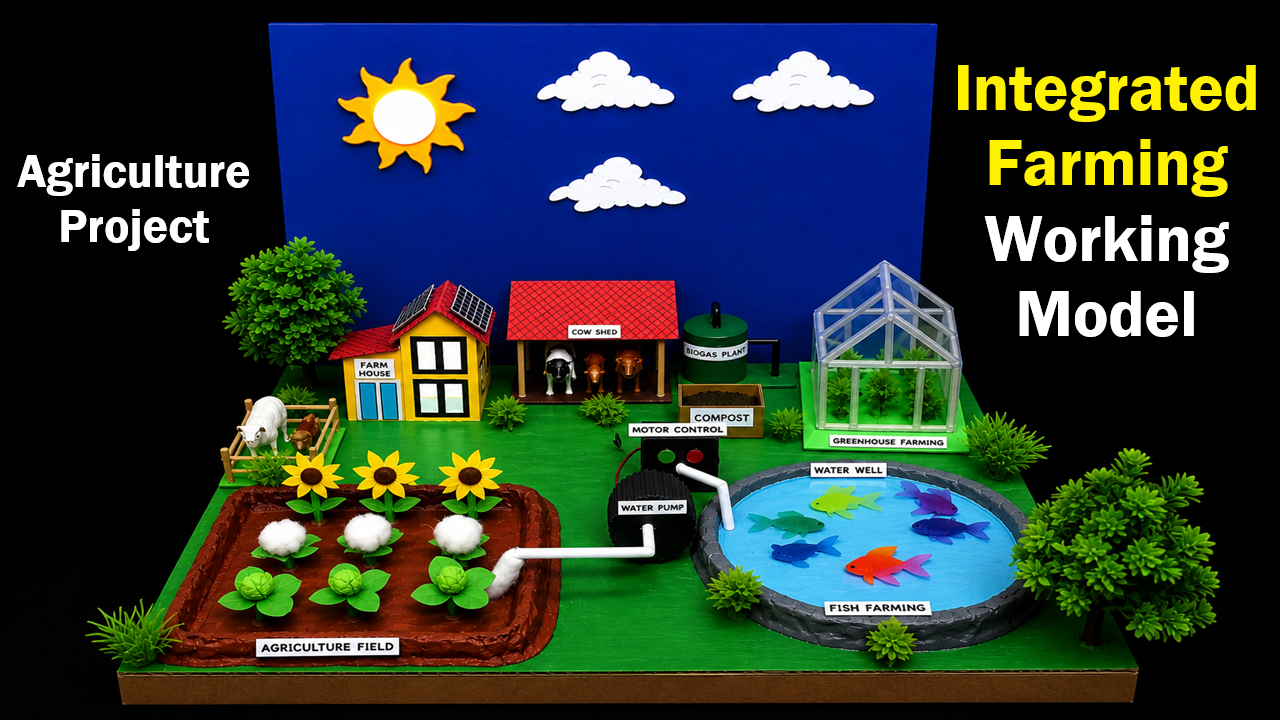
Today I am going to explain my agriculture science project on “Integrated Farming System (IFS)”. This is a working model that shows how different farming activities can be connected together to increase productivity, reduce waste, and protect the environment.
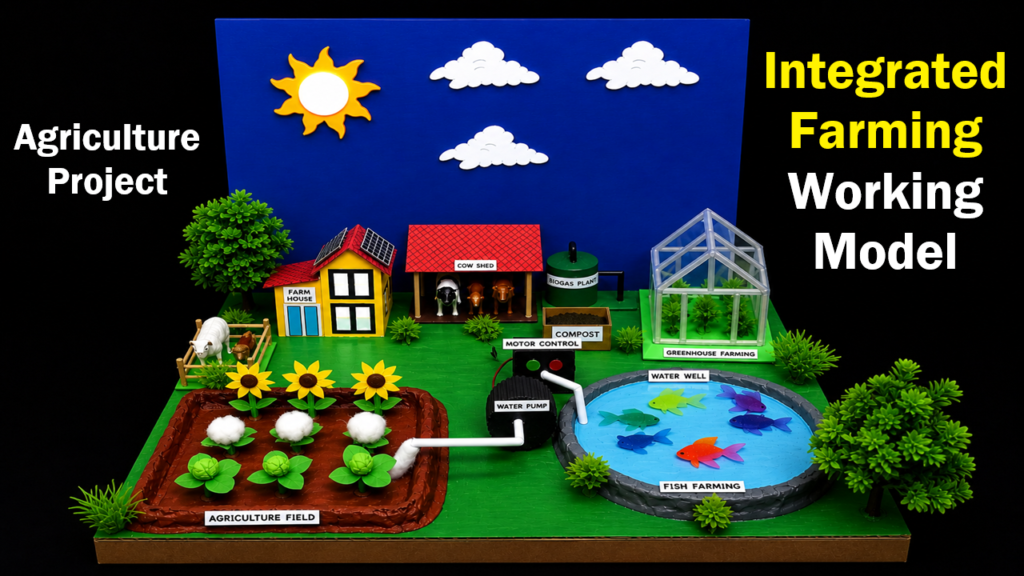
Integrated Farming System is a modern method of farming in which crops, animals, fish farming, composting, biogas production, greenhouse farming, and water management are combined into one system. In this method, the waste from one activity becomes useful for another activity. This helps farmers earn more profit with less waste and fewer expenses.
The main aim of this project is to promote sustainable agriculture and efficient use of natural resources.
Parts of the Working Model
This model includes:
- Agriculture field
- Farm house
- Cow shed
- Biogas plant
- Compost unit
- Greenhouse farming
- Fish farming pond
- Water pump and irrigation system
Each section works together as one integrated farming unit.
Agriculture Field
The agriculture field is the main crop-growing area shown in the model. Different crops and vegetables are grown here using mixed cropping methods.
Mixed cropping helps:
- Improve soil fertility
- Reduce crop failure risk
- Increase productivity
The field receives water from the fish pond through the water pump. Organic compost and cow dung manure are used as natural fertilizers.
Farm House
The farm house is the control center of the farm. Farmers live here and manage all farming activities.
The house in the model also has solar panels that represent the use of renewable energy in agriculture.
Solar energy helps:
- Save electricity
- Reduce fuel costs
- Protect the environment
Cow Shed
The cow shed contains cattle used for dairy farming. Cows provide milk, which gives income to farmers.
Cow dung is collected and used for:
- Biogas production
- Compost making
- Organic fertilizer
This reduces waste and supports eco-friendly farming.
Biogas Plant
The biogas plant converts cow dung and organic waste into biogas.
Biogas is a clean fuel used for:
- Cooking
- Lighting
- Energy production
The leftover slurry from the biogas plant is used as organic manure in the fields.
This process helps reduce pollution and saves fuel.
Compost Unit
The compost section converts agricultural waste, dry leaves, and animal waste into natural fertilizer.
Compost improves:
- Soil fertility
- Water retention
- Crop growth
Using compost reduces the need for chemical fertilizers and keeps the soil healthy.
Greenhouse Farming
The transparent structure shown in the model represents greenhouse farming.
A greenhouse protects plants from:
- Excess heat
- Heavy rain
- Cold weather
- Pests
Greenhouse farming allows farmers to grow vegetables and plants throughout the year with better quality and higher production.
Fish Farming Pond
The pond in the model represents fish farming or aquaculture.
Fish farming provides:
- Additional income
- Nutritious food
- Efficient water use
The nutrient-rich pond water is used for irrigation in the agriculture field, which helps plants grow better naturally.
Water Pump and Irrigation System
The water pump transfers water from the pond to the field.
This demonstrates:
- Water recycling
- Efficient irrigation
- Resource conservation
Proper water management is very important in agriculture.
Scientific Concepts Used
This project explains:
- Sustainable agriculture
- Renewable energy
- Organic farming
- Recycling of waste
- Water conservation
- Integrated resource management
Materials Used
This DIY model is made using:
- Cardboard
- Colored paper
- Plastic plants
- Clay
- Paint colors
- Pipes and wires
- Decorative items
How to Create the Model
Step 1 – Prepare the Base
Take a cardboard base and divide it into farming sections.
Step 2 – Create the Farm House
Make a small house using cardboard and add solar panels.
Step 3 – Build the Agriculture Field
Create crop fields using clay, paper plants, and colors.
Step 4 – Add the Cow Shed and Biogas Plant
Use cardboard and small animal figures to make the dairy section.
Step 5 – Make the Fish Pond
Create a circular pond using cardboard and decorate it with fish models.
Step 6 – Add Greenhouse Structure
Use transparent sheets or plastic to create a greenhouse.
Step 7 – Connect Water Pump System
Use pipes or straws to show water flow between pond and field.
Advantages of Integrated Farming
- Increases farmers’ income
- Reduces waste
- Saves water and energy
- Improves soil fertility
- Promotes organic farming
- Protects the environment
Conclusion
In conclusion, this Integrated Farming System (IFS) Working Model explains how different farming activities can work together for sustainable agriculture and environmental protection.
This system reduces waste, increases productivity, and helps farmers earn more income while protecting natural resources.
Integrated farming is one of the best solutions for future agriculture because it combines science, technology, and eco-friendly farming methods.