
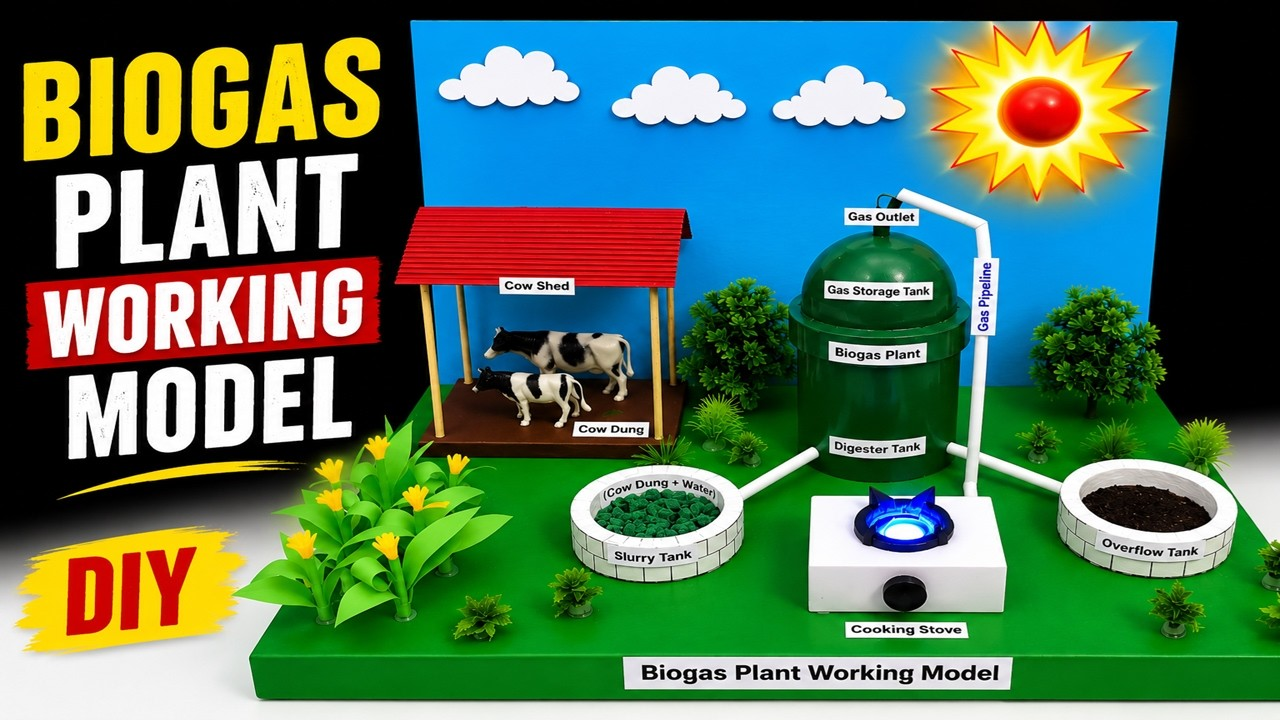
The Biogas Plant Working Model is an excellent science exhibition project that demonstrates how organic waste can be converted into clean and renewable energy. It combines the concepts of renewable energy, waste management, environmental protection, and sustainable agriculture.
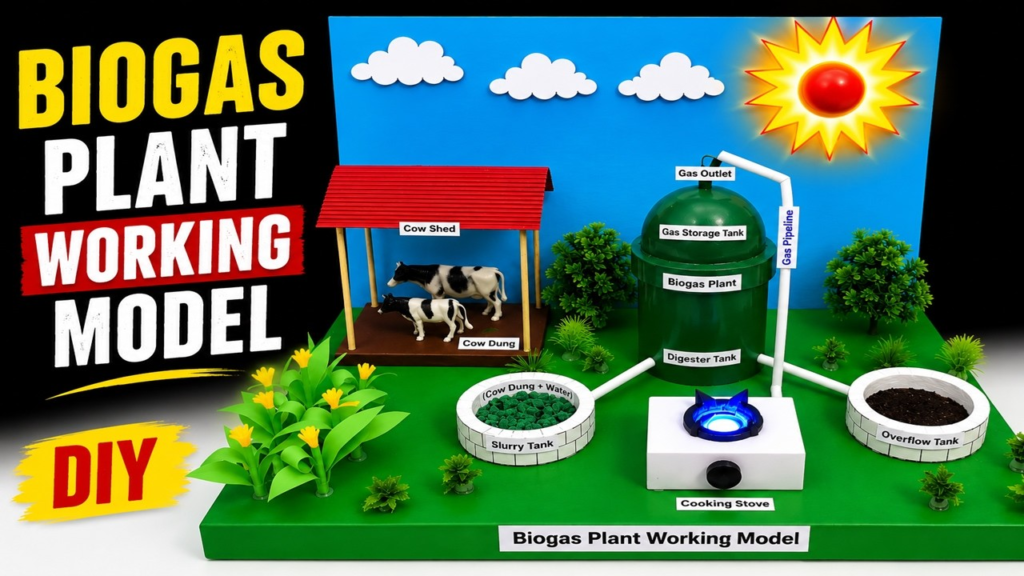
This DIY model is ideal for school science exhibitions, STEM fairs, and Inspire Award projects because it explains a real-life technology that is widely used in rural areas. The model can be easily built using cardboard, plastic bottles, colour paper, pipes, LED lights, toy animals, and other low-cost craft materials.
A biogas plant is a system that produces biogas from organic waste such as cow dung, kitchen waste, vegetable peels, food waste, and agricultural residues. When these materials decompose in the absence of oxygen, tiny microorganisms break them down and release biogas. This process is called anaerobic digestion. The main component of biogas is methane (CH₄), which is a combustible gas that can be used for cooking, heating, and electricity generation.
In this working model, the cow shed represents the source of cow dung. Fresh cow dung is collected and mixed with water to form a semi-liquid mixture called slurry. The slurry is poured into the slurry tank, where it is prepared before entering the biogas plant. This simple step shows how farm waste can be converted into a useful source of energy instead of being discarded.
The slurry then flows into the digester tank, which is the most important part of the biogas plant. Inside the digester, there is no oxygen. Naturally occurring bacteria decompose the organic matter and produce biogas over several days. During this process, methane, carbon dioxide, and small amounts of other gases are generated. Since methane is lighter than the slurry, it rises and collects in the upper part of the tank.
The gas storage tank stores the biogas produced inside the digester. As more gas is generated, the storage chamber fills with biogas. A gas outlet pipe carries the gas from the storage tank to a cooking stove or another appliance. In this working model, the blue LED flame on the stove represents the burning of biogas, showing how waste can be converted into useful cooking fuel.
After the gas has been produced, the remaining slurry flows into the overflow tank. This leftover material is called digestate or bio-slurry. It is rich in nutrients such as nitrogen, phosphorus, and potassium, making it an excellent organic fertilizer. Farmers can use this natural fertilizer to improve soil fertility and increase crop production while reducing the use of chemical fertilizers.
The working principle of the model is very simple. First, cow dung is mixed with water to prepare slurry. The slurry enters the digester tank, where anaerobic bacteria decompose the organic matter. During decomposition, methane-rich biogas is produced and stored in the gas chamber. The gas is transported through the pipeline to the cooking stove, where it burns and produces heat. Finally, the leftover slurry is collected in the overflow tank and used as organic manure.
Biogas plants provide many environmental and economic benefits. They reduce the amount of organic waste in the environment and help maintain cleanliness. Since biogas replaces firewood, coal, and LPG in many applications, it reduces deforestation and greenhouse gas emissions. Farmers also save money by producing their own cooking fuel and organic fertilizer from farm waste. This technology supports clean energy and sustainable farming.
This DIY project helps students understand several important scientific concepts, including renewable energy, anaerobic digestion, microbial decomposition, methane production, organic waste recycling, and environmental conservation. The colourful design, labelled tanks, gas pipeline, cooking stove, and cow shed make the model attractive and easy for judges and visitors to understand.
Applications of a Biogas Plant
- Cooking fuel for homes
- Electricity generation using biogas generators
- Organic fertilizer production
- Waste management in farms and villages
- Renewable energy for rural communities
Advantages of This Working Model
- Uses renewable and eco-friendly energy
- Converts organic waste into useful fuel
- Produces high-quality organic fertilizer
- Reduces environmental pollution
- Saves conventional fuels such as LPG and firewood
- Easy to build using low-cost materials
- Ideal for science exhibitions and STEM projects
In conclusion, the Biogas Plant Working Model is a practical and educational science exhibition project that demonstrates how organic waste can be transformed into clean energy and natural fertilizer. It highlights the importance of renewable energy, sustainable agriculture, and proper waste management. By explaining each stage—from slurry preparation to biogas production and fertilizer generation—this DIY model shows how science can solve real-world environmental problems. It also delivers an important message: “Turn Waste into Energy, Protect Nature, and Build a Sustainable Future.”