
Introduction
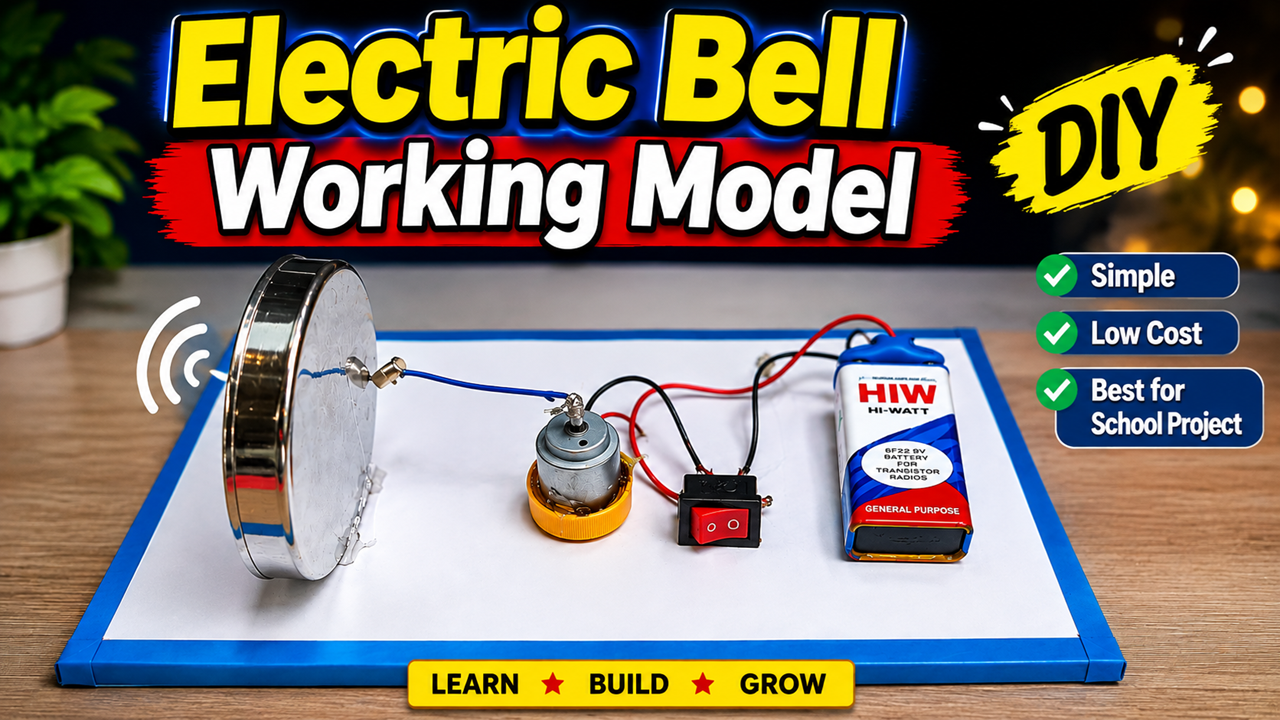
An electric bell is an electrical device that converts electrical energy into sound energy. It is commonly used in school bells, doorbells, alarms, and signaling systems. When an electric circuit is switched on, electrical energy is converted into mechanical movement, which causes a striker to hit a metal bell and produce sound.
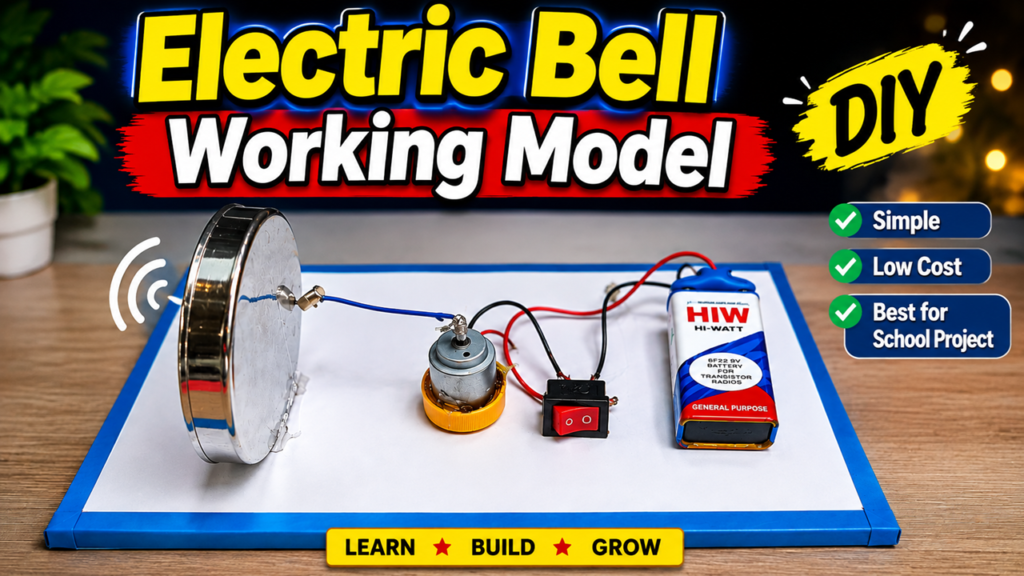
This project demonstrates a simple Electric Bell Working Model made using a metal bell, small DC motor, battery, switch, wires, and a cardboard base. It is an excellent school science project because it explains the conversion of electrical energy into mechanical energy and then into sound energy.
Principle of the Project
The main principle behind this model is the conversion of energy. When the switch is turned on, current flows from the battery through the motor. The motor starts rotating. A small striker or eccentric attachment connected to the rotating motor moves repeatedly and strikes the metal bell.
The sequence of operation is:
Battery → Switch → DC Motor → Rotating Striker → Metal Bell → Sound
Thus, electrical energy from the battery is first converted into rotational mechanical energy by the motor. The mechanical movement causes the bell to vibrate, producing sound energy.
Materials Required
For making this model, you will need a thick piece of cardboard or foam board for the base, a small metal bell or metal lid, a low-voltage DC motor, a suitable battery or battery holder, an ON/OFF switch, insulated connecting wires, a small piece of cardboard or plastic for the motor support, glue or hot glue, tape, scissors, a cutter, ruler, and marker.
A small eccentric piece, screw, or lightweight plastic arm can be used as the striker mechanism. The motor should be appropriate for the battery voltage being used.
How to Make the Model
First, prepare a rectangular cardboard base. Use two or three layers of cardboard and glue them together to make the base strong and stable. Cover it with white or colored paper and add a border to make the project look attractive.
Next, position the metal bell at one end of the base. In the example model, the bell is mounted vertically so that its surface can be easily struck. Fix it firmly using a small cardboard support, adhesive, or suitable mounting arrangement.
Now prepare the DC motor assembly. Fix the motor securely on the base using a cardboard holder or strong adhesive. The motor should be positioned close enough to the bell for the striker to reach it.
Attach a small lightweight striker arm or eccentric attachment to the motor shaft. When the motor rotates, this attachment should move toward and away from the bell repeatedly. Adjust its position carefully so that it taps the bell without putting excessive load on the motor.
Next, connect the electrical circuit. Connect one terminal of the battery to one terminal of the switch. Connect the other switch terminal to one terminal of the motor. Finally, connect the remaining motor terminal back to the other battery terminal.
Turn the switch ON. The motor should rotate, causing the striker to hit the metal bell and produce a ringing sound. If the striker does not make proper contact, adjust its position or length. Make sure all connections are secure.
Finally, add labels such as BATTERY, SWITCH, DC MOTOR, STRIKER, METAL BELL, and SOUND OUTPUT. You can also display an energy-conversion diagram beside the model.
Conclusion
The Electric Bell Working Model is a simple and effective demonstration of electrical energy conversion. When the circuit is completed, the battery supplies electrical energy to the motor. The motor converts this energy into mechanical motion, and the moving striker produces vibrations in the metal bell, which we hear as sound.
This project helps students understand electric circuits, switches, motors, mechanical motion, vibration, and energy transformation in a practical way. It is inexpensive, easy to construct, and suitable for science exhibitions and classroom demonstrations.
Safety Note: Use only a low-voltage battery or appropriate power supply. Do not connect this model directly to household mains electricity. Keep fingers, loose clothing, and wires away from the rotating motor shaft.