
Introduction
A Theft Alarm System is a security device designed to detect unauthorized access to a protected object or area and immediately produce an alert. Such systems are commonly used in homes, shops, offices, banks, vehicles, and other places where valuable items need protection.
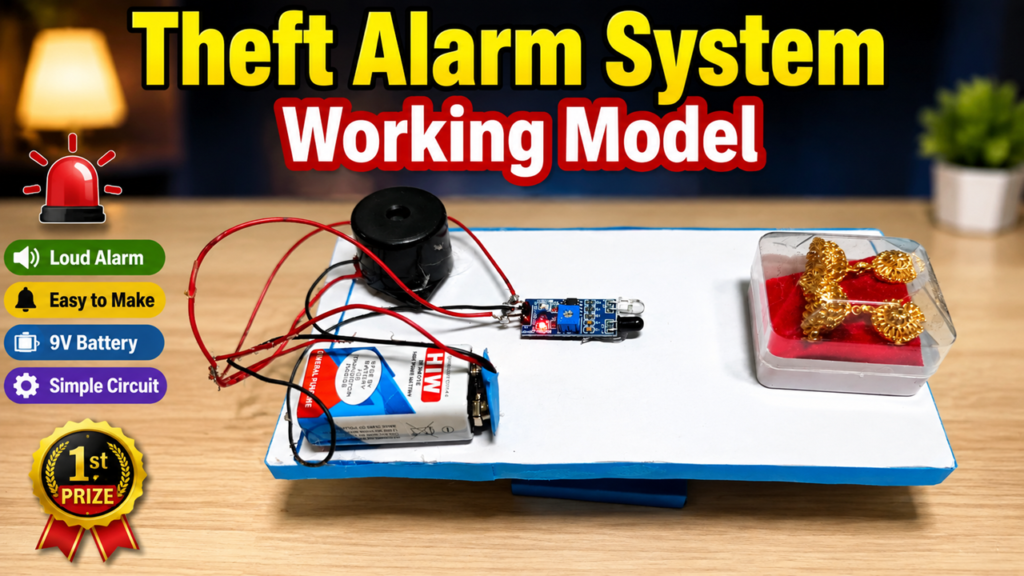
This project demonstrates a simple theft alarm working model using a sensor module, buzzer, LED, battery, and a small box representing a valuable object. When someone attempts to open or disturb the protected object, the sensor detects the change and activates the alarm. The project helps students understand the basic principles of sensors, electrical circuits, and security systems.
Main Concept of the Model
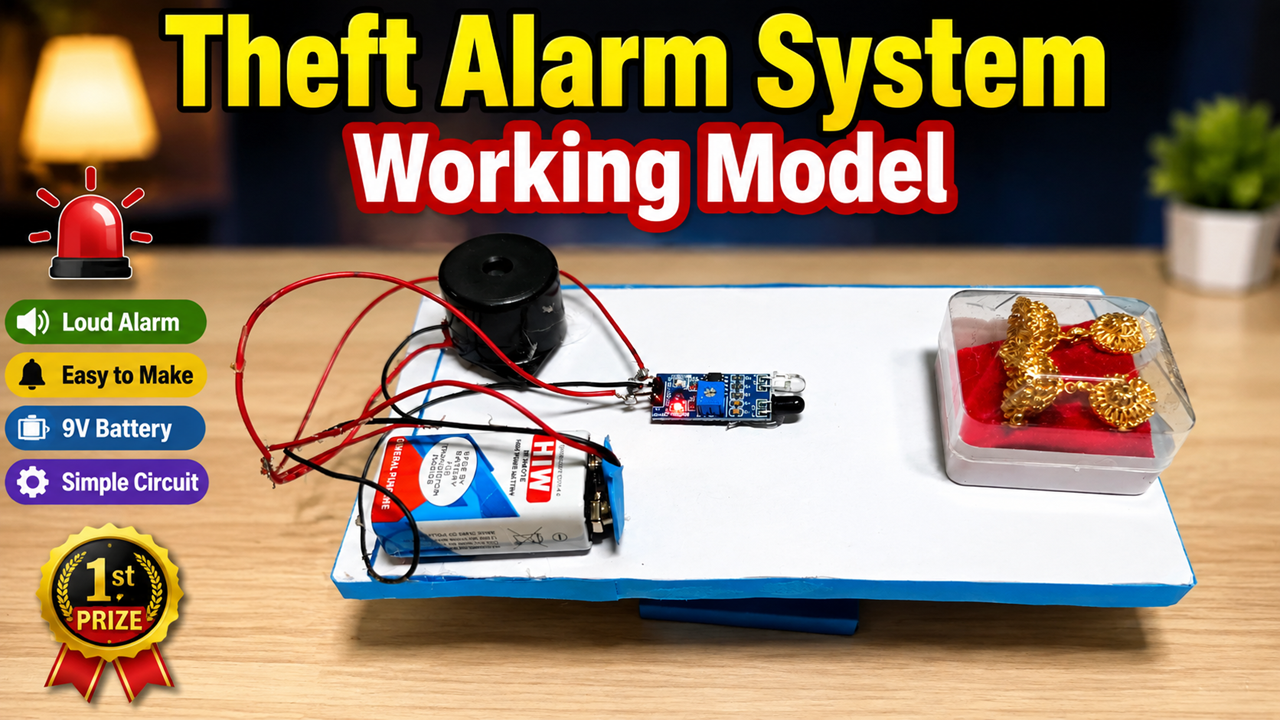
The model shown consists of a 9V battery, sensor module, buzzer, warning LED, connecting wires, and a protected box. The sensor acts as the detection component. When the protected box is opened or the sensor detects movement or interruption, it sends a signal to the alarm circuit.
The circuit then activates the buzzer, producing a loud sound. The red LED can also illuminate to indicate that an alarm condition has been detected.
The basic working sequence is:
Unauthorized Access → Sensor Detects Change → Circuit Activated → Buzzer Sounds + LED Lights → Warning Given
Real security systems may use magnetic door sensors, motion detectors, infrared sensors, pressure sensors, cameras, or other technologies. This school model demonstrates the same basic idea in a simple form.
Materials Required
To make this model, you will need a thick cardboard or foam-board sheet for the base, colored chart paper, a small cardboard or plastic box for the protected object, glue, scissors, a cutter, ruler, pencil, and markers.
For the electronic circuit, you will need a low-voltage battery pack or suitable battery, buzzer, red LED, connecting wires, and a sensor module. Depending on the design, a magnetic reed switch, infrared obstacle sensor, vibration sensor, or other suitable low-voltage sensor can be used. A small switch can be added to turn the system on and off.
How to Make the Model
First, prepare a rectangular cardboard base. Cover it with white paper and add a colored border around the edges. This will provide a clean platform for mounting the electronic components.
Next, make a small security box using cardboard or use a lightweight plastic container. Decorate it with colored paper and place a harmless decorative object inside to represent valuable property. The box should be easy to open during the demonstration.
Now install the sensor near the box. For example, if using a magnetic reed switch, place one part of the sensor on the box and the matching magnet on the lid. When the lid is opened, the magnet moves away and the sensor changes state. This can be used to activate the alarm circuit.
Connect the sensor to the buzzer and LED according to the sensor manufacturer’s wiring instructions. Connect the circuit to a suitable low-voltage power source. Do not connect a 9V battery directly to an LED without an appropriate current-limiting resistor or suitable module.
Place the buzzer on the base and connect the red LED where it can be easily seen. Secure the wires neatly using tape. Add an ON/OFF switch so the system can be safely activated before demonstrating it.
Turn the system on and open the protected box. When the sensor detects the change, the buzzer should sound and the warning LED should illuminate. If it does not work, check the sensor wiring, battery connection, polarity, and sensor position.
Finally, add labels such as “THEFT DETECTION,” “SENSOR,” “ALARM,” “WARNING LIGHT,” “BATTERY,” and “PROTECTED OBJECT.” You can also add an information card explaining the working process.
Conclusion
The Theft Alarm System project demonstrates how sensors and simple electronic circuits can be used for security purposes. It shows that when an unwanted change is detected, an automatic warning can be generated through sound and light.
This project is useful for science exhibitions because it combines electronics, automation, and real-life problem solving. It also teaches students how everyday security systems can detect unauthorized access and provide an immediate alert.
Safety Note: Use only low-voltage components and an appropriate battery or power supply. Do not connect the project to household mains electricity.