
Good morning everyone.
Today I am going to explain my science project on “Natural Disaster Alert System.” This is an Inspire Award working model designed to spread awareness about disaster management and early warning systems.
Natural disasters such as thunderstorms, heavy rain, floods, cyclones, and lightning can cause damage to human life and property. Many disasters become dangerous because people do not receive warnings on time. This project demonstrates how technology and communication systems can help provide disaster alerts quickly and save lives.
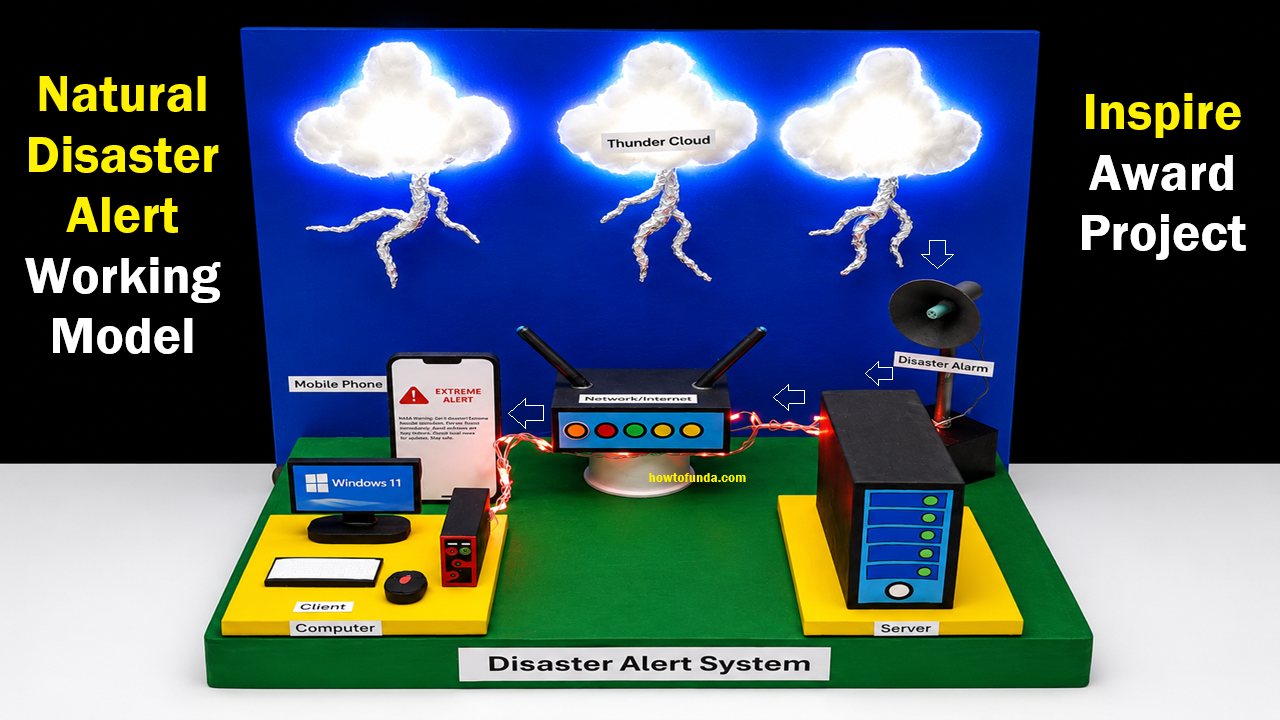
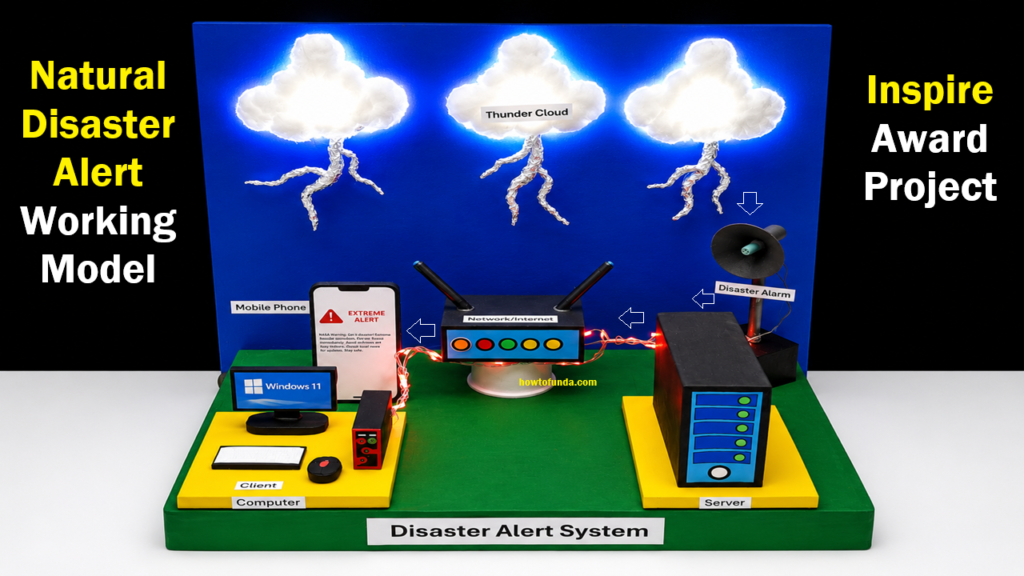
The model shows a disaster alert network connected through a server, internet system, computer, mobile phone, alarm system, and weather monitoring clouds.
Aim of the Project
The main aim of this project is:
- To create awareness about natural disasters
- To explain disaster alert systems
- To demonstrate weather monitoring technology
- To show how alerts are sent through networks
Parts of the Working Model
This project includes:
- Thunderstorm clouds
- Disaster alarm
- Server system
- Internet/network system
- Client computer
- Mobile phone alert system
- LED communication lights
Each section plays an important role in disaster management.
Thunderstorm Clouds
At the top of the model, clouds with LED lights represent thunderstorm clouds.
These clouds symbolize dangerous weather conditions such as:
- Lightning
- Heavy rain
- Storms
- Cyclones
The glowing lights show weather activity and warning signals.
This section explains how weather changes are monitored before disasters occur.
Disaster Alarm System
The alarm placed on the right side represents an emergency warning system.
When dangerous weather is detected:
- The alarm produces warning sounds
- People receive alerts immediately
- Citizens can move to safer places
Disaster alarms help reduce accidents and save lives.
Server System
The server shown in the model acts as the central control system.
The server:
- Collects weather information
- Processes disaster data
- Sends warning alerts
Weather stations and satellites send information to the server continuously.
Network and Internet System
The router-like network system in the center represents internet communication.
It transfers information between:
- Server
- Computers
- Mobile phones
- Alert systems
This demonstrates how disaster warnings travel quickly through communication networks.
Client Computer
The computer shown on the left side acts as the client system.
The client computer receives:
- Weather reports
- Disaster warnings
- Emergency instructions
Government offices and disaster management centers use computers to monitor weather conditions.
Mobile Phone Alert System
The mobile phone in the model displays an “Extreme Alert” notification.
This demonstrates real-life emergency alert systems used by governments and weather departments.
People receive:
- SMS alerts
- Mobile notifications
- Emergency warnings
This helps citizens stay safe during disasters.
Working of the Model
The project works in the following steps:
Step 1 – Weather Monitoring
Sensors and weather systems detect dangerous weather conditions like thunderstorms and heavy rain.
Step 2 – Data Sent to Server
The weather information is sent to the server through the internet.
Step 3 – Server Processes Data
The server analyzes the data and identifies disaster risks.
Step 4 – Alerts Sent Through Network
The server sends warning messages through:
- Mobile phones
- Computers
- Disaster alarms
LED lights in the model show communication between systems.
Step 5 – Public Warning
People receive alerts and take safety precautions before the disaster occurs.
Scientific Concepts Used
This project explains:
- Weather monitoring
- Disaster management
- Communication systems
- Internet networking
- Early warning systems
- Emergency alert technology
Materials Used
This DIY model is made using:
- Cardboard
- LED lights
- Cotton for clouds
- Battery and wires
- Toy computer and mobile models
- Alarm/buzzer
- Paint and glue
Real-Life Applications
Disaster alert systems are used in:
- Weather departments
- Flood warning systems
- Cyclone monitoring centers
- Earthquake alert systems
- Emergency communication networks
These systems help governments protect people during natural disasters.
Advantages of the Project
- Creates disaster awareness
- Explains early warning systems
- Helps students understand weather technology
- Interactive and creative learning
- Useful for science exhibitions and Inspire Awards
Importance of Disaster Alerts
Disaster alert systems help:
- Save human lives
- Reduce damage
- Improve emergency response
- Increase public safety
Early warnings are very important during natural disasters.
Conclusion
In conclusion, this Disaster Alert System Working Model is an innovative science project that explains how technology helps monitor weather conditions and send early warning alerts during natural disasters.
The project demonstrates the use of communication networks, servers, alarms, and mobile alerts in disaster management. It spreads awareness about safety precautions and emergency preparedness.
This model is highly useful for science exhibitions and Inspire Award competitions because it combines science, technology, and social awareness.