
Here are 20 unique science working model ideas inspired by projects

1. Renewable Energy Power Plant Model (Solar + Wind + Hydro)
This working model demonstrates how different renewable energy sources can generate electricity. The model combines a small solar panel, a windmill turbine, and a hydroelectric turbine powered by flowing water. Each system produces electricity that can light LEDs, showing how clean energy sources can power homes and cities. This project explains the importance of renewable energy in reducing pollution and conserving fossil fuels. It also helps students understand how multiple energy sources can work together to provide sustainable electricity.
2. Waste Water Treatment Plant Working Model
This project shows how dirty water from homes and industries is cleaned before being released into rivers. The model demonstrates different filtration stages such as sedimentation, filtration with sand and gravel, and purification. Colored water can be used to show how contaminants are removed step by step. The project helps students understand how wastewater treatment plants protect the environment and ensure safe water for reuse.
3. Waste to Electricity Generator Model
This model explains how waste materials can be converted into energy. In the project, waste is represented as fuel used to produce heat or gas that runs a generator. The generator lights an LED to show electricity production. The model highlights the concept of waste management and energy recovery. It teaches students how modern technology can turn garbage into a useful resource while reducing landfill pollution.
4. Global Warming & Greenhouse Effect Working Model
This project demonstrates how greenhouse gases trap heat in the Earth’s atmosphere. The model usually includes a miniature Earth, sun rays represented with light, and a transparent cover representing greenhouse gases. When heat enters but cannot escape easily, the temperature rises. This model helps students understand climate change and the role of carbon dioxide and other gases in global warming.
5. Save Environment / Go Green City Model
This model represents an eco-friendly city with green parks, solar panels, wind turbines, and recycling systems. It shows how cities can reduce pollution by using renewable energy and planting trees. Roads, buildings, and transport systems can be included to show sustainable urban planning. The project encourages people to adopt environmentally friendly practices and highlights the importance of protecting nature.
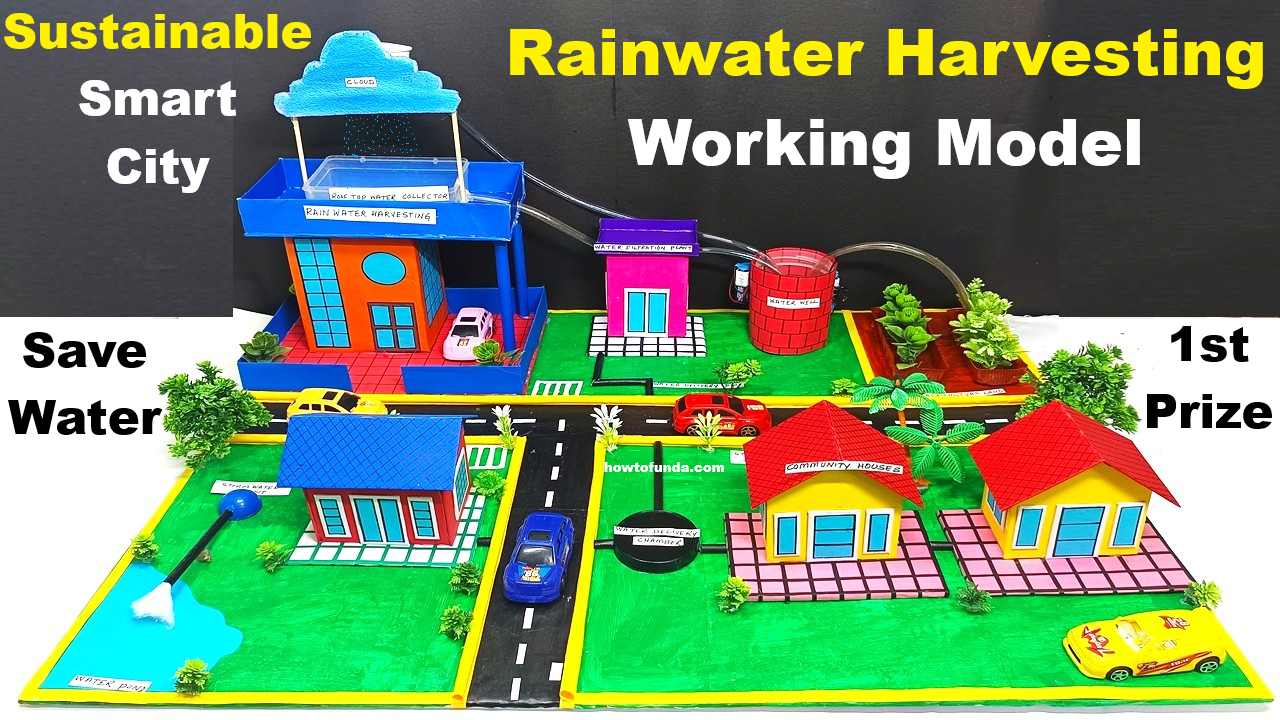
6. Rainwater Harvesting Working Model
This working model demonstrates how rainwater collected from rooftops can be stored and reused. The model includes a house roof, pipes, and a storage tank where rainwater flows. It explains how rainwater harvesting helps recharge groundwater and reduces water shortages. This project teaches students about water conservation and sustainable water management.
7. Air, Water, and Land Pollution Working Model
This model shows the different types of pollution affecting the environment. One section may represent air pollution from factories, another water pollution from waste dumping, and another land pollution caused by garbage. The project visually demonstrates how human activities impact the environment and encourages solutions such as recycling, tree planting, and pollution control.
8. Day and Night Rotation Working Model
This model demonstrates how the rotation of Earth causes day and night. A globe or ball representing Earth rotates in front of a light source representing the Sun. As the Earth rotates, one side receives sunlight (day) while the other remains dark (night). The model helps students understand Earth’s rotation and how it creates the daily cycle of daylight and darkness.
9. Solar Eclipse and Lunar Eclipse Working Model
This model explains how eclipses occur due to the alignment of the Sun, Earth, and Moon. The setup uses three balls representing these celestial bodies. By moving them into different positions, students can demonstrate solar and lunar eclipses. The project helps explain astronomical events and how shadows are formed in space.
10. Earth Rotation and Revolution Model
This project shows how Earth rotates on its axis and revolves around the Sun. A rotating globe attached to a motor can revolve around a central sun model. The project explains how Earth’s movement causes seasons and the cycle of days and years. It helps students understand fundamental concepts of astronomy.
11. Phases of the Moon Working Model
This model demonstrates how the Moon appears in different shapes during a month. By moving a moon model around the Earth while light shines from the Sun, different phases such as new moon, half moon, and full moon can be shown. The project helps students understand the lunar cycle and how sunlight reflects from the Moon.
12. Simple Machines Working Model
This project demonstrates basic simple machines such as levers, pulleys, wheel and axle, and inclined planes. Each machine shows how effort can be reduced while performing work. The model helps explain mechanical advantage and how simple machines make tasks easier in daily life.
13. Force and Motion Demonstration Model
This working model explains how force affects the movement of objects. It can include rolling cars, ramps, or moving objects powered by motors. The project demonstrates concepts such as speed, direction, and acceleration. It helps students understand Newton’s laws of motion and the relationship between force and movement.
14. Magnetic Science Project Working Model
This model demonstrates how magnets attract or repel objects. It may include a magnetic crane, floating magnets, or magnetic separation of metals. The project helps students understand magnetic fields and their applications in everyday technology.
15. Newton’s Wheel Working Model
Newton’s wheel demonstrates the concept of action and reaction forces. A wheel with small containers or tubes releases air or water that pushes the wheel in the opposite direction, causing it to rotate. This model explains Newton’s third law of motion in a visual and interactive way.
16. Hydroponic Farming Working Model
This project demonstrates a modern farming technique where plants grow without soil. Instead, plants receive nutrients through water solutions. The model may include pipes, small containers, and flowing nutrient water. It explains how hydroponics can help grow crops efficiently using less water and space.
17. Solar Powered Irrigation System
This model shows how solar energy can power water pumps used in farming. A small solar panel runs a motor pump that moves water to irrigation channels. The project explains how renewable energy can help farmers reduce electricity costs and improve irrigation systems.
18. Greenhouse Farming Model
This model explains how greenhouses help plants grow in controlled environments. Transparent covers allow sunlight to enter while trapping heat inside. The project demonstrates how greenhouses protect crops from extreme weather and improve agricultural productivity.
19. Acid Rain Working Model
This project demonstrates how pollution from factories and vehicles can lead to acid rain. The model shows how polluted clouds produce acidic rainfall that damages plants, buildings, and water bodies. It helps students understand environmental pollution and its harmful effects.
20. Solid Waste Management and Recycling Model
This model demonstrates how waste can be sorted and recycled. Different sections show waste collection, segregation, recycling processes, and composting. The project highlights the importance of reducing waste and promoting recycling to protect the environment.