
1. What is renewable energy?
Answer:
Renewable energy is energy obtained from natural resources that are continuously replenished, such as sunlight, wind, and flowing water. These sources do not get exhausted and are environmentally friendly.
2. Why is renewable energy important?
Answer:
Renewable energy helps reduce pollution, decreases dependence on fossil fuels, conserves natural resources, and helps fight climate change by reducing greenhouse gas emissions.
3. How does a solar panel generate electricity?
Answer:
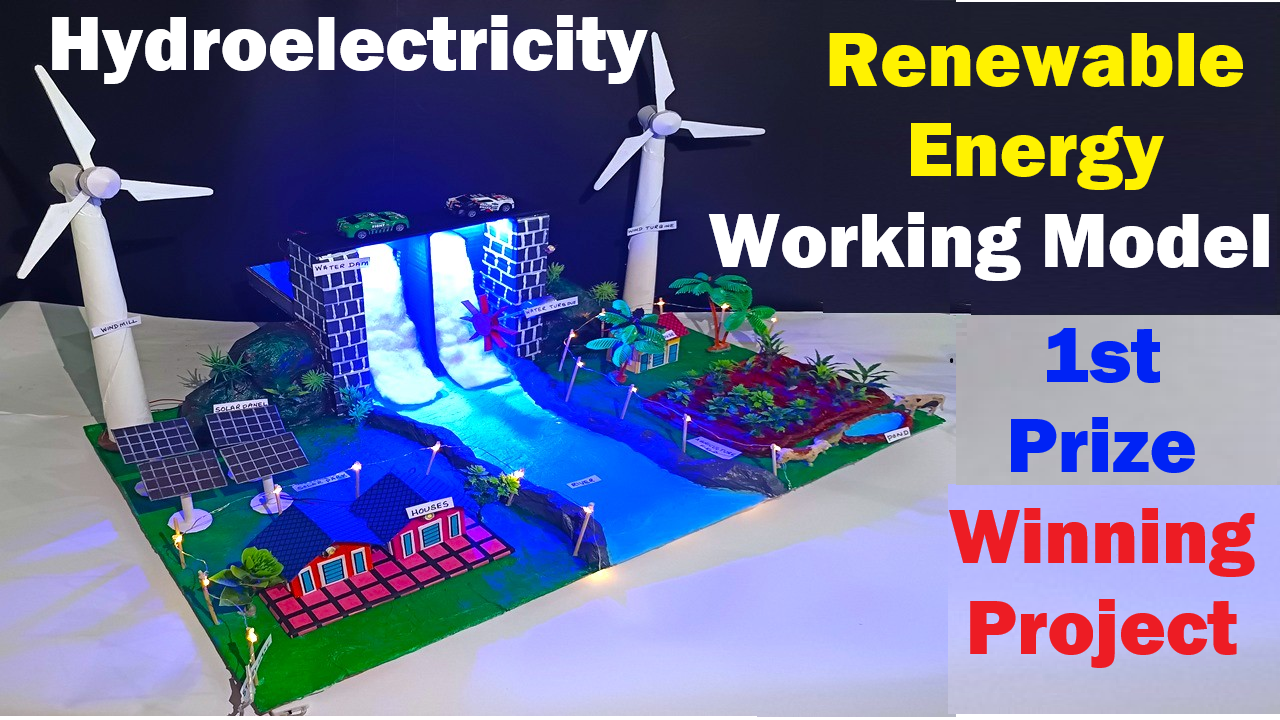
Solar panels contain photovoltaic (PV) cells that convert sunlight directly into electricity. When sunlight falls on the cells, electrons move and produce electric current.
4. How does a wind turbine produce electricity?
Answer:
When wind blows, it rotates the blades of the wind turbine. The rotating blades turn a generator, which converts mechanical energy into electrical energy.
5. How is hydroelectricity generated?
Answer:
Water stored in a dam flows through turbines. The moving water rotates the turbines, which drive a generator to produce electricity.
6. Which renewable energy source is most efficient in this model?
Answer:
The efficiency depends on local conditions. Solar energy works best in sunny areas, wind energy in windy regions, and hydroelectricity where there is a continuous water supply. Using all three together provides reliable power generation.
7. What are the advantages of combining solar, wind, and hydro energy?
Answer:
- Continuous power supply
- Reduced dependence on one source
- Better energy reliability
- Lower environmental impact
- Efficient utilization of natural resources
8. What are the environmental benefits of renewable energy?
Answer:
Renewable energy:
- Produces little or no air pollution
- Reduces carbon dioxide emissions
- Conserves fossil fuels
- Protects ecosystems and public health
9. What are the limitations of renewable energy?
Answer:
- Solar energy depends on sunlight.
- Wind energy depends on wind speed.
- Hydroelectricity requires sufficient water.
- Initial installation cost can be high.
However, operating costs are usually low.
10. How does this working model help society?
Answer:
This model demonstrates how multiple renewable energy sources can work together to generate clean electricity for homes, schools, industries, and street lights while reducing pollution and conserving natural resources.
Bonus Jury Questions
Q11. Can renewable energy completely replace fossil fuels?
Answer:
Yes, with proper technology, energy storage systems, and infrastructure, renewable energy can meet a large portion of future energy demands.
Q12. Which energy source works at night?
Answer:
Wind turbines can operate day and night if wind is available. Hydroelectric power can also generate electricity continuously. Solar panels generate electricity only during daylight hours.
Q13. What is the difference between renewable and non-renewable energy?
Answer:
Renewable energy sources are naturally replenished, while non-renewable sources such as coal, petroleum, and natural gas are limited and can be exhausted.
Q14. What is the role of a generator in this model?
Answer:
A generator converts mechanical energy from moving water or rotating wind turbine blades into electrical energy.
Q15. Why should schools promote renewable energy projects?
Answer:
Renewable energy projects help students understand sustainable development, environmental conservation, and future clean-energy technologies.
One-Line Conclusion for Judges
“This model demonstrates how solar, wind, and hydroelectric energy can work together to provide clean, sustainable, and eco-friendly electricity for the future.”