
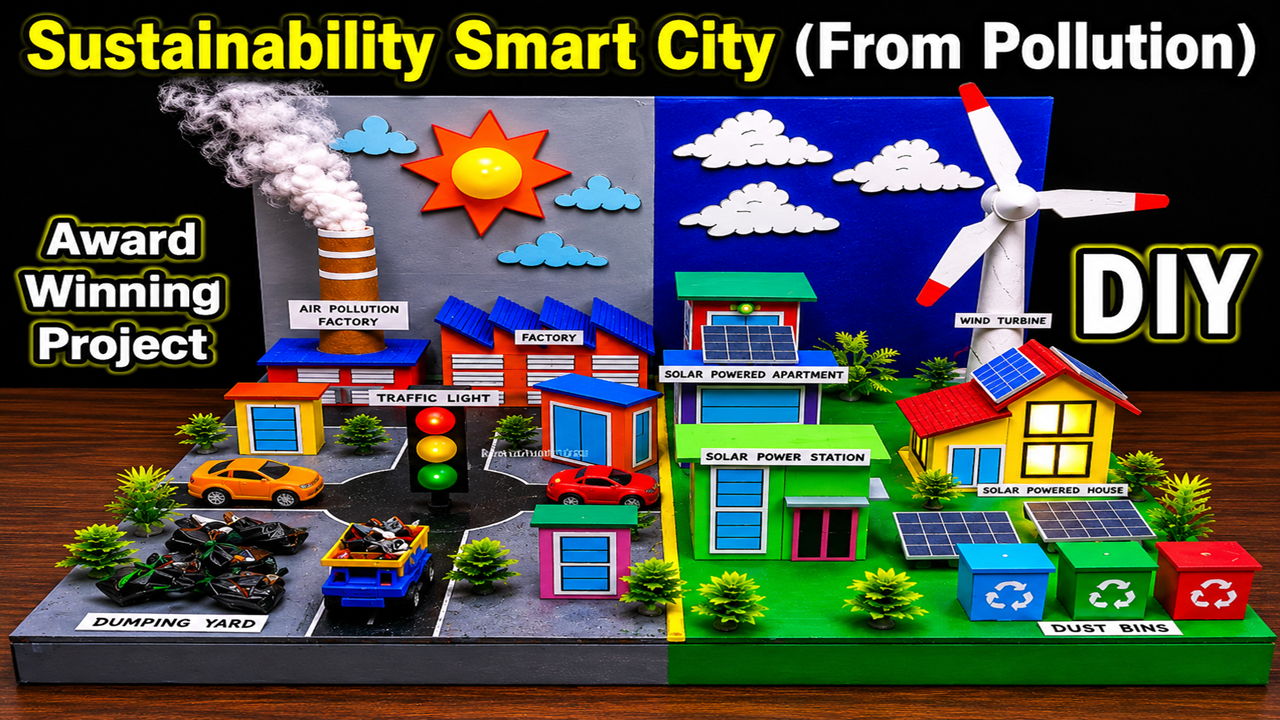
A Sustainability Smart City Working Model is an innovative science project that demonstrates how a polluted city can be transformed into a clean, green, and environmentally friendly smart city.
This model highlights the importance of renewable energy, waste management, pollution control, green transportation, and sustainable development. It is an excellent project for science exhibitions, Inspire Awards, and environmental awareness programs.
The model is divided into two sections. The left side represents a polluted city with factories emitting smoke, waste dumping areas, and environmental pollution.
The right side represents a sustainable smart city powered by solar energy and wind energy, featuring clean surroundings, recycling systems, and green infrastructure. This comparison helps students understand the importance of adopting sustainable practices for a better future.
Materials Required
Base and Structure
- Cardboard sheets
- Foam board
- Colored chart papers
- Color papers (green, blue, grey, black)
- Glue gun or Fevicol
- Scissors and cutter
Buildings and Roads
- Cardboard boxes
- Colored papers for buildings
- Black chart paper for roads
- White strips for road markings
Renewable Energy Components
- Mini solar panels (or dummy solar panels)
- Wind turbine made using chart paper or foam sheet
- Small DC motor (optional)
- LED lights
- 9V battery
- Switch
- Connecting wires
Decoration Materials
- Artificial plants and trees
- Toy vehicles
- Dustbins made from small boxes
- Cotton for factory smoke
- Traffic signal model
- Paints and markers
Procedure
Step 1: Prepare the Base
Take a large cardboard sheet and divide it into two sections:
- Polluted City Area
- Sustainable Smart City Area
Cover the polluted section with grey paper and the smart city section with green paper.
Step 2: Create the Polluted City
Construct factories using cardboard boxes. Add cotton smoke to factory chimneys to represent air pollution. Create a dumping yard using waste materials and place toy vehicles on roads.
Step 3: Build the Smart City
Construct houses, apartments, and a solar power station. Add solar panels on rooftops and install a wind turbine using paper blades and a support tower.
Step 4: Add Renewable Energy Features
Install LED lights powered by a battery. Place solar panels and wind turbines to show clean energy generation.
Step 5: Waste Management System
Create colored recycling bins for:
- Plastic Waste
- Paper Waste
- Metal Waste
Show how waste is separated and recycled properly.
Step 6: Decoration
Add trees, plants, streetlights, and pathways. Label important parts clearly for exhibition presentation.
Working Principle
The model demonstrates the transformation of a polluted city into a sustainable smart city.
Polluted City Side
- Factories release smoke into the atmosphere.
- Waste is dumped without proper management.
- Fossil fuels increase pollution levels.
- Limited greenery affects air quality.
Sustainable Smart City Side
- Solar panels convert sunlight into electricity.
- Wind turbines generate electricity using wind energy.
- Waste is segregated and recycled.
- Green spaces improve air quality.
- Energy-efficient buildings reduce power consumption.
The model shows how renewable energy and smart urban planning can create healthier and cleaner cities.
Advantages of a Sustainable Smart City
- Reduces air and water pollution
- Promotes renewable energy usage
- Improves waste management
- Conserves natural resources
- Increases energy efficiency
- Provides a healthier environment
- Supports sustainable development
Conclusion
The Sustainability Smart City Working Model effectively demonstrates the difference between a polluted city and a sustainable smart city. By using renewable energy sources such as solar and wind power, implementing recycling systems, and increasing green spaces, cities can become cleaner and more efficient. This project helps students understand environmental challenges and encourages them to adopt eco-friendly practices for a sustainable future. It is a creative and award-winning science exhibition project that promotes environmental awareness and smart city development.