
Introduction
Rainwater harvesting is a sustainable method of collecting and storing rainwater for future use. With increasing water scarcity, this technique helps conserve water, replenish groundwater, and reduce dependency on municipal water supply. Rainwater can be collected from rooftops, road surfaces, and open areas, and then stored in wells, tanks, or ponds for agriculture, gardening, and household use.
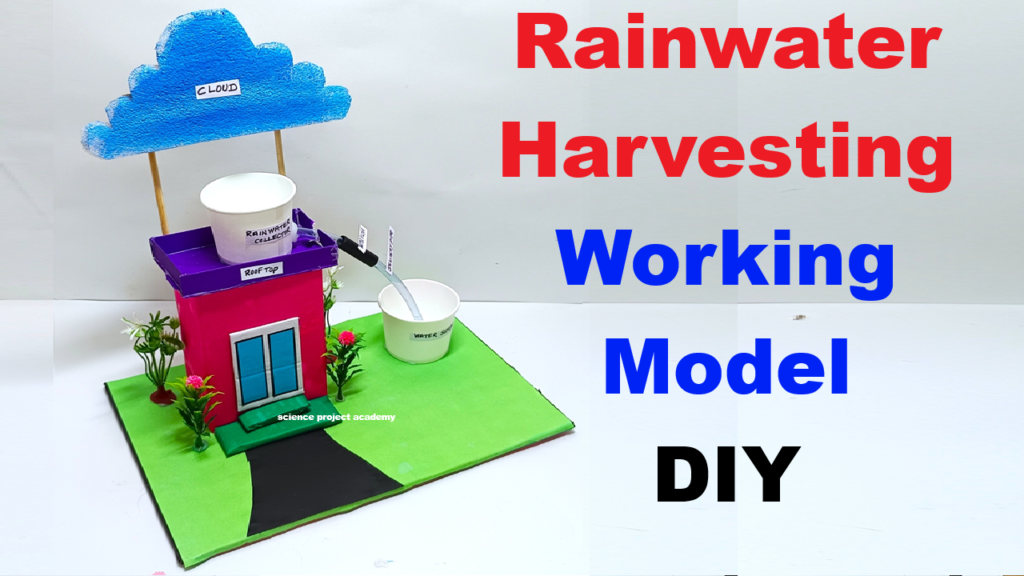
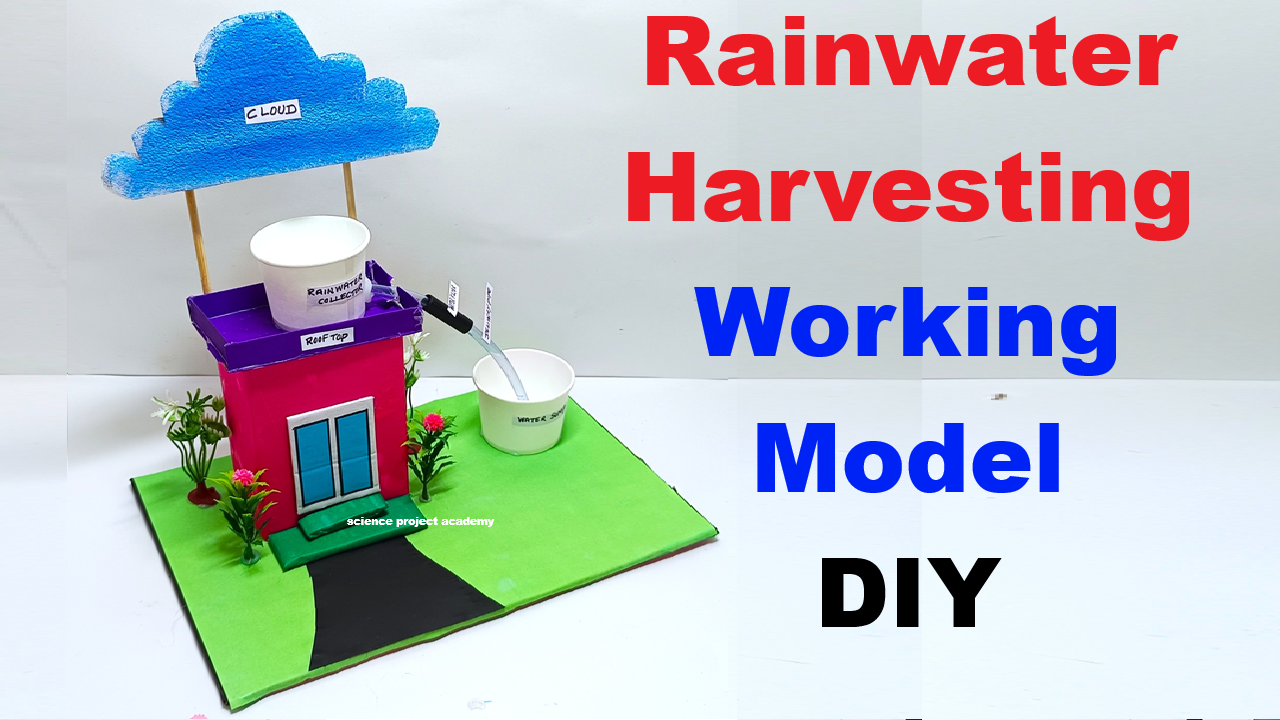
This Rainwater Harvesting Working Model is a DIY science exhibition project using simple materials to demonstrate the process of water collection, filtration, and storage. The model clearly shows how rainwater can be captured, stored, and used efficiently.
Aim of the Project
The main objectives of this project are:
- To demonstrate the collection and storage of rainwater
- To promote water conservation and sustainability
- To create awareness about groundwater recharge
- To develop a simple, low-cost DIY science exhibition project
Materials Used
- Cardboard (base and step structure)
- Plastic or glass bottles (to store water)
- Small gravel, large gravel, and sand (for filtration)
- Coal or activated charcoal (optional for water purification)
- Tissue paper (fine filtration)
- Tubes or small pipes
- Marker pens for labeling
- Glue, tape, scissors
- Color papers for decoration
Concept of Rainwater Harvesting
Rainwater harvesting works by:
- Collection: Rainwater is captured from rooftops, road surfaces, or other catchment areas.
- Filtration: Collected water is passed through layers of gravel, sand, coal, and tissue paper to remove debris and impurities.
- Storage: Filtered water is stored in tanks, wells, or ponds.
- Usage: Stored water is used for agriculture, household chores, or replenishing groundwater through borewells.
Construction of the Model
- A cardboard base is prepared with multiple steps to show filtration stages.
- Water collection points (small rooftop models) are placed at the top step.
- Each step is filled with filtration materials in layers:
- Large gravel → small gravel → sand → coal → tissue paper
- Tubes are connected to allow water to flow from one layer to the next.
- The bottom layer leads to a storage container representing a well or pond.
- Optional coloring and labeling are done for clear visualization.
Working of the Model
- Rainwater (simulated using colored water) is poured onto the rooftop area.
- Water flows down through the step filtration layers.
- Each layer removes different impurities, illustrating filtration.
- The cleaned water is collected in the storage bottle at the bottom.
- Stored water can be shown as being used for irrigation or poured into another tube representing borewell recharge.
Educational Importance
- Explains water conservation and management
- Demonstrates real-life sustainable practices
- Encourages hands-on learning for students
- Ideal for science exhibition projects
Advantages of Rainwater Harvesting
- Conserves water and reduces wastage
- Recharges groundwater and raises water table
- Reduces flooding and surface runoff
- Supports agriculture and household needs
Conclusion
The Rainwater Harvesting Working Model is an innovative and educational DIY project that shows how rainwater can be efficiently collected, filtered, stored, and used. It emphasizes sustainable water management and environmental awareness, making it highly suitable for school science exhibitions.