
Good morning everyone.
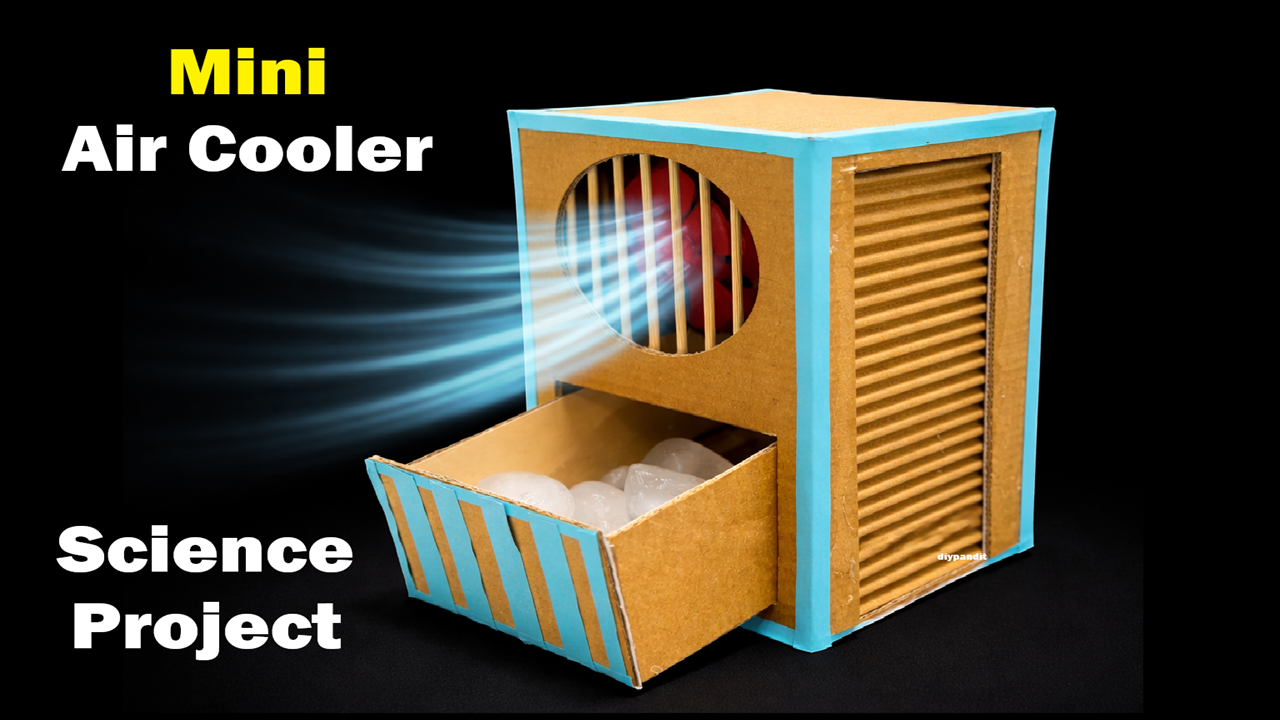
Today I am going to explain my science exhibition project on “Mini Air Cooler Working Model.” This is a simple DIY project that demonstrates how an air cooler works using a fan, cooling chamber, and ice.
This project is based on the principle of cooling through evaporation and airflow. It helps students understand how coolers reduce temperature and provide cool air during hot weather.
The model is easy to make using cardboard and simple electronic components, making it perfect for school science exhibitions and STEM learning.
Aim of the Project
The main aim of this project is:
- To demonstrate the working of an air cooler
- To understand cooling mechanisms
- To explain airflow and evaporation
- To create an eco-friendly cooling system
Explanation of the Model
The mini air cooler model contains:
- Cooling fan
- Ice chamber
- Air vents
- Cooling pads or side vents
- Cardboard body
The fan pulls warm air into the cooler and pushes it through the cooling section. The air becomes cooler after passing over ice or wet cooling surfaces.
Parts of the Mini Air Cooler
1. Cooling Fan
Inside the front circular opening, a small fan is installed.
The fan:
- Pulls warm air inside
- Pushes cool air outward
- Creates airflow
The moving air helps in cooling the surroundings.
2. Ice Chamber
The front tray contains ice cubes.
The air passing near the ice becomes cooler before coming out of the cooler.
This demonstrates practical cooling using cold surfaces.
3. Side Ventilation Panel
The side panel acts like cooling vents or cooling pads.
In real air coolers:
- Water flows through cooling pads
- Air passing through wet pads becomes cool
This process is called evaporative cooling.
4. Cardboard Body
The outer structure is made using cardboard.
It supports all components and creates the cooler shape.
Working Principle
This project works mainly on:
Evaporative Cooling and Airflow
When warm air passes through a cool or wet surface:
- Heat is absorbed
- Air temperature decreases
- Cool air is produced
The fan increases airflow and improves cooling efficiency.
Working of the Mini Air Cooler
Step 1 – Switch ON the Fan
The battery or power source starts the fan.
Step 2 – Warm Air Enters
The fan pulls warm surrounding air into the cooler.
Step 3 – Air Passes Over Ice
The air moves through the cooling chamber containing ice.
Step 4 – Air Gets Cooled
Heat from the air is absorbed by the ice.
Step 5 – Cool Air Comes Out
The cooler releases cool air from the front side.
Scientific Concepts Used
This project explains:
- Evaporation
- Heat transfer
- Cooling systems
- Air circulation
- Temperature reduction
Real-Life Applications
Air coolers are used in:
- Homes
- Offices
- Shops
- Factories
- Eco-friendly cooling systems
They consume less electricity compared to air conditioners.
Materials Used
This DIY project is made using:
- Cardboard
- Small DC fan
- Ice tray or small container
- Battery or USB power
- Glue gun
- Cutter and scissors
- Decorative paper
How to Make the Mini Air Cooler
Step 1 – Create the Box
Make a cube-shaped body using cardboard.
Step 2 – Install the Fan
Cut a circular hole and fix the fan.
Step 3 – Make the Ice Tray
Create a tray for storing ice cubes.
Step 4 – Add Ventilation Panels
Attach side vents using cardboard strips.
Step 5 – Connect Power Supply
Connect the fan to a battery or USB cable.
Step 6 – Test the Cooler
Add ice cubes and switch on the fan.
Advantages of the Project
- Easy DIY project
- Eco-friendly cooling
- Low-cost model
- Energy efficient
- Attractive for exhibitions
Educational Importance
This project helps students:
- Understand cooling systems
- Learn heat transfer concepts
- Improve practical skills
- Develop creativity and innovation
It combines science with real-world applications.
Safety Precautions
- Keep electrical wires dry
- Use low-voltage power supply
- Avoid water leakage near the fan
- Handle scissors and cutter carefully
Conclusion
In conclusion, this Mini Air Cooler Working Model is a simple and creative science project that demonstrates cooling using airflow and ice-based temperature reduction.
The project explains important concepts such as evaporation, heat transfer, and air circulation in an easy and practical way. It is an excellent project for science exhibitions and STEM education.