
Introduction
The human respiratory system is responsible for breathing and supplying oxygen to the body. Oxygen is essential for the survival of all living cells. The main organs of the respiratory system are the nose, trachea, lungs, and diaphragm. Breathing involves two main processes: inhalation (taking in oxygen) and exhalation (releasing carbon dioxide).

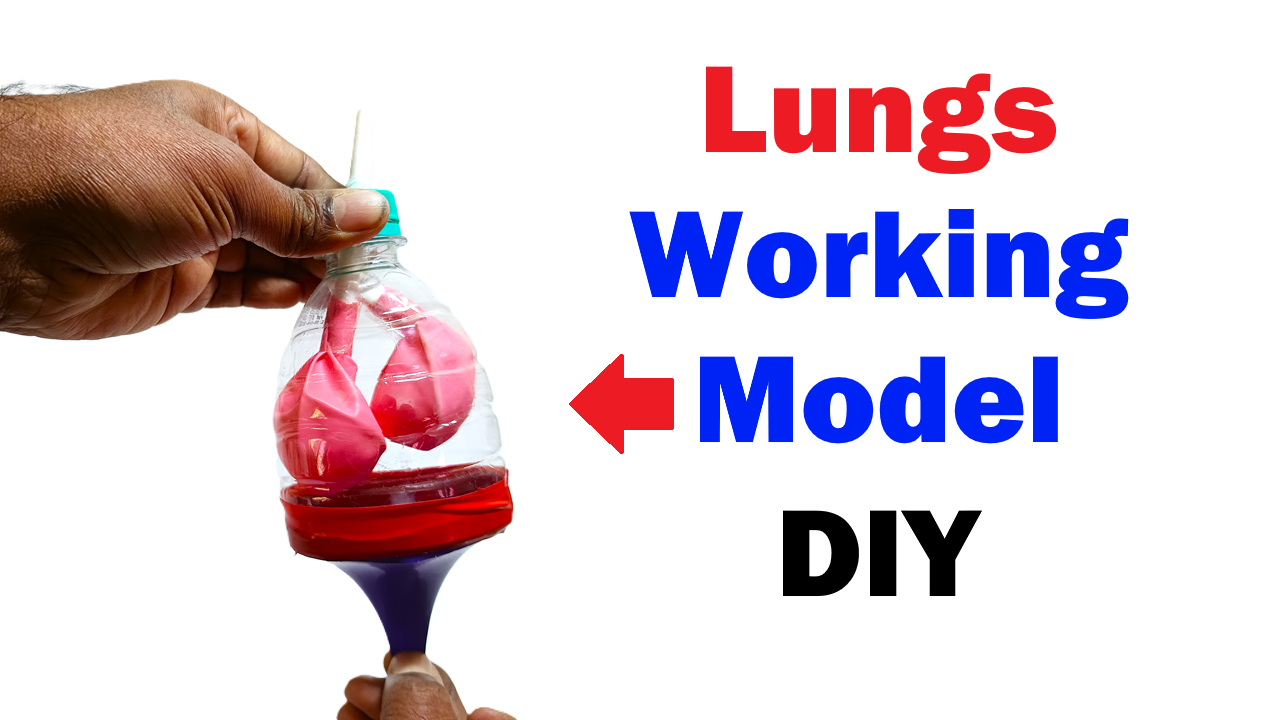
This Human Lungs Working Model is a simple and effective DIY science exhibition project made using a plastic bottle and balloons. It clearly demonstrates how lungs expand and contract during breathing, making it ideal for school biology exhibitions.
Aim of the Project
The objectives of this project are:
- To understand the structure of the human lungs
- To demonstrate the process of breathing
- To explain inhalation and exhalation visually
- To create a low-cost working biology model
Materials Used
- Transparent plastic bottle
- Two small balloons (lungs)
- One large balloon or rubber sheet (diaphragm)
- Y-shaped straw or plastic pipe
- Rubber bands or thread
- Tape and glue
- Scissors or cutter
- Marker pens for labeling
Structure of the Respiratory System
The main parts shown in this model are:
- Trachea (windpipe): Carries air into the lungs
- Lungs: Pair of organs where gas exchange takes place
- Diaphragm: Muscle that helps in breathing movement
Construction of the Model
The bottom of the plastic bottle is cut carefully. Two small balloons are attached to the ends of a Y-shaped straw, representing the lungs. The top of the straw is fixed at the mouth of the bottle, acting as the trachea. A large balloon is stretched across the open bottom of the bottle to represent the diaphragm.
The bottle acts as the chest cavity.
Working Principle of the Model
The model works on the principle of air pressure.
- When the diaphragm (bottom balloon) is pulled downward, the space inside the bottle increases
- Air pressure inside decreases
- Air enters the lungs, and the balloons inflate (inhalation)
- When the diaphragm is pushed upward
- Space inside the bottle decreases
- Air is pushed out of the lungs, and the balloons deflate (exhalation)
This shows how breathing takes place in the human body.
Scientific Explanation
In the human body, the diaphragm contracts and moves downward during inhalation, allowing the lungs to expand. During exhalation, the diaphragm relaxes and moves upward, causing the lungs to shrink. This movement helps in exchanging oxygen and carbon dioxide.
Educational Importance
- Makes breathing mechanism easy to understand
- Highly interactive model
- Ideal for science exhibition and viva
- Encourages hands-on learning
Advantages of the Model
- Very low-cost and easy to make
- Uses easily available materials
- Safe for students
- Reusable and durable
Health Awareness
This model helps spread awareness about lung health, importance of clean air, and avoiding smoking and pollution.
Conclusion
The Human Lungs Working Model using Balloon and Plastic Bottle is a simple yet powerful science exhibition project. It clearly explains the working of the respiratory system and breathing process through visual demonstration. This DIY model is perfect for biology exhibitions and helps students understand an important life process easily.