
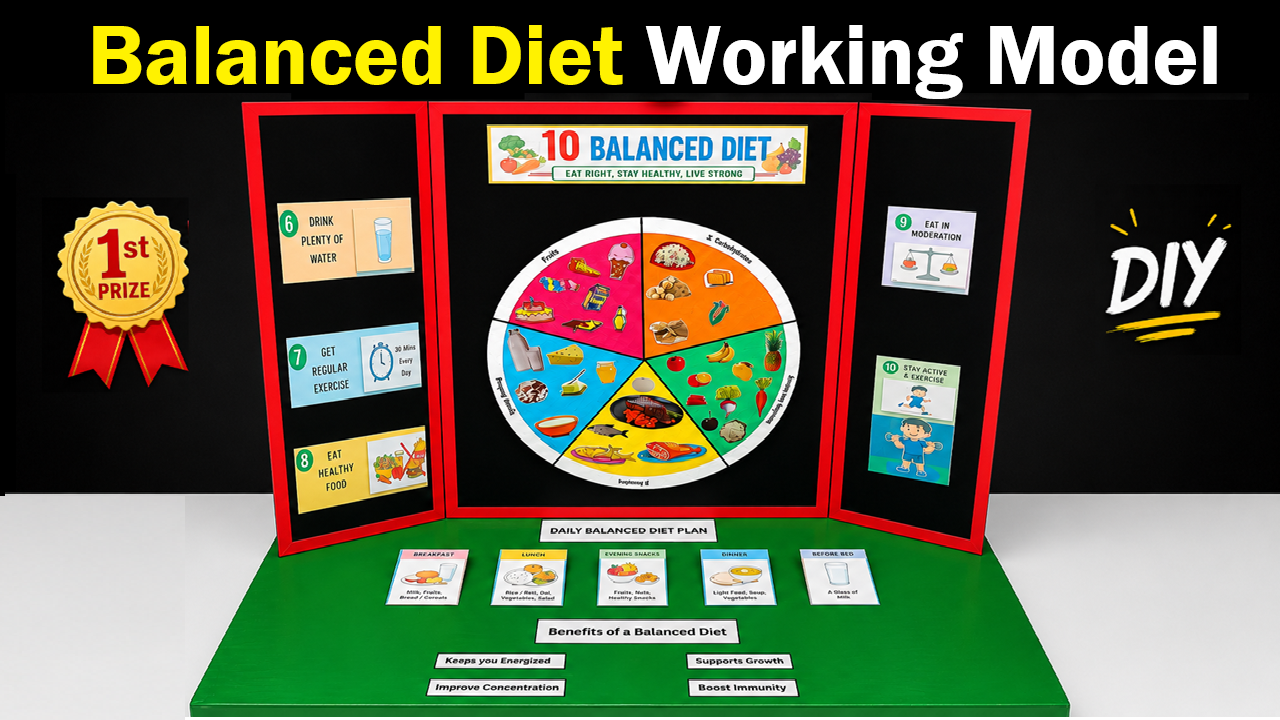
A Balanced Diet Working Model is an excellent biology project that helps students understand the importance of healthy eating and proper nutrition.
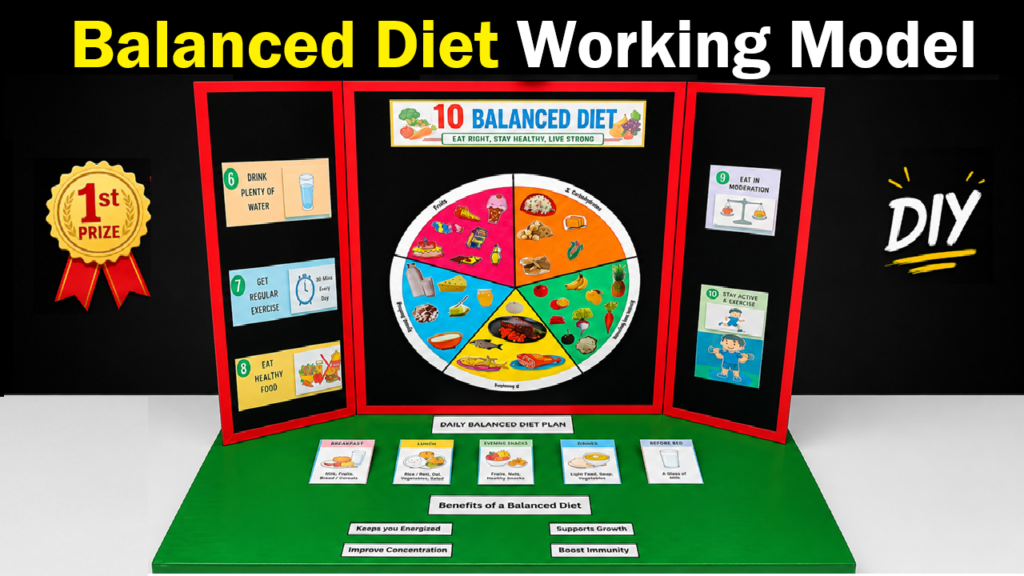
A balanced diet contains all essential nutrients required by the body in the correct proportions, including carbohydrates, proteins, fats, vitamins, minerals, fiber, and water.
This model visually represents different food groups arranged in a diet wheel, making it easy to learn about healthy food choices and their benefits.
This project is ideal for science exhibitions, health awareness programs, and biology fairs. It teaches students how proper nutrition helps maintain good health, supports growth, boosts immunity, and prevents diseases caused by nutrient deficiencies.
Materials Required
Base and Structure
- Cardboard sheets
- Foam board or chart paper
- Colored papers (Red, Green, Black, White)
- Circular cardboard for diet wheel
- Scale and pencil
- Scissors and cutter
- Glue gun or Fevicol
Decoration Materials
- Printed pictures of food items
- Colored markers
- Sketch pens
- Labels and stickers
- Small cards for health tips
- Decorative borders
Food Groups Included in the Model
1. Carbohydrates
Examples:
- Rice
- Bread
- Chapati
- Potatoes
Function:
- Main source of energy for the body.
2. Proteins
Examples:
- Eggs
- Fish
- Pulses
- Milk
- Meat
Function:
- Help in growth and repair of body tissues.
3. Fruits and Vegetables
Examples:
- Apples
- Bananas
- Carrots
- Tomatoes
- Spinach
Function:
- Provide vitamins, minerals, and fiber.
4. Dairy Products
Examples:
- Milk
- Cheese
- Yogurt
Function:
- Strengthen bones and teeth.
5. Fats and Oils
Examples:
- Butter
- Nuts
- Cooking oil
Function:
- Provide stored energy and support body functions.
Procedure
Step 1: Prepare the Base
Take a large cardboard sheet and cover it with colored paper. This will serve as the base of the model.
Step 2: Create the Diet Wheel
Cut a large circular piece of cardboard. Divide it into sections representing different food groups such as carbohydrates, proteins, fruits, vegetables, dairy products, and fats.
Step 3: Add Food Pictures
Paste pictures or drawings of food items in the appropriate sections of the wheel.
Step 4: Create Health Tip Panels
Prepare side panels showing important health tips such as:
- Drink plenty of water
- Exercise regularly
- Eat healthy food
- Eat in moderation
- Stay active
Step 5: Add Daily Meal Plan
Create small cards showing:
- Breakfast
- Lunch
- Evening Snack
- Dinner
- Before Bed
Step 6: Label Everything
Clearly label each food group and nutrition category for easy understanding during the exhibition.
Working Principle
The Balanced Diet Working Model demonstrates how different food groups contribute to overall health.
- Carbohydrates provide energy for daily activities.
- Proteins support growth and muscle development.
- Fruits and vegetables provide vitamins and minerals.
- Dairy products supply calcium for strong bones.
- Fats provide energy and help absorb certain vitamins.
- Water helps maintain body functions and hydration.
The model shows that consuming foods from all groups in the right proportion is necessary for maintaining good health.
Benefits of a Balanced Diet
- Provides energy for daily activities
- Supports growth and development
- Improves concentration and memory
- Strengthens bones and muscles
- Boosts immunity
- Helps maintain healthy body weight
- Reduces the risk of diseases
Conclusion
The Balanced Diet Working Model is a simple and effective project that teaches the importance of healthy eating habits. It helps students understand the role of different nutrients and food groups in maintaining a healthy body.
By following a balanced diet and adopting healthy lifestyle habits such as regular exercise and adequate water intake, individuals can lead healthier and more productive lives.
This project is highly suitable for science exhibitions and health awareness programs because it combines nutrition education with creative presentation.