
1. Introduction
Pollution is one of the biggest environmental problems in the world. It occurs when harmful substances enter our air, water and land or when unwanted sounds create disturbances in our surroundings.
Pollution affects humans, animals, plants and the entire ecosystem. Increasing industrial activities, vehicle emissions, plastic waste, deforestation and improper waste disposal are some of the major causes of pollution.
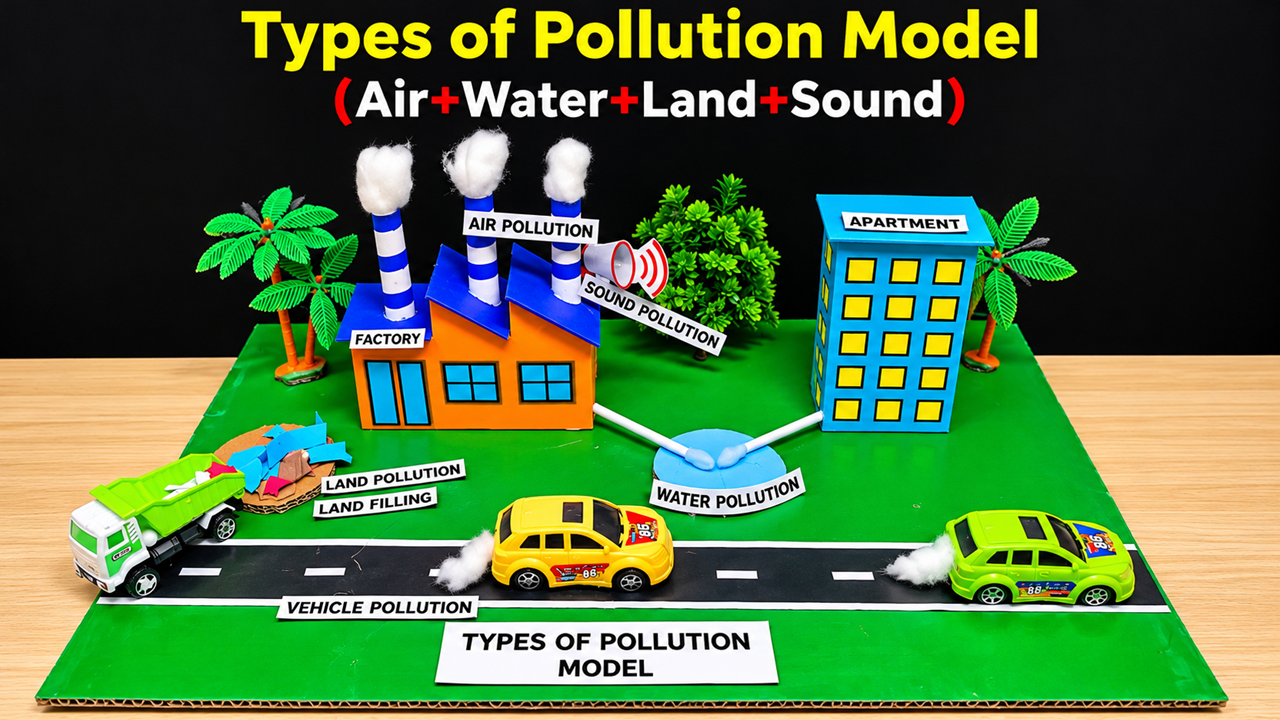
In this project, we have created a Types of Pollution Working Model that demonstrates four major types of pollution: Air Pollution, Water Pollution, Land Pollution and Sound Pollution.
Our model represents a factory, vehicles, residential buildings, waste dumping areas and a water pollution section. Each section explains how human activities contribute to environmental pollution.
The main objective of this project is to create awareness about pollution and encourage people to adopt eco-friendly practices.
2. Materials Required
To prepare this working model, we need the following materials:
- Large cardboard or thermocol sheet for the base.
- Green colour paper or artificial grass.
- Black chart paper for roads.
- Cardboard boxes for factories and apartments.
- Blue, yellow, orange and green colour papers.
- Three cardboard pipes for factory chimneys.
- Cotton for representing smoke.
- Small toy cars, buses and trucks.
- Small plastic containers for water pollution demonstration.
- Waste paper, plastic pieces and cardboard scraps.
- Small speakers or buzzer for sound pollution.
- Artificial trees and decorative plants.
- Small LED lights (optional).
- Glue gun, scissors, cutter and adhesive tape.
- Printed labels for different pollution types.
3. How to Make the Model
Step 1: Prepare the Base
Take a large rectangular cardboard sheet. Cover the surface with green colour paper or artificial grass. Prepare a road using black chart paper and add white road markings.
Divide the base into four sections representing air pollution, water pollution, land pollution and sound pollution.
Step 2: Prepare the Factory for Air Pollution
Take a cardboard box and construct a small factory building. Cover it with orange colour paper. Make three cylindrical chimneys using cardboard rolls or plastic pipes.
Fix cotton pieces at the top of the chimneys to represent smoke coming out of the factory.
Add a label called AIR POLLUTION near the chimneys.
You can also place small toy vehicles near the factory to demonstrate pollution caused by vehicle emissions.
Step 3: Prepare the Water Pollution Section
Take a small circular or rectangular plastic container and fill it with blue-coloured water.
Place small pieces of waste paper and plastic in the water to represent water pollution.
Connect a small pipe from the factory or residential building towards the water container to demonstrate wastewater discharge.
Add a label called WATER POLLUTION.
Step 4: Prepare the Land Pollution Section
Collect small pieces of waste paper, plastic covers, cardboard and other harmless waste materials.
Place them in one corner of the model to represent an open dumping area.
You can also make a small garbage collection vehicle using cardboard or use a toy garbage truck.
Add labels such as LAND POLLUTION and LAND FILLING.
Step 5: Prepare the Sound Pollution Section
Take a small cardboard piece and make a speaker or loudspeaker model.
Place it near the factory or road area. You can use a small buzzer or speaker to demonstrate unwanted noise.
Connect the buzzer to a battery and switch. When switched ON, it produces sound to represent noise pollution.
Add a label called SOUND POLLUTION.
Step 6: Prepare the Residential Area
Make a small apartment building using cardboard. Cover it with blue and yellow colour paper.
Place it near the factory and road to demonstrate how pollution affects people living in residential areas.
Step 7: Add Vehicles and Trees
Place toy cars, buses and trucks on the road. Add artificial trees and plants around the model.
Finally, attach labels for all four types of pollution. Your Types of Pollution Working Model is now ready.
4. How Does the Working Model Work?
Our model demonstrates four major types of environmental pollution.
1. Air Pollution
Air pollution occurs when harmful gases, smoke and dust enter the atmosphere.
In our model, the factory chimneys represent industrial emissions. The cotton placed above the chimneys represents smoke. Vehicles on the road represent pollution caused by burning petrol and diesel.
Air pollution can cause breathing problems, respiratory diseases and environmental damage.
2. Water Pollution
Water pollution occurs when harmful substances enter rivers, lakes, ponds and other water bodies.
In our model, the water container represents a river or lake. Waste materials placed inside the water demonstrate how plastic waste, chemicals and untreated wastewater contaminate water bodies.
Water pollution harms aquatic animals, plants and human health.
3. Land Pollution
Land pollution occurs when garbage, plastic waste, chemicals and other harmful materials are dumped on the ground.
In our model, the garbage dumping section represents improper waste disposal and land filling.
Plastic waste and chemicals can damage soil quality, affect plant growth and contaminate groundwater.
4. Sound Pollution
Sound pollution, also called noise pollution, occurs when unwanted or excessive sound disturbs people and animals.
In our model, the speaker represents noise from factories, vehicles and loudspeakers.
When we switch ON the buzzer, it produces sound to demonstrate noise pollution.
Excessive noise can cause stress, sleep disturbances and hearing problems.
5. Effects of Pollution
- Causes respiratory and other health problems.
- Contaminates drinking water sources.
- Damages soil fertility.
- Harms animals and aquatic organisms.
- Contributes to climate change.
- Disturbs natural ecosystems.
- Causes stress and hearing-related problems.
- Reduces the overall quality of life.
6. How Can We Control Pollution?
- Plant more trees and protect forests.
- Use public transport, bicycles and electric vehicles.
- Avoid burning plastic and garbage.
- Treat industrial wastewater before releasing it.
- Reduce, reuse and recycle waste.
- Avoid single-use plastics.
- Use dustbins and maintain cleanliness.
- Avoid unnecessary honking and loudspeakers.
- Promote renewable energy sources.
- Create environmental awareness.
7. Conclusion
Our Types of Pollution Working Model explains four major types of environmental pollution: air, water, land and sound pollution.
Factories, vehicles, improper waste disposal and excessive noise are major contributors to environmental problems.
Pollution affects human health, animals, plants and the entire ecosystem. Therefore, everyone must take responsibility for protecting the environment.
By planting trees, reducing plastic waste, using clean energy, treating wastewater and controlling noise, we can create a cleaner and healthier planet.
Our message is: STOP POLLUTION, SAVE NATURE AND MAKE EARTH A BETTER PLACE TO LIVE!
8. Science Exhibition – Short Presentation Script
Good morning, respected judges, teachers and my dear friends.
My project name is Types of Pollution Working Model.
Pollution is one of the biggest environmental problems affecting our planet.
In our model, we demonstrate four major types of pollution.
First is Air Pollution. Factory smoke and vehicle emissions release harmful substances into the atmosphere.
Second is Water Pollution. When plastic waste, chemicals and untreated wastewater enter rivers and lakes, they contaminate water.
Third is Land Pollution. Improper disposal of plastic, garbage and other waste materials damages the land and soil.
Fourth is Sound Pollution. Excessive noise from vehicles, factories and loudspeakers affects humans and animals.
All these types of pollution are harmful to our environment and living organisms.
We can control pollution by planting trees, using public transport, recycling waste, treating wastewater and avoiding unnecessary noise.
My message is: BE THE SOLUTION, NOT THE POLLUTION!
Let us work together to make our Earth clean, green and pollution-free.
Thank you!