
Introduction
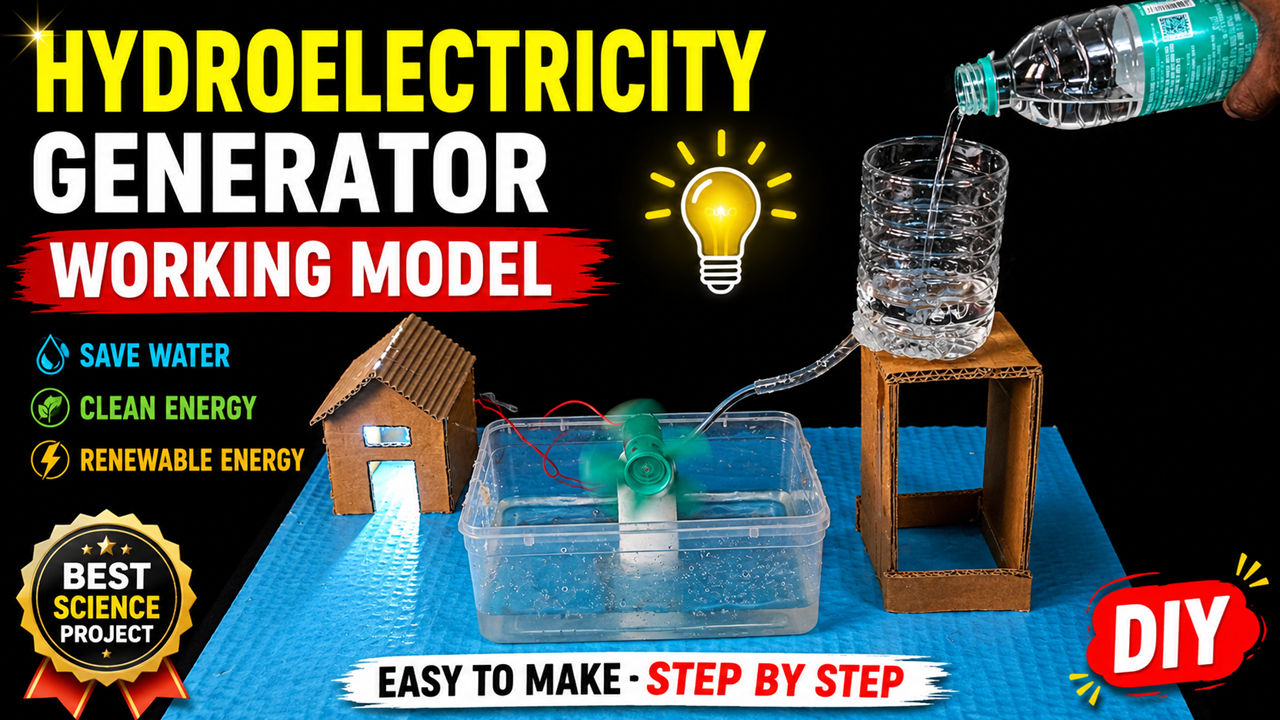
Hydroelectricity is electricity generated by using the energy of moving or falling water. It is one of the most important sources of renewable energy because water is naturally replenished through the water cycle. This project demonstrates how the energy of flowing water can be converted into mechanical energy and then into electrical energy using a small generator.
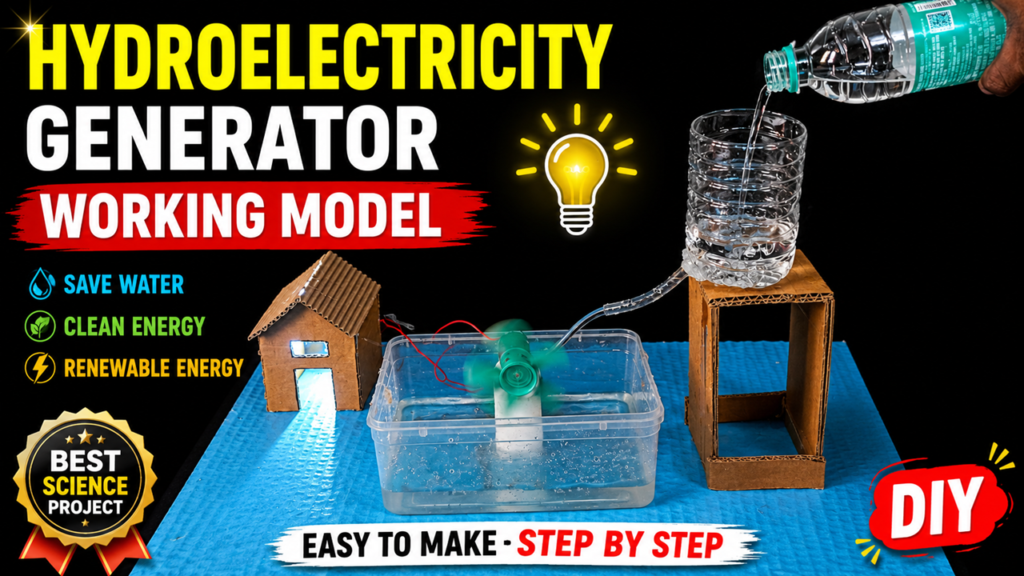
The model shown consists of a water storage tank, water pipe, turbine, small generator, LED light, and miniature house. When water flows from a height through the pipe, it strikes the turbine blades and makes them rotate. The rotating turbine drives the generator, which produces electrical energy and powers the LED.
Working Principle
The working principle is based on the conversion of energy. Water stored at a height possesses potential energy. When the water is released, this potential energy is converted into kinetic energy as the water flows downward.
The fast-moving water strikes the blades of a small turbine. The turbine begins to rotate, converting the water’s energy into mechanical energy. The turbine is connected to a small DC motor used as a generator. As the motor shaft rotates, electrical energy is produced.
The generated electricity travels through wires to an LED or small bulb. When enough water flow and turbine speed are available, the LED lights up. This demonstrates the basic process:
Stored Water → Flowing Water → Turbine Rotation → Generator → Electricity → LED Light
Real hydroelectric power stations use the same basic principle, although they employ much larger dams, turbines, generators, transformers, and electrical systems.
Materials Required
For making this model, you will need a large cardboard or foam-board base, blue chart paper, a transparent plastic container or tray, an empty plastic bottle, flexible plastic tubing, a small DC motor, a small turbine or fan with blades, connecting wires, an LED, a switch if desired, cardboard, glue, tape, scissors, a cutter, ruler, and colored paper.
You can also use recycled cardboard to construct the water tank stand and a small house to demonstrate how the generated electricity can be used.
How to Make the Model
First, prepare a strong rectangular cardboard base and cover it with blue paper to represent water. Place a transparent plastic container in the center of the base. This container will act as the lower water reservoir.
Next, make a raised stand from strong cardboard. Place a plastic bottle or transparent container on top of the stand. This will serve as the water storage tank. Make sure the stand is strong and stable.
Attach one end of a flexible tube to the lower part of the water tank. Position the other end of the tube so that water will flow directly toward the turbine. Seal the connection properly so that water does not leak.
Now install a small turbine in the water path. You can make turbine blades using plastic pieces, bottle material, or a small lightweight fan. Connect the turbine shaft to a small DC motor. The motor will function as a generator when its shaft is rotated by the turbine.
Connect two wires from the motor to an LED. Test the connection by allowing water to flow through the pipe. The water should rotate the turbine, which turns the motor and generates electricity. If the LED does not light, check the wiring, turbine alignment, and water flow.
Finally, build a small cardboard house and connect its LED to the generator to demonstrate how hydroelectricity can be used for lighting. Add labels such as Water Tank, Water Flow, Turbine, Generator, Electricity, and LED Light.
Conclusion
This project demonstrates how the energy of water can be converted into electrical energy without burning fuels. Hydroelectricity is a renewable and relatively clean source of energy when properly managed. It can provide reliable electricity and reduce dependence on fossil fuels. The model makes the concept easy to understand by showing the complete process from stored water to useful electrical power.