
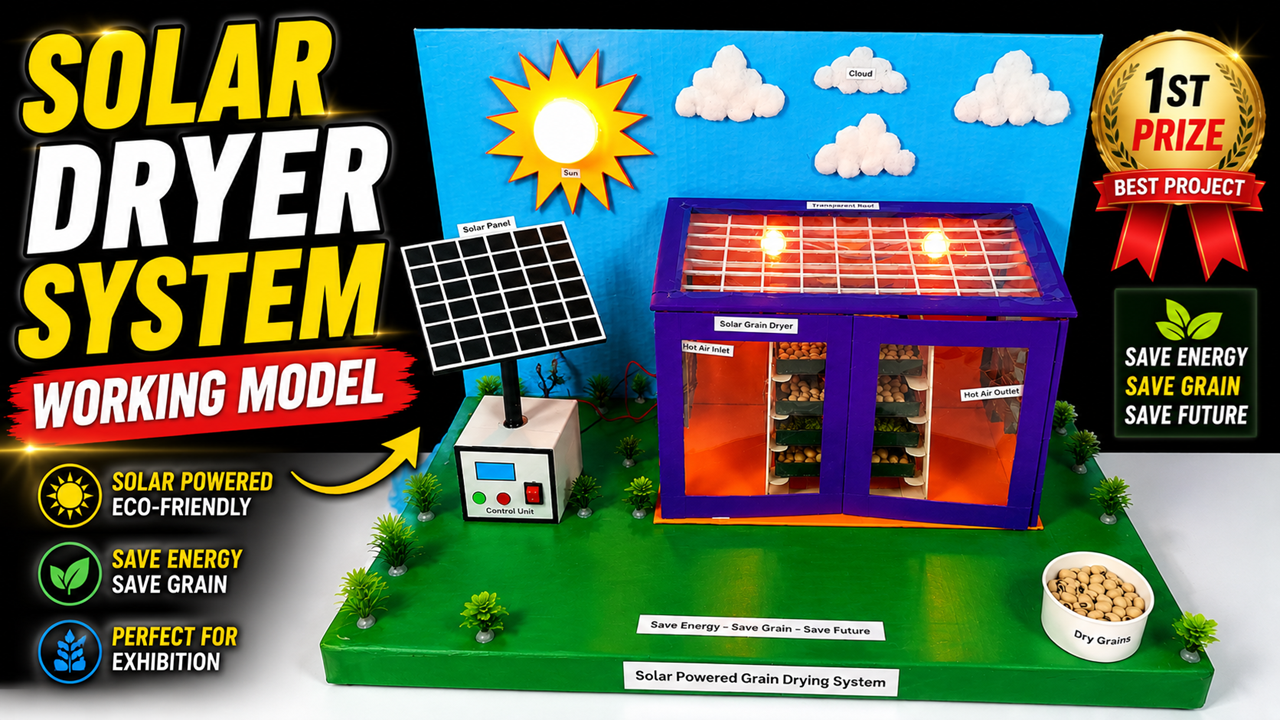
The Solar Dryer System Working Model is an innovative and eco-friendly science exhibition project that demonstrates how solar energy can be used to dry agricultural products such as grains, fruits, vegetables, herbs, and seeds.
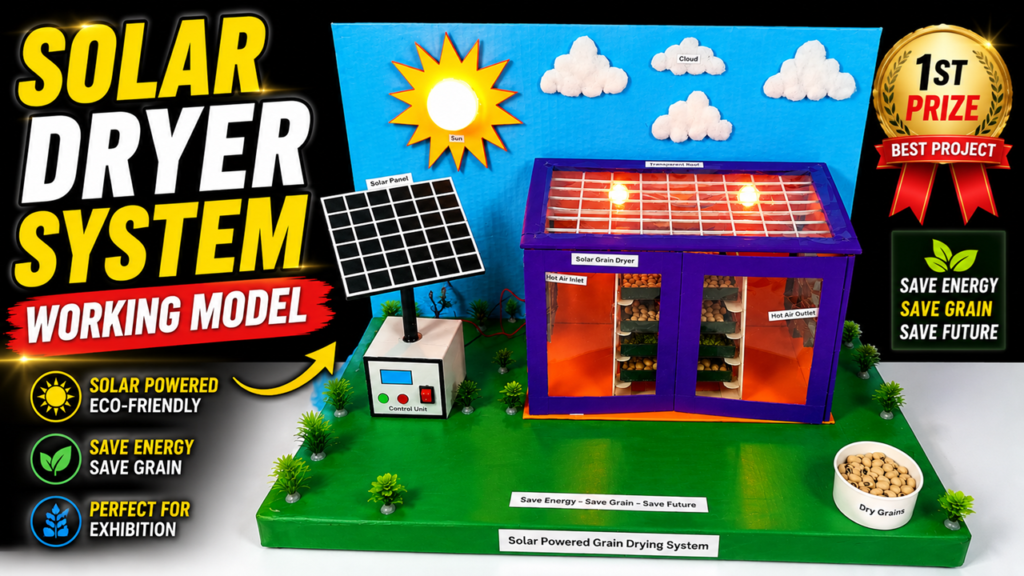
This project combines the concepts of renewable energy, food preservation, and sustainable agriculture, making it an excellent choice for school science exhibitions, STEM competitions, and Inspire Award projects. It is easy to build using cardboard, colour paper, LED lights, a small solar panel, transparent plastic sheet, and simple craft materials.
A solar dryer is a device that uses the heat from the Sun to remove moisture from food products. Drying food helps prevent the growth of bacteria, fungi, and mould, allowing the food to be stored safely for a longer period. Unlike traditional open-sun drying, a solar dryer protects the food from dust, insects, birds, and unexpected rain while improving the quality of the dried products.
In this working model, the solar panel represents the source of electrical energy. The solar panel converts sunlight into electricity, which can be used to operate small DC fans or LED lights inside the drying chamber. The Sun shown in the model represents the natural source of heat that warms the air inside the dryer. During sunny weather, the solar panel generates electricity, making the system energy-efficient and environmentally friendly.
The drying chamber is the main part of the model. It is enclosed with a transparent roof, allowing sunlight to enter while trapping heat inside. This creates a greenhouse effect, increasing the temperature within the chamber. Multiple trays are placed inside the dryer to hold grains, seeds, fruits, or vegetables. Warm air circulates through the trays, removing moisture from the food. As the moisture evaporates, it leaves through the hot air outlet, while fresh air enters through the air inlet, creating continuous airflow.
The working principle of the solar dryer is simple. First, sunlight falls on the transparent cover and heats the air inside the chamber. At the same time, the solar panel converts solar energy into electrical energy to power the fan if required. The warm air passes over the food items placed on the trays. The moisture present in the food changes into water vapour due to the heat. The moist air then exits through the outlet, while fresh air enters from the inlet. This continuous circulation of warm air dries the food evenly and efficiently without the need for conventional electricity.
Solar drying offers several advantages over traditional drying methods. It significantly reduces post-harvest losses by preserving crops for longer periods. Farmers can store surplus produce and sell it later, reducing waste and increasing income. Since the system uses renewable solar energy, it consumes very little or no fossil fuel, making it environmentally friendly. The enclosed chamber also protects food from dust, insects, birds, and contamination, producing cleaner and healthier dried products.
This DIY project also highlights the importance of renewable energy in modern agriculture. With increasing energy costs and climate concerns, solar-powered technologies are becoming more popular worldwide. Solar dryers are especially useful in rural and remote areas where electricity is limited. They help farmers preserve food naturally while reducing dependence on expensive fuel or electric dryers.
Students can use this working model to explain important scientific concepts such as solar energy, heat transfer, greenhouse effect, evaporation, air circulation, and food preservation. The colourful design, solar panel, glowing LEDs, drying trays, and labelled air inlet and outlet make the model visually attractive and easy to understand for judges and visitors.
Applications of Solar Dryer System
- Drying grains and seeds
- Drying fruits such as mangoes, bananas, grapes, and apples
- Drying vegetables like chillies, onions, tomatoes, and leafy vegetables
- Preserving medicinal herbs and spices
- Food storage for farmers and households
Advantages of This Working Model
- Uses clean and renewable solar energy
- Saves electricity and fuel
- Reduces food wastage after harvest
- Protects food from dust and insects
- Easy to build using low-cost materials
- Ideal for science exhibitions and STEM projects
- Demonstrates real-life applications of renewable energy
In conclusion, the Solar Dryer System Working Model is an excellent science exhibition project that demonstrates how renewable energy can solve real-world agricultural problems. It combines scientific principles with practical applications to show how solar energy can preserve food, reduce waste, and protect the environment. This simple DIY model helps students understand sustainable technology while promoting the message: “Save Energy, Save Grain, Save Future.”