
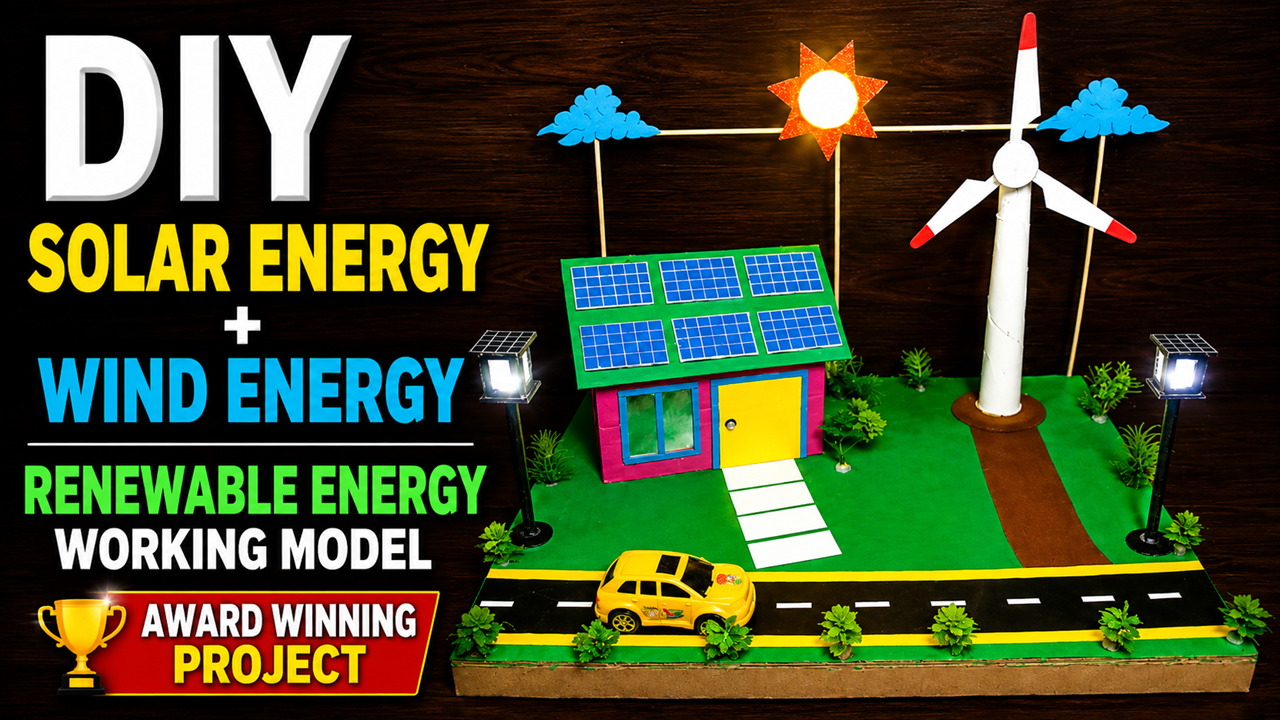
Renewable energy is energy obtained from natural sources that are continuously replenished, such as sunlight and wind.
This Renewable Energy Working Model demonstrates how solar energy and wind energy can be used together to generate clean electricity for homes and street lights.
The project is simple to make and is an excellent science exhibition model for students
In this model, a solar-powered house is connected with a wind turbine. During the daytime, solar panels convert sunlight into electricity, while the wind turbine generates electricity when wind rotates its blades.
The electricity produced can be used to power street lights, houses, and other electrical devices. This project helps students understand the importance of renewable energy and sustainable development.
Materials Required
- Cardboard or Foam Board (Base)
- Green and Black Color Paper
- Small Toy House
- Solar Panel (Mini Solar Panels or Dummy Panels)
- DC Motor (3V–9V)
- White Chart Paper or Foam Sheet (for Wind Turbine)
- LED Lights (2–3)
- 9V Battery
- Battery Connector
- Switch
- Connecting Wires
- Ice Cream Sticks or Wooden Sticks
- Glue Gun / Fevicol
- Small Artificial Plants
- Toy Car
- Scissors and Cutter
- Scale and Pencil
Procedure
Step 1: Prepare the Base
Take a cardboard sheet and cover it with green paper to represent grass. Create a road using black chart paper and add road markings using white strips.
Step 2: Make the Solar House
Create a small house using cardboard. Attach miniature solar panels on the roof. Connect the panels or decorative setup according to your project design.
Step 3: Build the Wind Turbine
Use a DC motor as the turbine generator. Make three blades using foam sheet or thick chart paper and attach them to the motor shaft. Fix the turbine on a tall support made from cardboard tubes or sticks.
Step 4: Install Street Lights
Create street lights using LEDs and small poles. Connect them to the battery through a switch.
Step 5: Add Wiring
Connect the LEDs, battery, switch, and wind turbine neatly. Hide the wires under the base for a clean appearance.
Step 6: Decoration
Add trees, shrubs, toy vehicles, and pathways to make the model attractive and realistic.
Working Principle
The model demonstrates two renewable energy sources:
Solar Energy
Solar panels absorb sunlight and convert it into electrical energy using photovoltaic cells. This electricity can power homes and street lights.
Wind Energy
When wind blows, the turbine blades rotate. The connected DC motor acts as a generator and produces electricity through electromagnetic induction.
By combining solar and wind energy, electricity can be generated even when one source is unavailable. For example, solar panels work during sunny weather, while wind turbines can generate electricity during windy conditions.
Advantages of Renewable Energy
- Environment-friendly and pollution-free
- Reduces dependence on fossil fuels
- Renewable and sustainable source of energy
- Low operating cost
- Helps reduce global warming
- Suitable for rural and urban areas
Conclusion
This Renewable Energy Working Model demonstrates how solar and wind energy can work together to provide clean and sustainable electricity. It helps students understand the importance of green energy and promotes awareness about protecting the environment. This project is ideal for science exhibitions, Inspire Awards, and school competitions because it combines creativity, technology, and environmental conservation in a practical way.