
Good morning everyone.
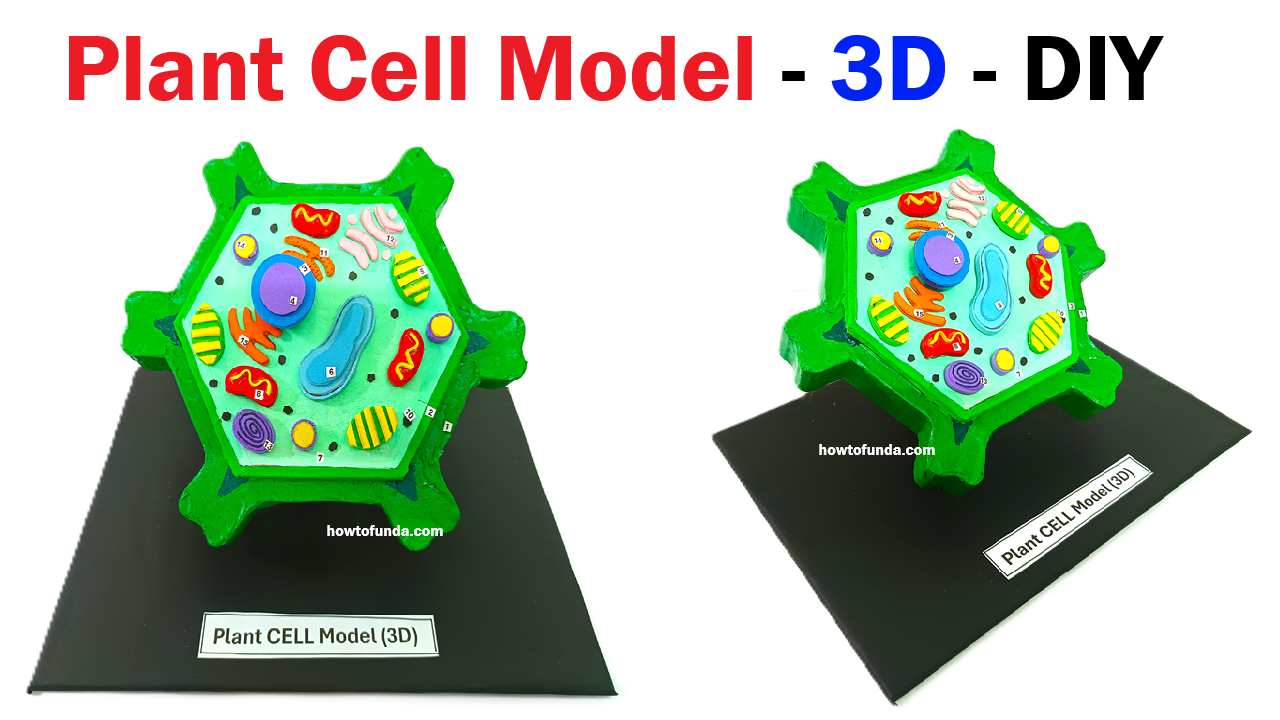
Today I am going to explain my science project on “Plant Cell 3D Model.” This DIY model helps students understand the structure and functions of a plant cell in a simple and creative way.
A cell is called the basic structural and functional unit of life. Plants are made up of millions of cells that perform different activities necessary for growth and survival. Plant cells are different from animal cells because they contain a cell wall and chloroplasts.
This 3D model shows the important parts of a plant cell using different colors and shapes. It helps students learn biology through practical and visual understanding.
Parts of the Plant Cell
1. Cell Wall
The outer thick green boundary is called the Cell Wall. It gives shape, strength, and protection to the plant cell.
The cell wall is made of cellulose and helps the plant remain strong and upright.
2. Cell Membrane
Inside the cell wall is the Cell Membrane. It controls the movement of substances in and out of the cell.
It acts like a protective covering for the cell contents.
3. Cytoplasm
The light green area inside the cell is called the Cytoplasm. It is a jelly-like substance where all cell organelles are present.
Many chemical reactions take place inside the cytoplasm.
4. Nucleus
The purple structure in the center is the Nucleus. It is known as the control center of the cell because it controls all activities of the plant cell.
The nucleus contains DNA, which carries hereditary information.
5. Vacuole
The large blue structure is the Vacuole. Plant cells contain a large central vacuole that stores water, food, and waste materials.
The vacuole also helps maintain the shape of the cell.
6. Chloroplast
The green oval-shaped structures are called Chloroplasts. They contain chlorophyll, which helps plants prepare food by the process of photosynthesis.
Photosynthesis uses sunlight, water, and carbon dioxide to make food for the plant.
7. Mitochondria
The red bean-shaped structures are the Mitochondria. They are known as the powerhouse of the cell because they produce energy through respiration.
8. Endoplasmic Reticulum
The orange folded structures represent the Endoplasmic Reticulum (ER). It helps in transporting materials inside the cell.
9. Golgi Apparatus
The pink folded structure is the Golgi Apparatus. It stores, modifies, and packages proteins and other substances.
10. Ribosomes
The small black dots shown in the model are Ribosomes. They help in protein synthesis.
Materials Used
This DIY project is made using:
- Thermocol or foam sheet
- Cardboard
- Clay or foam pieces
- Paint colors
- Glue
- Marker pens
How to Make the Model
Step 1 – Prepare the Base
Cut the plant cell shape using thermocol or cardboard.
Step 2 – Create Cell Organelles
Make different organelles using colored clay or foam sheets.
Step 3 – Fix the Organelles
Paste all organelles in their correct positions inside the cell.
Step 4 – Paint and Decorate
Use bright colors to make the model attractive and easy to understand.
Step 5 – Label the Parts
Label all organelles properly for exhibition presentation.
Importance of the Project
This project helps students:
- Understand plant cell structure
- Learn functions of organelles
- Improve biology knowledge
- Develop creativity and practical skills
It makes science learning more interesting and interactive.
Advantages of the 3D Model
- Easy to understand
- Attractive and colorful
- Improves visual learning
- Useful for science exhibitions
- Encourages hands-on learning
Conclusion
In conclusion, this Plant Cell 3D Model is an educational and creative science project that explains the structure and functions of a plant cell clearly.
The model helps students identify different cell organelles and understand their functions through practical learning. It also improves creativity and interest in biology.
This project is simple, informative, and perfect for school science exhibitions.