
Introduction
Hydroelectricity is one of the most important and widely used renewable sources of energy. It is produced by converting the energy of flowing or falling water into electrical energy. Hydroelectric power plants generate electricity without producing pollution, making them eco-friendly and sustainable.
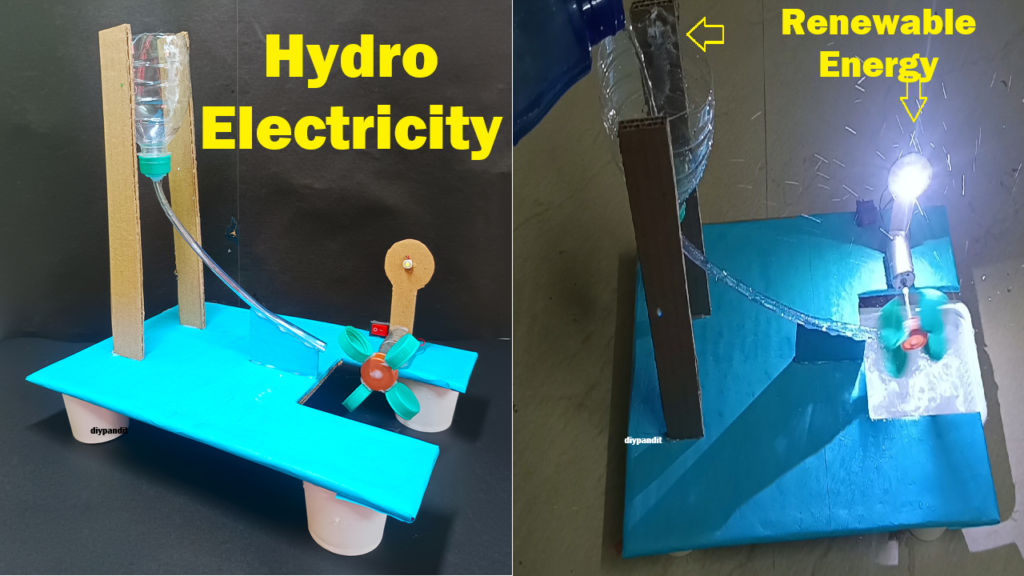
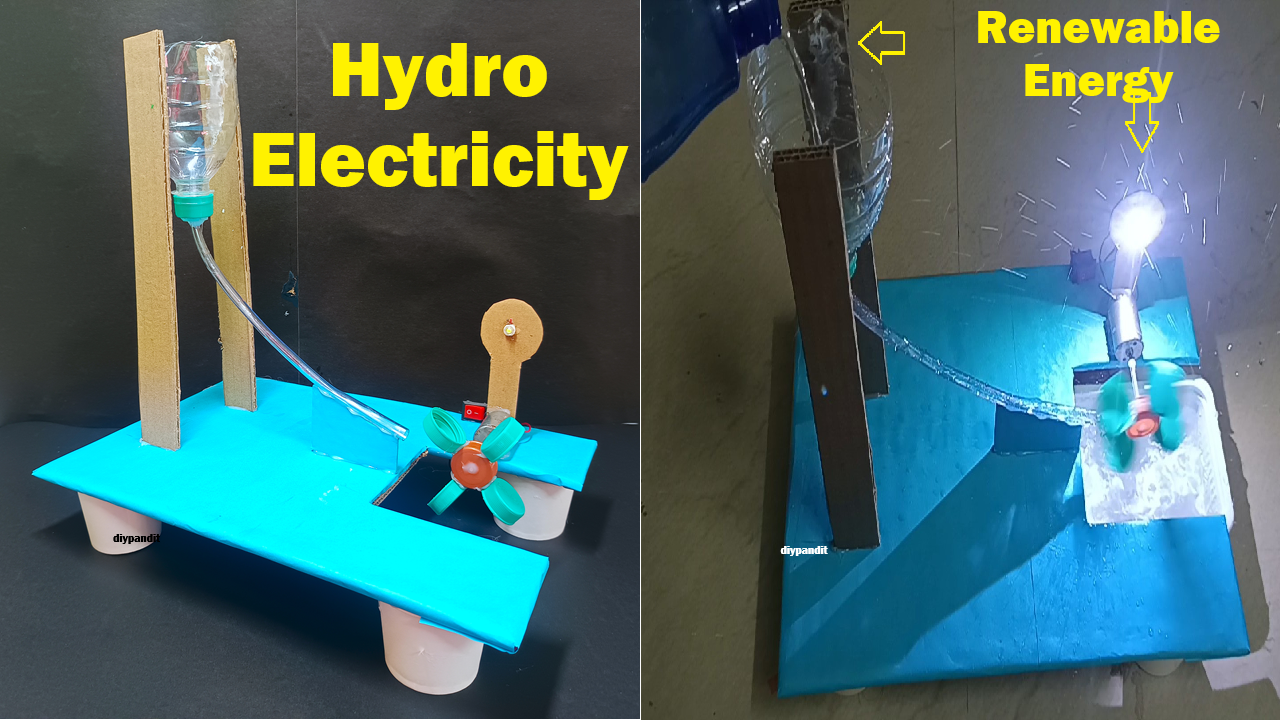
This Hydroelectricity Working Model is a DIY science exhibition project made using simple materials such as a plastic bottle as a water dam, a DC motor with blades made from bottle cups, and LED lights. The model clearly demonstrates how water energy is converted into electrical energy.
Aim of the Project
The main objectives of this project are:
- To understand the working principle of hydroelectric power generation
- To demonstrate energy conversion from water to electricity
- To promote renewable and clean energy sources
- To create a low-cost working model for science exhibitions
Materials Used
- Plastic bottle (water dam)
- Cardboard base
- DC motor (acts as generator)
- Plastic bottle caps or cups (turbine blades)
- LED lights
- Connecting wires
- Switch (optional)
- Glue, tape
- Scissors or cutter
- Water
- Marker pens for labeling
Principle of Hydroelectricity
Hydroelectricity works on the principle of energy conversion. When stored water is released from a height, it flows with force and rotates turbine blades. The rotating turbine turns a generator, which converts mechanical energy into electrical energy.
Construction of the Model
A strong cardboard base is prepared to support the model. A plastic bottle is fixed at a height to represent a dam or water reservoir. A small hole is made near the bottom of the bottle to allow controlled water flow.
Below the outlet, a DC motor is fixed. Bottle cups or caps are attached to the motor shaft to form turbine blades. LED lights are connected to the motor using wires. All components are fixed firmly to prevent water leakage.
Working of the Model
- Water is filled into the plastic bottle dam
- When the outlet is opened, water flows downward due to gravity
- Flowing water strikes the turbine blades
- The turbine rotates the DC motor
- The DC motor generates electricity
- LED lights glow, showing power generation
The faster the water flow, the brighter the LED glows, demonstrating the relationship between water energy and electricity generation.
Scientific Explanation
- Potential energy of stored water converts into kinetic energy while flowing
- Kinetic energy rotates the turbine (mechanical energy)
- DC motor converts mechanical energy into electrical energy
This shows multiple energy transformations in a simple way.
Advantages of Hydroelectricity
- Renewable and non-polluting
- Reduces dependence on fossil fuels
- Low operating cost
- Long-lasting energy source
Limitations
- Requires large amount of water
- High initial construction cost
- Can affect nearby ecosystems
Applications
- Power generation in dams
- Small hydroelectric plants
- Rural electrification
- Renewable energy projects
Educational Importance
- Easy demonstration of renewable energy
- Helps in viva explanations
- Encourages innovation and sustainability
- Ideal for science exhibitions
Safety Measures
- Avoid water contact with wires
- Use low-voltage LEDs
- Fix all components securely
Conclusion
The Hydroelectricity Working Model is an effective and educational science exhibition project. By using a plastic bottle as a dam, a DC motor turbine, and LED lights, the model clearly demonstrates how water energy is converted into electricity. This DIY project promotes awareness about renewable energy and sustainable development.