
Introduction
Sustainable development is the idea of meeting present needs without compromising the ability of future generations to meet their own needs. As cities grow and populations increase, it becomes important to use resources efficiently and protect the environment. A sustainable development working model helps demonstrate how modern cities and agriculture can function together while conserving energy, water, and natural resources.
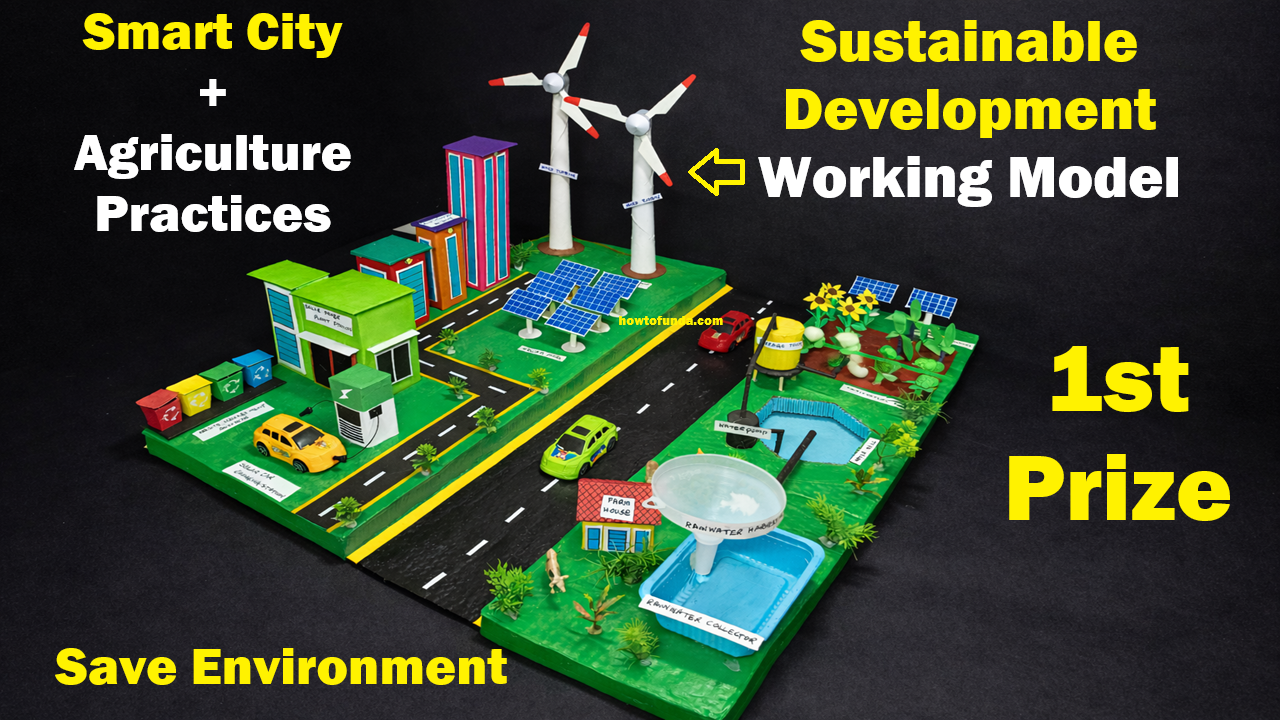
The model shown in the image represents a Smart City integrated with sustainable agriculture practices. It includes renewable energy sources such as solar panels and wind turbines, water conservation systems like rainwater harvesting, modern solar irrigation techniques, and waste management systems. This type of project is ideal for science exhibitions because it shows how technology and environmental responsibility can work together to create a better future.
Concept of Sustainable Development
Sustainable development focuses on three main pillars:
- Environmental Protection – conserving natural resources and reducing pollution.
- Economic Development – promoting growth using efficient technologies.
- Social Well-being – improving quality of life for people.
The model in the image demonstrates these principles by combining smart city infrastructure with eco-friendly agricultural practices. It highlights how renewable energy, efficient water management, and waste recycling can help build environmentally friendly communities.
Smart City Infrastructure
A smart city uses technology and sustainable solutions to improve urban living. In the model, the smart city area includes buildings, roads, vehicles, renewable energy systems, and waste management units.
Modern Buildings
The model shows tall buildings and residential houses that represent urban infrastructure. In real smart cities, buildings are designed to be energy efficient by using solar power, natural lighting, and sustainable construction materials.
Smart Transportation
The roads and cars shown in the model represent transportation systems. Smart cities encourage the use of electric vehicles and efficient public transport to reduce air pollution and carbon emissions.
Solar Power Generation
Solar panels are installed in the city area of the model. These panels capture sunlight and convert it into electricity using photovoltaic cells. Solar energy is one of the most popular renewable energy sources because it is clean, abundant, and renewable.
Electricity generated from solar panels can power homes, streetlights, and industries, reducing dependence on fossil fuels.
Wind Energy System
The model also includes wind turbines, which represent another renewable energy source. Wind turbines generate electricity by converting the kinetic energy of moving air into mechanical energy.
When wind blows, it rotates the turbine blades. These blades turn a generator that produces electricity. Wind energy is widely used around the world because it produces electricity without causing pollution.
In the smart city model, wind turbines help supply clean electricity to the city infrastructure.
Rainwater Harvesting System
Water conservation is an important part of sustainable development. The model shows a rainwater harvesting system that collects rainwater and stores it for later use.
Rainwater harvesting works in the following way:
- Rainwater falls on rooftops and surfaces.
- The water is collected through pipes and channels.
- It is directed into storage tanks or reservoirs.
- The stored water can be used for irrigation, washing, and household needs.
This system helps reduce water shortages, recharge groundwater, and decrease dependence on municipal water supply.
Solar Irrigation for Agriculture
Agriculture requires a large amount of water and energy. Traditional irrigation systems often rely on diesel pumps or electricity from fossil fuels. In contrast, the model demonstrates a solar irrigation system.
Solar irrigation uses solar panels to power water pumps. These pumps draw water from wells, ponds, or tanks and distribute it to agricultural fields.
The benefits of solar irrigation include:
- Reduced energy costs
- Environmentally friendly operation
- Reliable water supply for crops
- Reduced dependence on fossil fuels
This technology is especially useful in rural areas where electricity supply may be limited.
Agricultural Practices in the Model
The agricultural section of the model represents sustainable farming practices. The farm area includes plants, crops, and irrigation systems.
Sustainable agriculture focuses on:
- Efficient water use
- Organic farming methods
- Reduced chemical fertilizers
- Soil conservation
By combining modern irrigation systems with renewable energy, farmers can improve productivity while protecting the environment.
Waste Management SystemWaste management is another important component of sustainable cities. The model includes colored waste bins representing waste segregation.
Waste is typically divided into three categories:
- Organic Waste – food scraps and biodegradable materials
- Recyclable Waste – plastic, paper, and metal
- Non-recyclable Waste – materials that cannot be reused
Proper waste management reduces pollution and allows recyclable materials to be processed into new products.
In many smart cities, organic waste is converted into biogas or compost, which can be used for energy generation or agriculture.
Integration of City and Agriculture
One of the most interesting aspects of this model is the integration of urban and rural systems. The city produces energy using solar and wind power, while the agricultural area uses solar irrigation and rainwater harvesting.
This connection demonstrates how cities and farms can support each other in a sustainable ecosystem.
For example:
- Renewable energy powers irrigation systems.
- Rainwater harvesting provides water for crops.
- Organic waste from cities can be used as compost in agriculture.
This approach reduces environmental impact and promotes efficient resource use.
Educational Importance of the Model
A sustainable development working model is an excellent project for science exhibitions because it helps students understand important global challenges such as climate change, resource conservation, and renewable energy.
This model teaches students about:
- Renewable energy technologies
- Water conservation methods
- Sustainable agriculture
- Waste management practices
- Smart city infrastructure
It also encourages creativity, innovation, and environmental awareness.
Benefits of Sustainable Development
Sustainable development offers many advantages for society and the environment.
Some key benefits include:
- Reduced environmental pollution
- Conservation of natural resources
- Improved energy efficiency
- Increased agricultural productivity
- Better quality of life for communities
By adopting sustainable practices, cities and villages can become cleaner, healthier, and more resilient.
Conclusion
The Smart City and Sustainable Agriculture Working Model effectively demonstrates how modern technology and environmental responsibility can work together. By incorporating renewable energy sources such as solar and wind power, water conservation techniques like rainwater harvesting, and efficient agricultural practices such as solar irrigation, the model presents a vision of a sustainable future.
This type of science exhibition project not only explains important scientific concepts but also highlights practical solutions for global environmental challenges. It shows that with innovation, planning, and responsible resource management, it is possible to build cities and communities that are both technologically advanced and environmentally sustainable.
Such projects inspire students to think about sustainable living and encourage the development of technologies that protect the Earth for future generations.