

Introduction
Renewable energy plays a crucial role in protecting the environment and reducing dependence on fossil fuels. As the demand for electricity continues to increase worldwide, it is important to adopt clean and sustainable energy sources. One of the most widely used renewable energy sources is solar energy, which harnesses the power of sunlight to produce electricity.
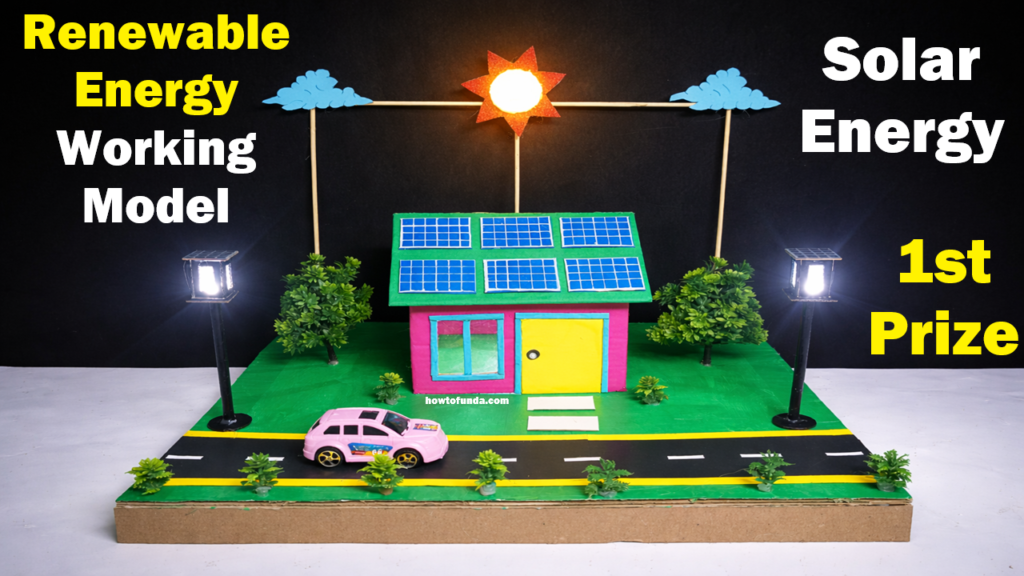
The working model shown in the image demonstrates a solar energy–powered house system. It represents how sunlight can be converted into electrical energy using solar panels to power streetlights and household electricity. This type of project is commonly used in science exhibitions to explain renewable energy concepts in a simple and practical way. The model includes a house with solar panels on the roof, LED streetlights, decorative trees, and a road with a vehicle to represent a modern sustainable neighborhood.
This project helps students understand the importance of solar power and how it can be used in everyday life.
Concept of Solar Energy
Solar energy is produced by converting sunlight into electricity using solar panels, also known as photovoltaic (PV) panels. These panels contain photovoltaic cells that absorb sunlight and convert it into electrical energy.
The basic process of solar energy generation includes:
- Sunlight falls on the solar panels.
- Photovoltaic cells absorb the sunlight.
- The cells convert solar energy into electrical energy.
- The generated electricity powers lights, homes, and other electrical devices.
Solar energy is considered a clean and renewable source of power because it does not produce pollution and the sun is an unlimited natural resource.
Materials Required
To build this solar energy working model, the following materials are required:
- Cardboard or thermocol sheet for the base
- Small model house made from cardboard
- Decorative solar panel sheets or printed panels
- LED lights or small bulbs
- Electric wires
- Small rechargeable battery
- Solar panel (mini solar cell)
- Switch
- Streetlight poles made from sticks or plastic rods
- Artificial trees and plants
- Toy car
- Glue gun and adhesive
- Paints and colored papers
- Cutter and scissors
These materials are easily available and inexpensive, making the project suitable for students.
Steps to Make the Model
Step 1: Prepare the Base
Start by taking a rectangular cardboard or thermocol board as the base of the model. Cover it with green paper or paint to represent grass. Draw or stick a black strip of paper to create a road across the model.
Step 2: Construct the House
Make a small house using cardboard or foam board. Paint it with bright colors to make it visually appealing. Place the house at the center of the base. This house represents a solar-powered home.
Step 3: Install Solar Panels
Attach small solar panel models on the roof of the house. These panels represent the photovoltaic cells that collect sunlight and convert it into electricity.
In an actual working model, a small solar cell can be connected to a rechargeable battery that stores the generated electricity.
Step 4: Install Streetlights
Place two streetlight poles on either side of the road using sticks or plastic rods. Attach LED lights at the top of these poles. Connect the wires from the LEDs to the solar power system so the lights can be powered by solar energy.
Step 5: Add Landscape and Decorations
Decorate the model with small trees, plants, and bushes to create a realistic environment. Add a toy car on the road to represent transportation in a modern city.
These decorative elements make the model more attractive and help explain the concept of a sustainable neighborhood.
Step 6: Electrical Connections
Connect the solar panel to a small battery and then to the LED lights using wires. A switch can be added to control the lighting system. When sunlight falls on the solar panel, electricity is generated and stored in the battery, which powers the streetlights.
Working Principle of the Model
The working model demonstrates the conversion of solar energy into electricity. When sunlight falls on the solar panels placed on the roof of the house, the photovoltaic cells convert solar energy into electrical energy. This electricity is then used to power the LED streetlights in the model.
In real life, solar panels installed on rooftops or solar farms generate electricity that can be used for homes, industries, and public infrastructure such as street lighting.
Advantages of Solar Energy
Solar energy has several important advantages:
- It is renewable and unlimited.
- It does not produce harmful pollution.
- It reduces electricity costs.
- It requires low maintenance.
- It helps reduce dependence on fossil fuels.
Because of these benefits, solar energy is becoming one of the most popular renewable energy sources worldwide.
Conclusion
The solar energy working model is a simple yet powerful demonstration of renewable energy technology. It shows how sunlight can be converted into electricity to power homes and streetlights. By building this model, students can better understand the concept of solar power and its importance in creating a sustainable future.
Such science exhibition projects encourage students to think about innovative solutions for energy conservation and environmental protection. Solar energy represents a promising step toward a cleaner, greener, and more sustainable world.