
Introduction
Water is one of the most essential natural resources for life. Efficient water management is important for homes, industries, and agriculture. In many households, water tanks are used to store water, but people often face problems such as water overflow or shortage because they cannot easily monitor the water level inside the tank. To solve this problem, a water level indicator with alarm system is used.
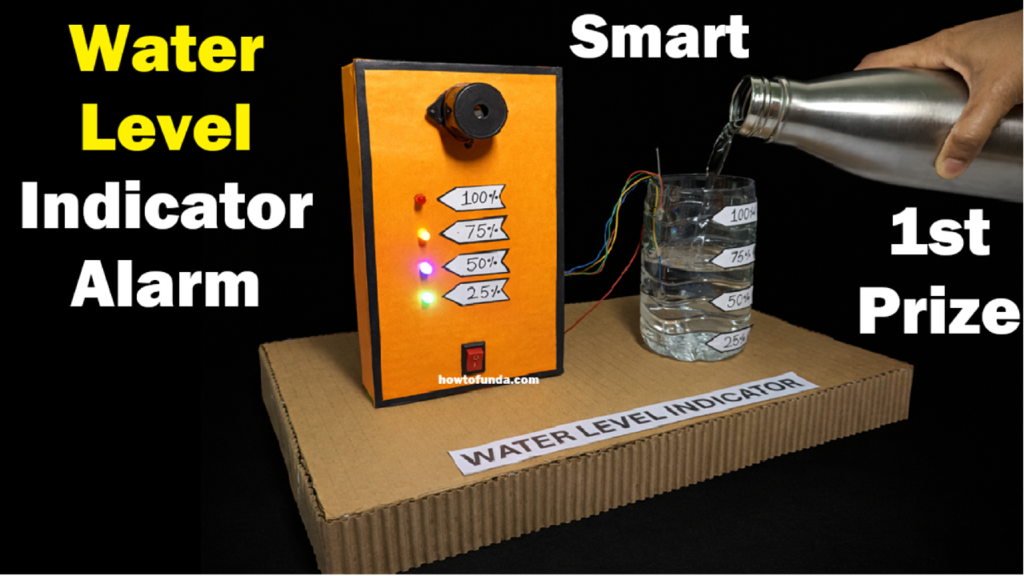
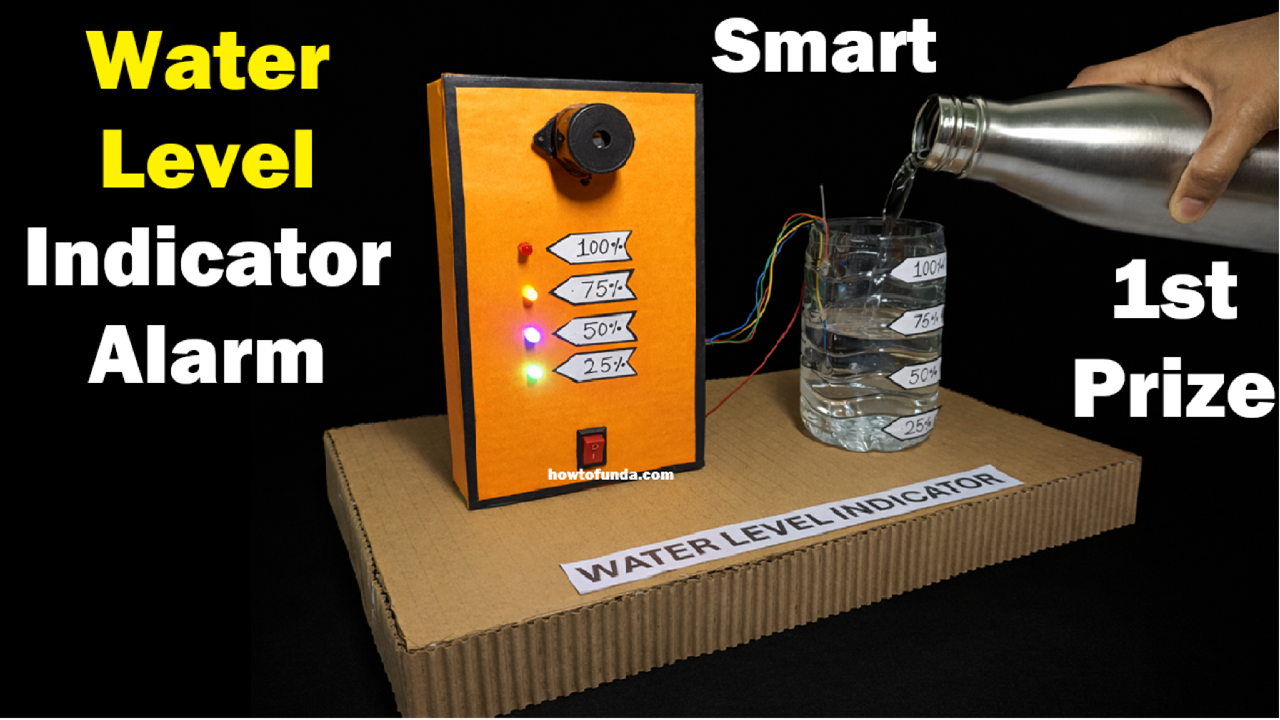
The model shown in the image represents a smart water level indicator working model designed for a science exhibition. This system uses electronic components such as wires, LEDs, and a buzzer to detect the water level in a tank and display it using indicator lights. When the tank becomes full, the system activates an alarm to alert the user. This project helps demonstrate how simple electronic circuits can be used for water conservation and efficient resource management.
Concept of the Water Level Indicator
A water level indicator works on the principle of electrical conductivity of water. Water contains minerals and impurities that allow electricity to pass through it. When water touches metal probes placed at different heights inside the tank, it completes an electrical circuit.
Each probe corresponds to a specific water level, such as 25%, 50%, 75%, and 100%. When water reaches a particular level, the corresponding LED light turns on, indicating the current water level. When the water reaches the maximum level, a buzzer alarm is activated to warn that the tank is full.
This system helps prevent water wastage and allows users to monitor the tank without opening it.
Components Used in the Model
The water level indicator model uses several basic electronic components, including:
- LEDs (Light Emitting Diodes)
- Buzzer or alarm
- Resistors
- Connecting wires
- Battery or power supply
- Switch
- Metal probes or sensors
- Water container (representing a tank)
- Cardboard box for circuit housing
These components work together to detect water levels and display them visually and audibly.
Structure of the Model
The project model consists of two main sections.
Indicator Panel
The vertical panel in the model contains:
- Four LED lights representing different water levels
- A buzzer for the alarm system
- A switch to turn the system on or off
- Labels indicating water levels such as 25%, 50%, 75%, and 100%
The LEDs glow when water reaches the corresponding sensor inside the tank.
Water Tank Section
The water tank is represented by a transparent container with level markings. Several metal wires are placed inside the container at different heights to act as water level sensors. These sensors are connected to the circuit in the indicator panel.
When water is poured into the tank, it touches the sensors one by one, completing the electrical circuits and lighting the LEDs.
Steps to Make the Water Level Working Model
Step 1: Prepare the Base
Start by taking a cardboard sheet as the base platform for the project. Place a transparent container on one side to represent the water tank and keep space for the indicator panel.
Step 2: Build the Indicator Box
Create a rectangular box using cardboard or foam board. Paint or decorate the box to make it visually appealing. Install the LED lights vertically on the front panel and label them as 25%, 50%, 75%, and 100%.
Install a buzzer on the top of the box and a switch at the bottom to control the system.
Step 3: Install Sensors in the Tank
Insert metal wires or probes into the water container at different heights corresponding to the water level markings. These wires act as sensors and are connected to the LED indicators using electrical wires.
Step 4: Connect the Circuit
Connect the sensors to the LEDs and buzzer through resistors and wires. The lowest probe acts as a reference connection, while the other probes activate LEDs when water touches them.
When the water reaches the highest sensor, the circuit activates the buzzer alarm.
Step 5: Demonstration
Pour water into the container slowly. As the water level increases:
- The 25% LED lights up first
- Then the 50% LED
- Followed by the 75% LED
- Finally the 100% LED lights up and the buzzer alarm sounds
This demonstrates how the system monitors water levels automatically.
Advantages of the Water Level Indicator
This system offers several benefits:
- Prevents water overflow from tanks
- Helps conserve water
- Saves electricity used by water pumps
- Provides automatic monitoring
- Easy and inexpensive to build
Water level indicators are commonly used in homes, industries, and water storage systems.
Conclusion
The water level indicator with alarm working model is a practical and innovative science project that demonstrates the use of electronics for water management. It clearly shows how sensors and circuits can be used to detect water levels and alert users when the tank becomes full.
By building this model, students learn about electrical circuits, conductivity of water, and real-world applications of electronics. Such projects not only improve scientific understanding but also encourage creative thinking and problem-solving skills. Implementing similar systems in real life can help conserve water and promote efficient resource management.