
Introduction
Waste management is one of the most serious challenges faced by modern society. With increasing population, urbanization, and consumption, the amount of waste generated every day is rising rapidly. Improper disposal of waste leads to environmental pollution, health hazards, blockage of drainage systems, and spread of diseases. Therefore, effective waste management is essential to keep our surroundings clean, healthy, and sustainable.
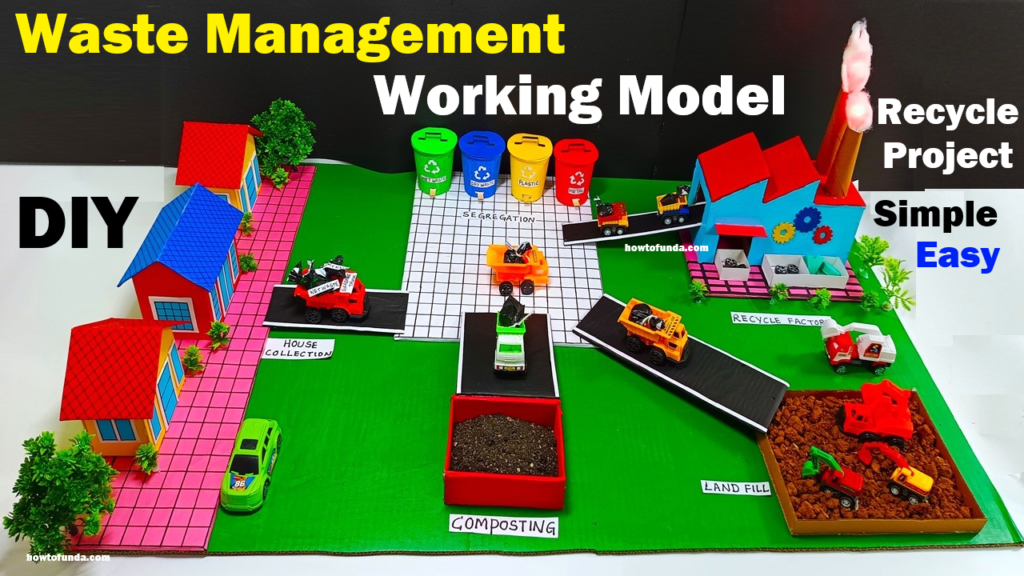
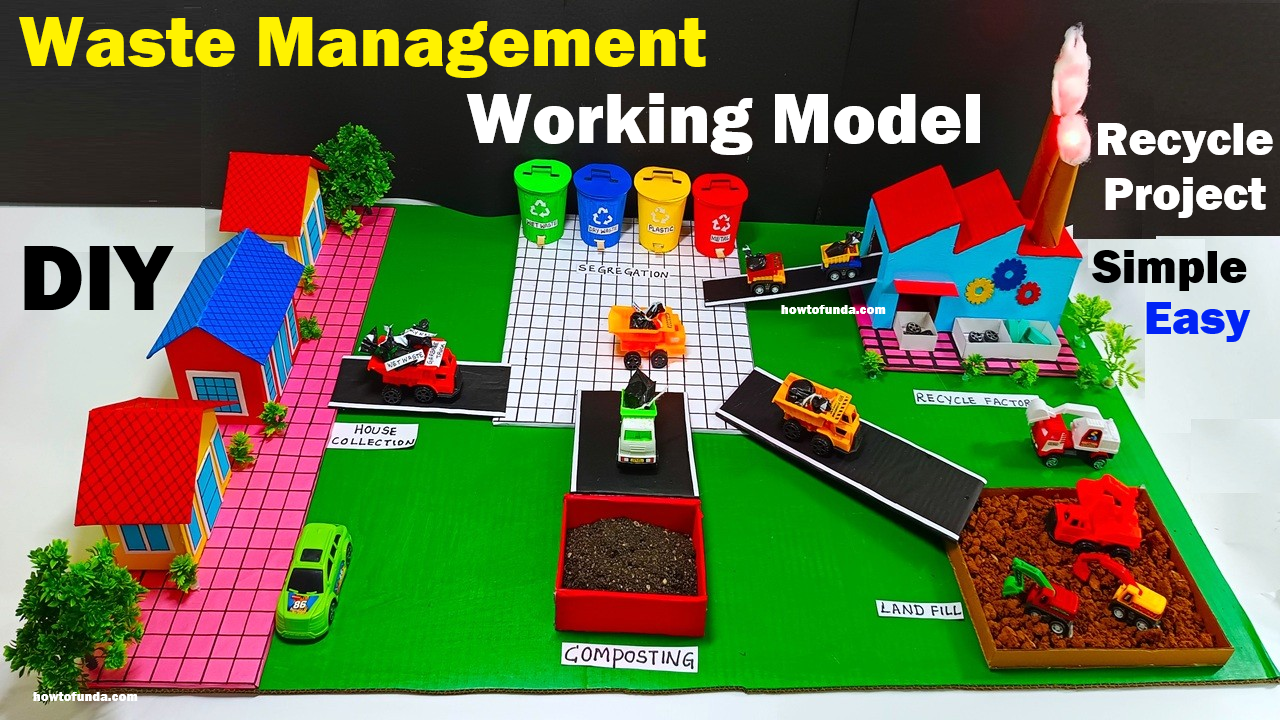
This Waste Management Working Model with Recycling demonstrates a systematic method of waste collection, segregation, recycling, composting, and safe disposal. The model focuses on the concept of Reduce, Reuse, and Recycle (3R’s) and shows how scientific waste management can protect the environment and conserve natural resources.
Aim of the Project
The main aims of this project are:
- To understand the importance of proper waste management
- To demonstrate waste segregation at source
- To explain recycling and composting processes
- To reduce environmental pollution
- To create awareness about sustainable waste disposal methods
Concept of Waste Management
Waste management is the process of collecting, transporting, segregating, treating, recycling, and disposing of waste materials in a safe and scientific manner. Waste can be broadly classified into:
- Biodegradable waste (food waste, vegetable peels, paper)
- Non-biodegradable waste (plastic, metal, glass)
- Hazardous waste (batteries, chemicals, e-waste)
Proper segregation at the source is the first and most important step in waste management.
Description of the Working Model
The model is designed using cardboard and low-cost materials. It represents a city or residential area connected to a waste management system. The model is divided into the following stages:
- Waste collection from houses
- Waste segregation
- Recycling of dry waste
- Composting of wet waste
- Final disposal of residual waste
1. Waste Collection from Houses
In this model, houses are shown generating different types of waste such as kitchen waste, paper, plastic, and metal. Waste is collected using separate bins placed outside the houses:
- Green Bin – Wet / biodegradable waste
- Blue Bin – Dry / recyclable waste
- Red Bin – Hazardous waste
This stage emphasizes the importance of segregation at the household level.
2. Waste Segregation Unit
Collected waste is transported to a waste segregation center. Here, waste is further separated manually or mechanically into different categories such as plastic, paper, metal, glass, and organic waste.
Proper segregation ensures that recyclable materials do not mix with organic waste, making recycling efficient and cost-effective.
3. Recycling of Dry Waste
Dry waste like plastic, paper, metal, and glass is sent to the recycling unit.
- Plastic waste is cleaned, shredded, melted, and reused to make new plastic products.
- Paper waste is pulped and recycled into new paper.
- Metal waste is melted and reused in manufacturing.
- Glass waste is crushed and remolded into new glass products.
Recycling helps conserve natural resources, save energy, and reduce the amount of waste sent to landfills.
4. Composting of Wet Waste
Biodegradable waste such as food scraps and garden waste is sent to the composting unit. In this process, microorganisms break down organic waste into nutrient-rich compost.
The compost produced is used as natural fertilizer for agriculture, gardens, and parks. This reduces the need for chemical fertilizers and improves soil health.
5. Final Disposal of Residual Waste
Waste that cannot be recycled or composted is sent to a sanitary landfill. In a scientific landfill, waste is covered with soil layers to prevent air, water, and soil pollution.
This stage highlights the importance of minimizing landfill waste by maximizing recycling and composting.
Environmental Benefits of Waste Management
- Reduces air, water, and soil pollution
- Prevents spread of diseases
- Conserves natural resources
- Saves energy through recycling
- Reduces greenhouse gas emissions
Importance of Recycling
Recycling plays a key role in sustainable waste management. It:
- Reduces the need for raw materials
- Saves energy and water
- Decreases pollution
- Creates employment opportunities
- Promotes circular economy
Educational Importance of the Model
- Helps students understand real-life waste problems
- Encourages responsible behavior toward waste disposal
- Promotes environmental awareness
- Easy to explain during exhibitions and viva
Conclusion
This Waste Management Working Model with Recycling clearly demonstrates how waste can be managed scientifically from collection to disposal. By practicing segregation, recycling, and composting, we can significantly reduce pollution and protect the environment.
The model delivers a strong social message: Waste is not useless; it becomes a resource when managed properly. Adopting proper waste management practices is essential for a clean, green, and sustainable future.