
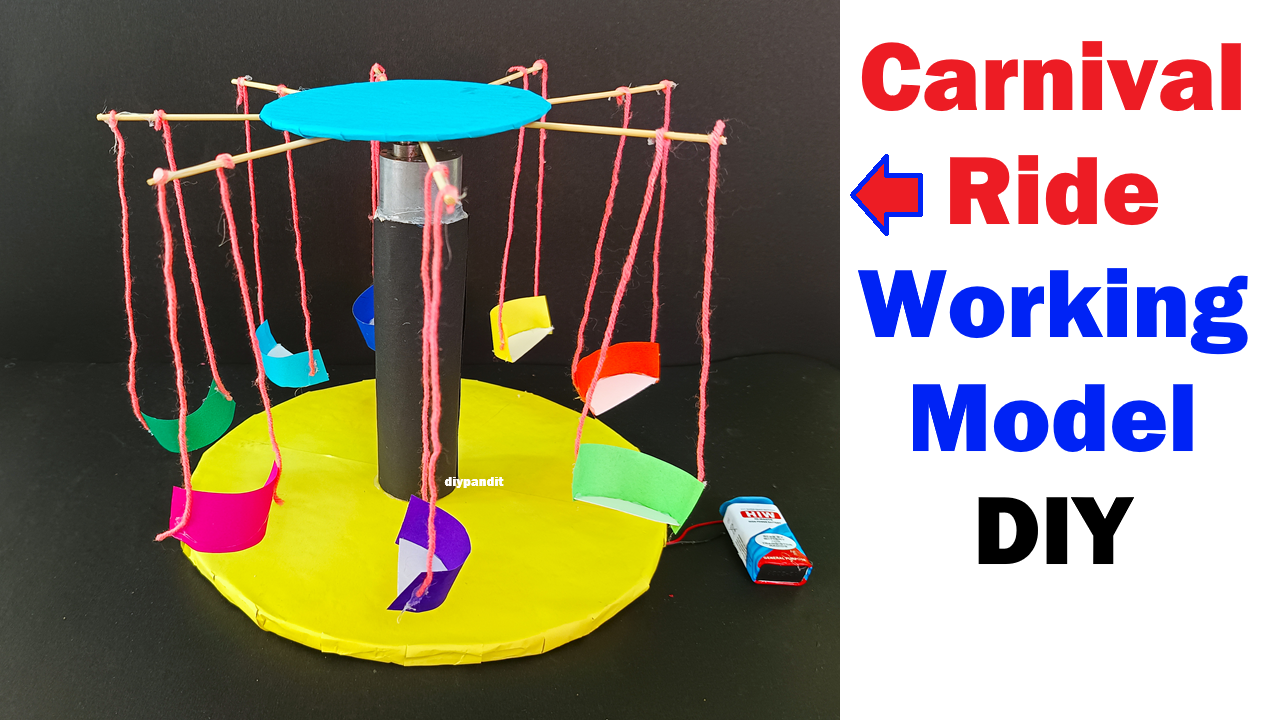
In this video, we show you how to build an exciting Carnival Ride working model (Merry-Go-Round) using simple materials and a DC motor. This interactive project is perfect for school science exhibitions, science fairs, classroom demonstrations, and DIY engineering displays.
It demonstrates basic principles of rotational motion, mechanical engineering, and electrical circuits in a fun and engaging way.
A merry-go-round (or carousel) is one of the most popular rides at amusement parks and carnivals. It rotates in a circular motion, creating a thrilling experience for riders. In this working model, we simulate the same motion on a smaller scale using cardboard, a DC motor, a power source, and decorative elements.
The model helps illustrate how electric power can be converted into mechanical rotational motion, making it an ideal example of applied physics.
Materials Used (Simple & Low-Cost)
Here are the materials you’ll need to build your working model:
- Cardboard – for the base, platform, and decorations
- DC motor – small hobby motor to drive rotation
- Battery pack (e.g., 9 V battery with holder)
- Switch – to turn your model on/off
- Wires and connectors
- Glue or hot glue gun
- Colored paper, markers, and craft supplies – for decoration
- Optional: small figures or cut-outs to place on the merry-go-round platform 🛞
How the Working Model Is Built
1. Prepare the Base and Platform
Start by cutting a large circular piece of cardboard that will serve as the base of your merry-go-round. This base should be stable and strong enough to support the entire model. Next, prepare a smaller circular platform that will rotate. This platform represents the top of the ride where riders would stand.
2. Attach the DC Motor
Fix the DC motor at the center of the base using glue or tape. Ensure the motor’s shaft is pointing upward. This shaft will be the axis around which the merry-go-round rotates.
3. Connect the Rotating Platform
Attach the rotating platform onto the motor’s shaft. This can be done by inserting the shaft through a hole in the center of the platform and securing it with glue or a fastener. When the motor is powered on, this platform will spin, just like a real carnival ride.
4. Electrical Connections
Connect the motor to a battery pack and switch. One wire from the motor should go to the switch, and the other wire from the switch should go to one terminal of the battery. The remaining wire from the motor goes directly to the other terminal of the battery pack. Once connected, flipping the switch will activate the motor and start the rotation.
5. Decoration and Details
Decorate the base and platform using colored paper, markers, or stickers. You can also add small figures, animals, or seats to make your model look like a real carnival ride. This not only makes your project visually appealing but also helps explain the concept during exhibitions.
Concept and Explanation
The Working Model Merry-Go-Round teaches several important scientific principles:
- Rotational Motion: The DC motor converts electrical energy into mechanical energy that causes the platform to spin.
- Energy Conversion: Electricity from the battery powers the motor, demonstrating how energy can change forms in a system.
- Mechanical Engineering: The model shows how simple machines and rotating structures are built and operate in real-world applications.
This model is an excellent tool to explain to your audience how simple electrical components like motors and switches can be used to create moving, dynamic exhibits. It’s also a fun way for students to learn the basics of circuits, motion, and design.
Why This Project Is Great for Exhibitions
This DIY Carnival Ride working model captures attention and makes learning interactive. Exhibitors can show how flipping a switch starts the ride, how the platform spins smoothly, and how motion is created using everyday materials. It also encourages students to explore further topics like gear ratios, motor speed control, and even solar powering the ride for advanced projects.