
Introduction
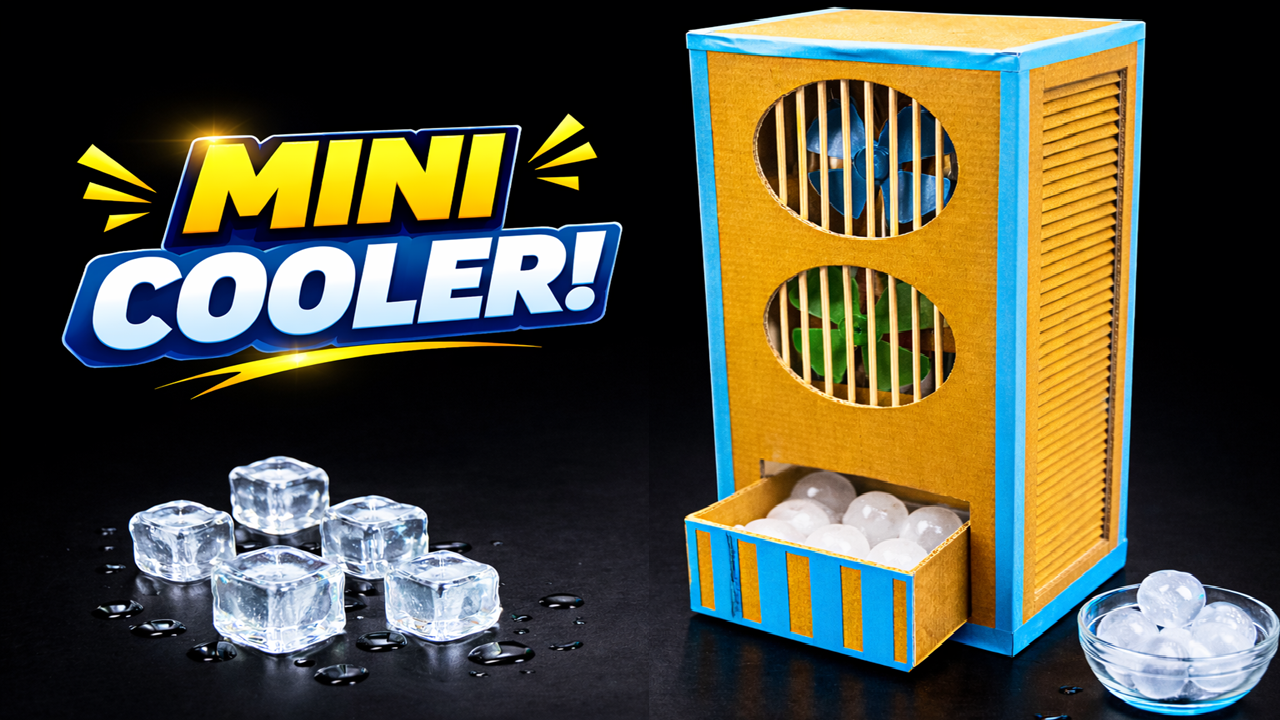
During hot summer days, staying cool becomes a challenge, especially without air conditioning. This DIY Mini Cooler made from cardboard is a creative and budget-friendly solution that can be built easily at home. It is also a perfect project for school exhibitions and summer vacation activities. This model demonstrates basic scientific principles like air circulation and evaporative cooling in a simple and practical way.
Materials Required
To build this mini cooler, you only need a few easily available materials:
- Cardboard box
- Small DC fan or motor fan
- Ice cubes
- Plastic container or tray
- Glue gun or Fevicol
- Cutter and scissors
- Battery or power supply
- Wooden sticks (optional for support)
Working Principle
The working of this mini cooler is based on the concept of evaporative cooling. When air passes over ice or cold surfaces, it loses heat and becomes cooler.
In this model:
- The fan pulls warm air from outside
- The air passes over ice placed inside the box
- The cooled air is then pushed out through the front openings
This simple mechanism creates a refreshing flow of cool air without using complex technology.
How It Works (Step-by-Step Idea)
- A cardboard box is designed with openings for airflow
- A small fan is installed at the back or side
- A tray filled with ice cubes is placed inside
- When the fan runs, it draws air through the ice section
- Cool air comes out from the front vents
The design can be customized by adding grills, multiple fans, or better airflow channels.
Advantages of This Project
- Low-cost and eco-friendly
- Does not require heavy electricity
- Easy to understand and explain
- Ideal for school science exhibitions
- Uses recyclable materials like cardboard
Educational Value
This project helps students understand:
- Basics of heat transfer
- Airflow and ventilation
- Practical application of science concepts
- Importance of sustainable solutions
It also encourages creativity and problem-solving skills.
Applications
- Personal desk cooler
- Small room cooling (limited effect)
- Science fair demonstrations
- DIY learning projects
Limitations
- Cooling is temporary (depends on ice)
- Not as powerful as real air conditioners
- Requires regular replacement of ice
Conclusion
The DIY Mini Cooler is a fun and educational project that combines creativity with science. It shows how simple materials can be used to solve everyday problems like heat. Whether you are preparing for a school exhibition or just want to try something innovative during summer vacation, this project is a great choice.