
1. Introduction
Good morning, respected judges, teachers, and my dear friends.
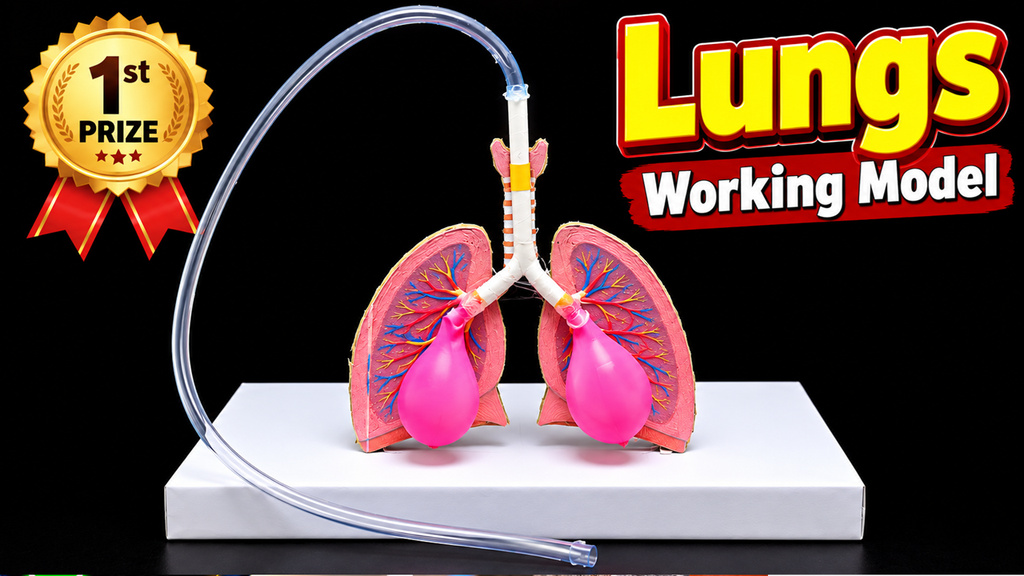
Today, I am going to explain my science project, “Human Respiratory System Working Model.”
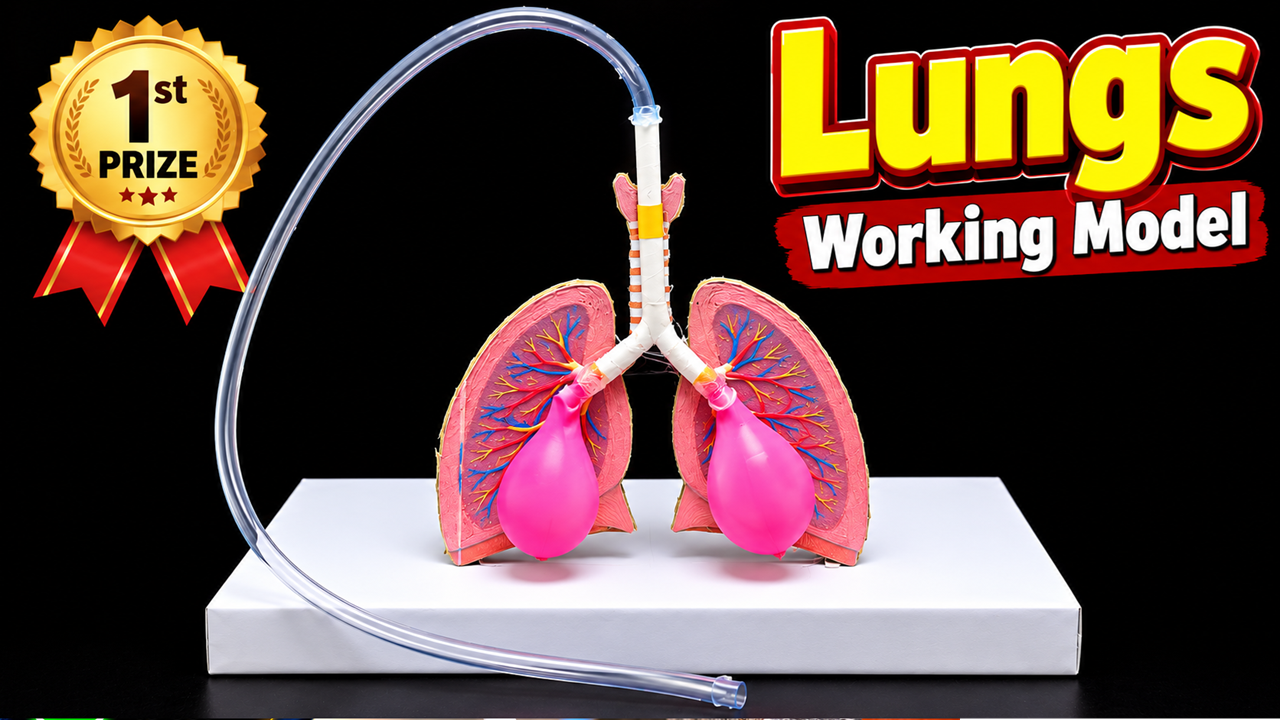
The respiratory system helps us breathe. It supplies oxygen to our body and removes carbon dioxide. The main organs of this system include the nose, trachea, bronchi, and lungs.
My working model demonstrates how the lungs inflate and deflate during breathing using balloons and a flexible tube.
2. Materials Required
- Cardboard or foam board for the base.
- Two small balloons to represent the lungs.
- One larger balloon or flexible membrane to represent the diaphragm.
- Plastic Y-shaped tubing or connected straws to represent the trachea and bronchi.
- A transparent flexible tube for airflow.
- Tape, glue, scissors, and coloured paper.
- Cardboard cutouts to represent the lungs and their internal structures.
3. Making Process
Step 1: Prepare the base
Take a thick cardboard sheet and cover it with white chart paper. This will provide a stable platform for the model.
Step 2: Make the trachea
Use a plastic tube or straw to represent the trachea, also called the windpipe. Attach a Y-shaped connector at the bottom to represent the two bronchi that carry air into the lungs.
Step 3: Attach the balloons
Connect one small balloon to each branch of the Y-shaped tube. Secure the connections tightly with tape so that air does not escape. These balloons represent the right and left lungs.
Step 4: Add the lung structure
Use pink cardboard or coloured paper to create lung-shaped outlines around the balloons. Add small coloured lines to represent the branching airways inside the lungs. These decorations help identify the main parts of the respiratory system.
Step 5: Connect the airflow tube
Attach the transparent flexible tube to the airway system. Ensure the connections are secure so that air can enter the balloons through the tube.
Step 6: Demonstrate breathing
Gently blow air through the tube. The balloons should inflate, representing inhalation. When the air is allowed to escape, the balloons deflate, representing exhalation.
For a more complete breathing mechanism, a flexible membrane or balloon can be fitted across the bottom of an airtight chamber containing the two lung balloons. Moving the membrane down increases the chamber’s volume and draws air into the lung balloons. Moving it up decreases the volume and pushes air out.
4. Working Principle
The working principle of this model is based on changes in air pressure and volume.
During inhalation, the diaphragm contracts and moves downward. The chest cavity expands, causing the pressure inside the lungs to decrease. Air enters through the nose or mouth, travels down the trachea, and passes through the bronchi into the lungs.
During exhalation, the diaphragm relaxes and moves upward. The chest cavity becomes smaller, pressure inside the lungs increases, and air moves out.
In the model, the balloons represent the lungs, the tube represents the airways, and the moving membrane represents the diaphragm. The inflation and deflation of the balloons demonstrate the basic mechanism of breathing.
5. Demonstration at the Exhibition
First, I will identify the trachea, bronchi, and lungs in my model.
Next, I will blow gently through the tube. The balloons will inflate, showing how air enters the lungs during inhalation.
Then, I will allow the air to escape. The balloons will deflate, demonstrating exhalation.
I will explain that in the human body, breathing is controlled by movements of the diaphragm and chest muscles, which change the pressure inside the chest cavity.
6. Importance of the Respiratory System
The respiratory system supplies oxygen needed by body cells to release energy from food. It also removes carbon dioxide, a waste product of cellular respiration.
We can help keep our respiratory system healthy by avoiding smoking, reducing exposure to air pollution, exercising regularly, and maintaining clean surroundings.
7. Conclusion
To conclude, my Human Respiratory System Working Model demonstrates how air enters and leaves the lungs during breathing. It helps us understand the roles of the trachea, bronchi, lungs, and diaphragm.
Through this project, I learned how the respiratory system works and how pressure changes help us breathe.
My message is: “Breathe Clean Air, Protect Your Lungs, and Stay Healthy!”