
1. Introduction
Good morning, respected judges, teachers, and my dear friends.
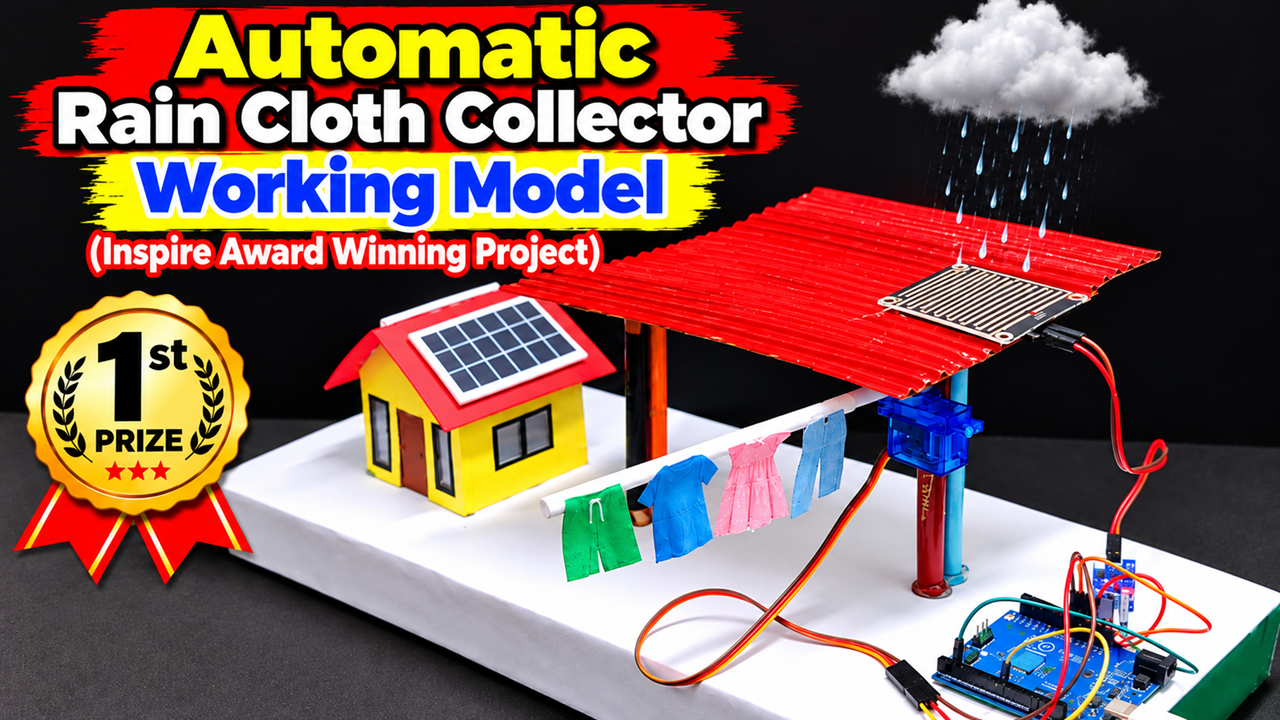
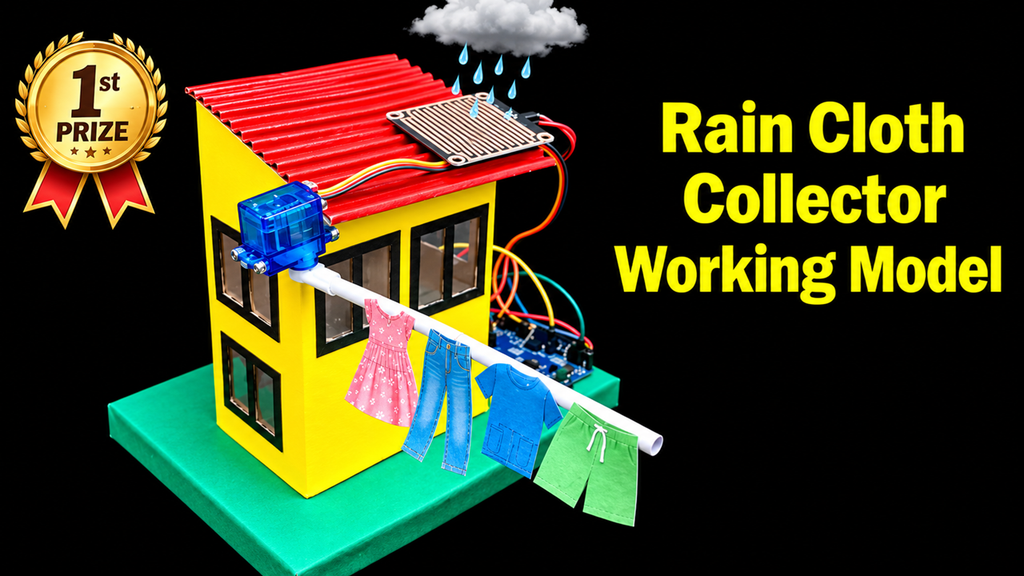
Today, I am going to explain my science project, Automatic Rain Cloth Collector Working Model.
Have you ever experienced a situation where clothes kept outside for drying become wet because of sudden rain?
To solve this problem, I have designed an automatic rain cloth collector using an Arduino, a rain sensor, and a servo motor.
This model helps protect clothes from rain without requiring human intervention.
2. Aim of the Project
The main aim of this project is to detect rainfall automatically and move the clothes to a protected area when rain occurs.
This project saves time, reduces human effort, and helps prevent clothes from getting wet.
3. Components Required
The main components used in this project are:
- Arduino UNO board
- Rain sensor module
- Servo motor
- Jumper wires
- USB cable or suitable power supply
- Cardboard, coloured paper, and other craft materials
- Miniature clothes and a clothesline
4. Working Principle
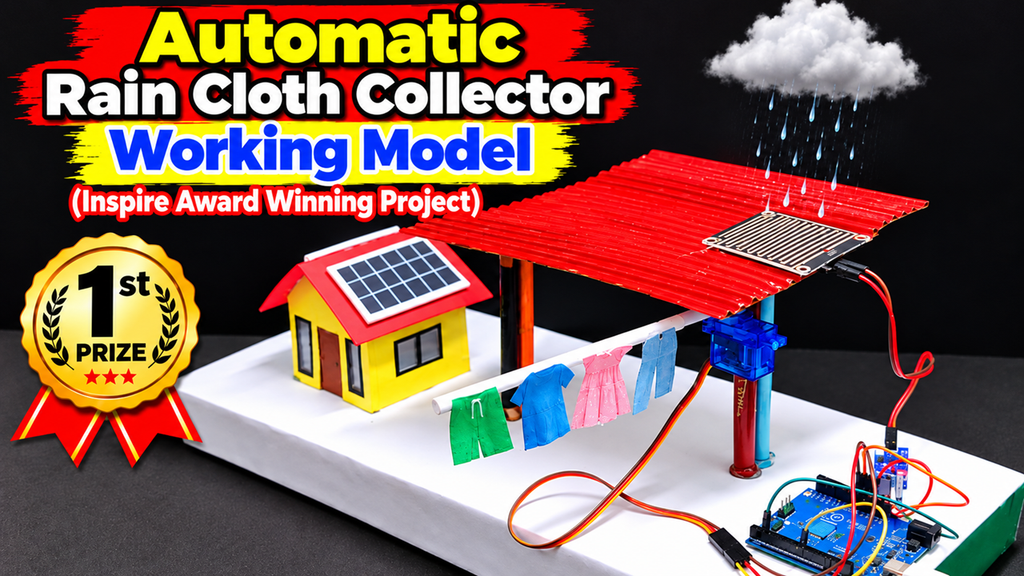
This project works on the principle of rain detection and automatic mechanical movement.
The rain sensor detects water droplets on its sensing plate and sends a signal to the Arduino.
The Arduino processes the signal and controls the servo motor according to the programmed instructions.
The servo motor moves the clothesline between its normal position and its protected position.
5. How Does the Model Work?
Step 1: Normal Condition
When there is no rain, the rain sensor does not detect water. The Arduino keeps the servo motor in its normal position, allowing the clothes to remain outside for drying.
Step 2: Rain Detection
When rain starts, water droplets fall on the rain sensor. The sensor detects the moisture and sends a signal to the Arduino.
Step 3: Automatic Movement
The Arduino processes the signal and rotates the servo motor to the programmed angle. This movement pulls or rotates the clothesline towards the protected area.
Step 4: Clothes Protection
The clothes are moved under the protective roof, helping prevent them from becoming wet.
Step 5: Rain Stops
When the rain stops and the sensor becomes dry, the Arduino can return the servo motor to its normal position, allowing the clothesline to move back outside. This depends on the program used.
6. Applications
This project can be useful in:
- Houses and apartments
- Balconies and terraces
- Hostels and student accommodation
- Small laundry areas
- Smart homes and automated drying systems
7. Advantages
The major advantages of this project are:
- Automatically detects rainfall.
- Reduces the need for manual intervention.
- Helps protect clothes from sudden rain.
- Demonstrates the practical use of Arduino and sensors.
- Can be developed into a larger smart-home system.
8. Future Improvements
In the future, this project can be improved by adding a larger motorized clothesline, a rain alert buzzer, a mobile notification system, and a more weather-resistant enclosure.
A delay or confirmation system can also be added to prevent unnecessary movement due to a few isolated water droplets.
9. Conclusion
To conclude, my Automatic Rain Cloth Collector is a simple and useful automation project that combines electronics, programming, and mechanical movement.
It demonstrates how technology can solve everyday problems and make our lives easier.
My project promotes the idea of smart living through simple and affordable innovation.
Thank you!