
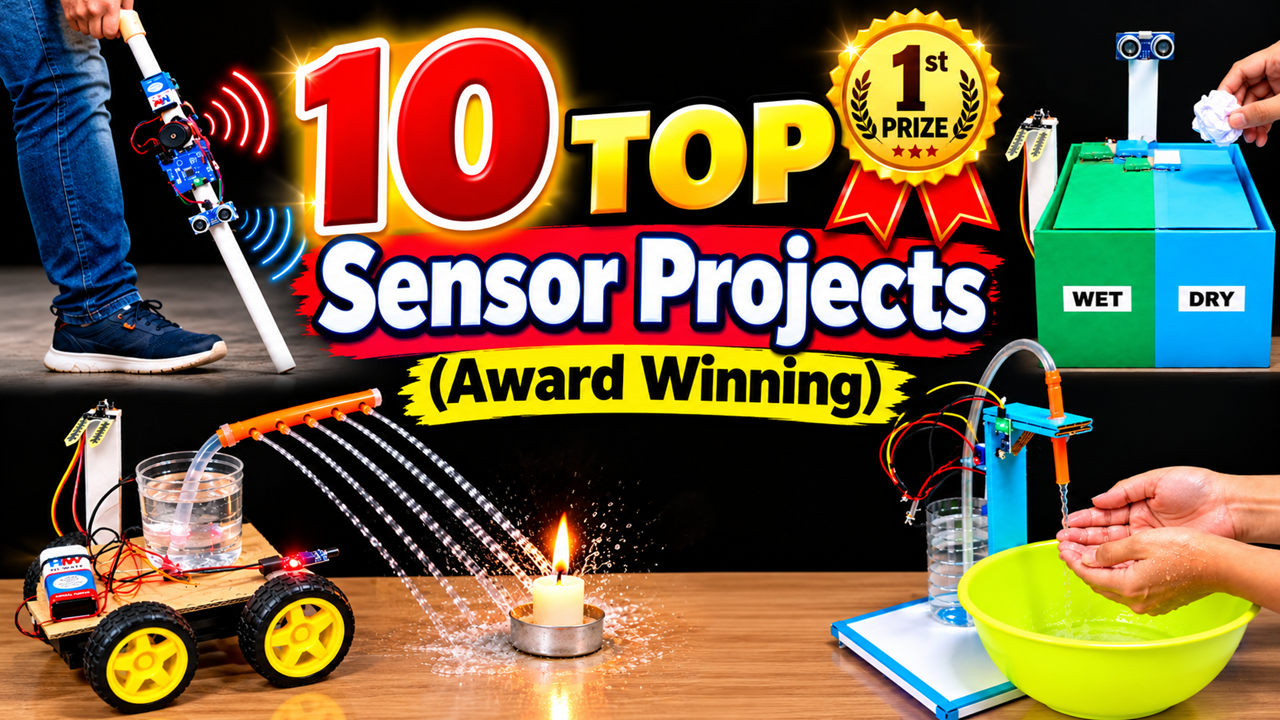
Science exhibitions and the prestigious INSPIRE Award – MANAK scheme encourage young innovators to build working models that solve real-world problems through technology. Among various domains, sensor-based electronics projects stand out for their practicality, automation capabilities, and potential for high competition scores.
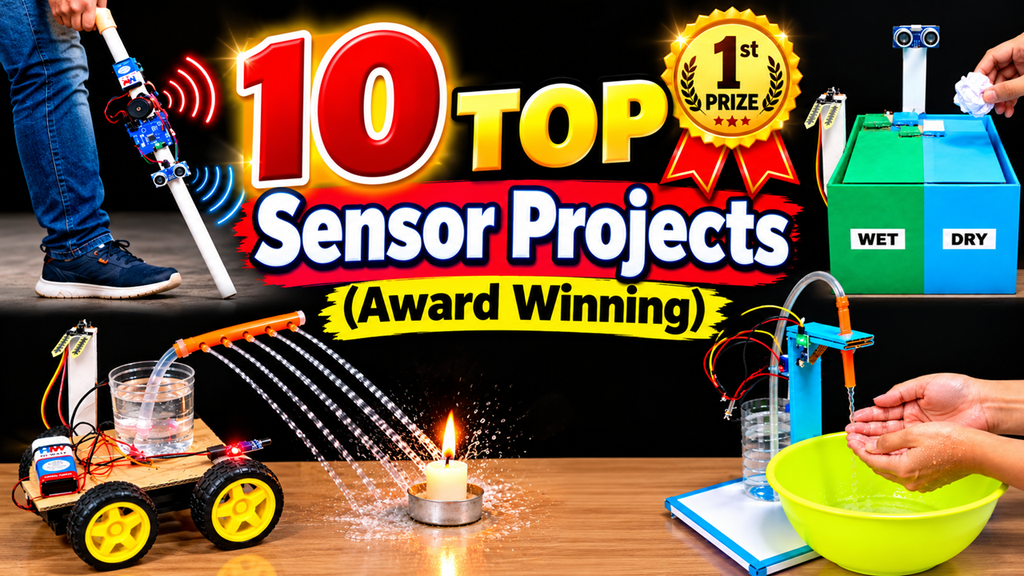
Sensors serve as the bridge between physical environments and electronic systems, enabling automation without human intervention.
If you are looking for impactful, innovative, and functional project ideas for your upcoming science exhibition, HowToFunda has curated a list of top-tier working models. Below is a comprehensive guide detailing how each project works, the primary sensors used, and why they are strong candidates for science fairs and INSPIRE Award nominations.
1. Smart Wet and Dry Dustbin
- YouTube Reference: Watch Video
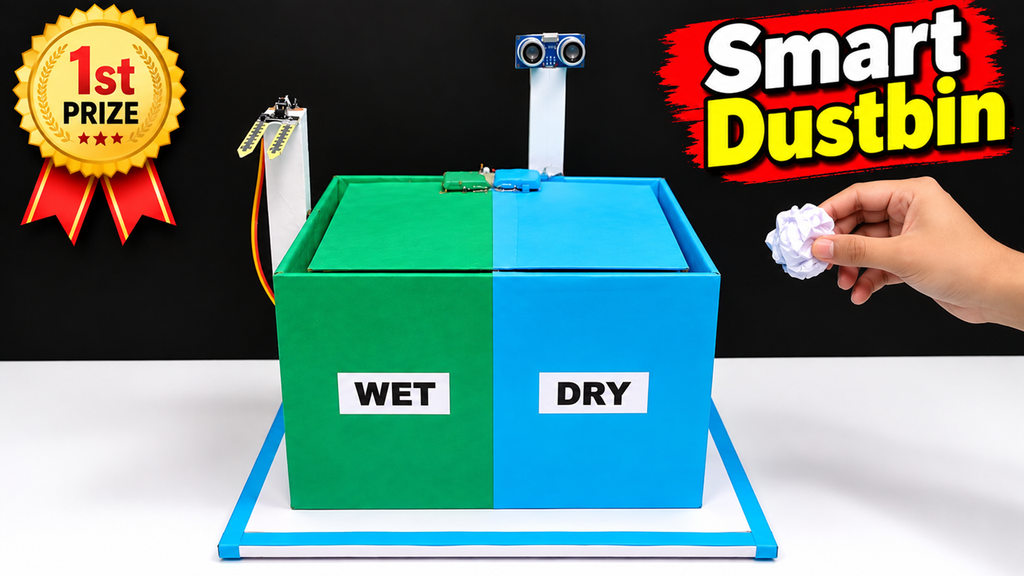
- Core Sensors: Soil Moisture Sensor / Rain Sensor, Ultrasonic Sensor
- Overview: Waste segregation at the source is critical for efficient municipal waste management. This project automatically categorizes waste into wet and dry categories. When waste is dropped onto a sensing platform, a moisture sensor evaluates the water content. Based on the reading, a servo motor tilts the platform to deposit wet waste into one compartment and dry waste into another. An ultrasonic sensor also detects approaching users to open the main lid automatically.
- Why it wins awards: Waste management is a major socio-environmental priority. Demonstrating practical, touchless, and automated waste segregation makes this a high-value prototype for smart city initiatives.
2. Fire Fighting Robot (Without Arduino)
- YouTube Reference: Watch Video
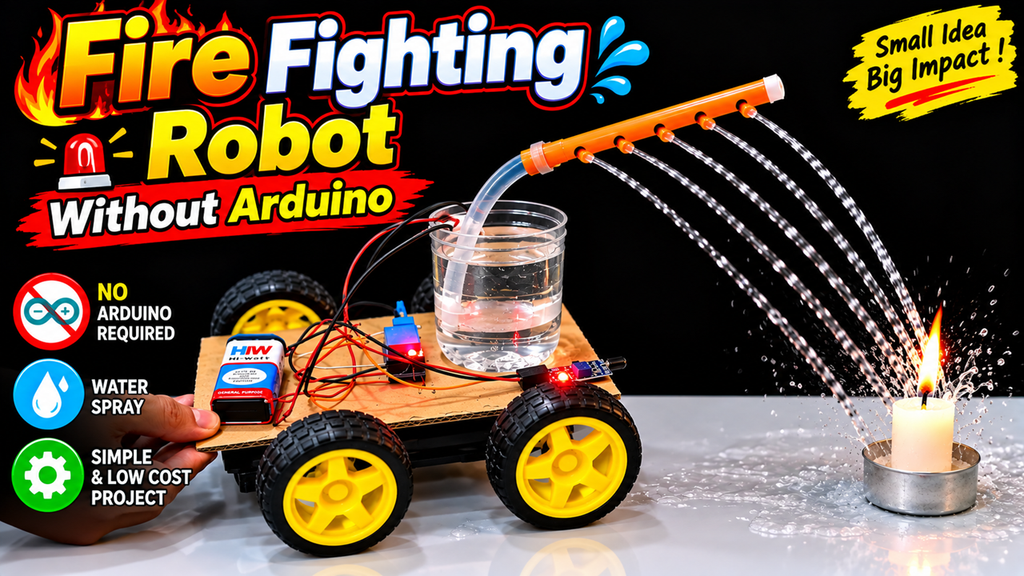
- Core Sensors: Flame Sensor Array
- Overview: Firefighting poses severe risks to human life. This autonomous or semi-autonomous mobile robot uses flame sensor modules to detect the direction of a fire source. Built using simple transistors, motor drivers, or ICs without complex microcontroller programming, the robot navigates toward the flame and activates a mounted DC water pump or miniature extinguisher to put out the fire.
- Why it wins awards: Highlighting hardware-level control without microcontrollers demonstrates strong fundamentals in electronics, safety engineering, and robotics.
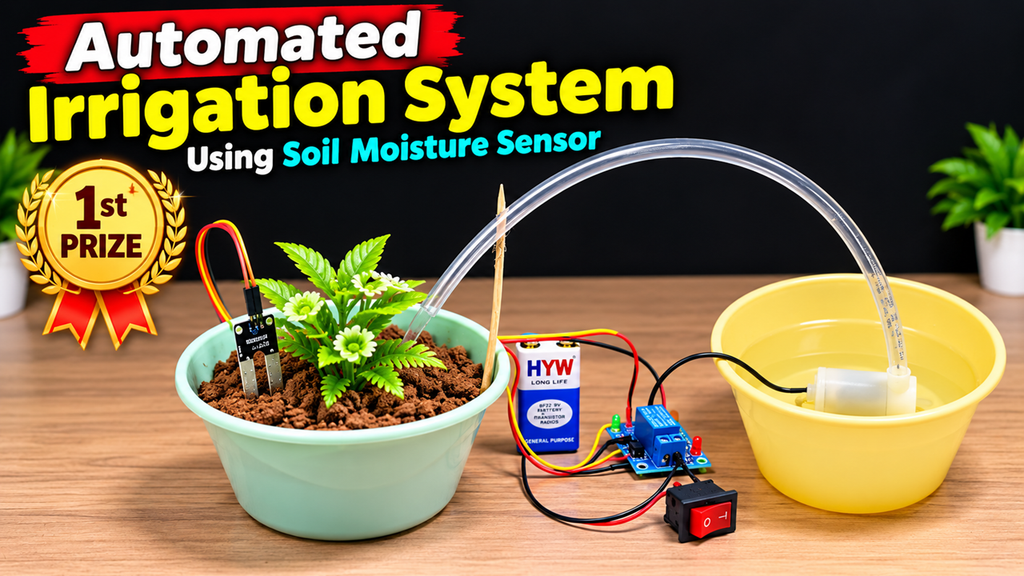
3. Automated Irrigation System
- YouTube Reference: Watch Video
- Core Sensor: Soil Moisture Sensor
- Overview: Agriculture consumes vast quantities of fresh water. This system optimizes water usage by monitoring soil conditions in real time. The soil moisture sensor measures electrical conductivity between probe tips. When soil moisture drops below a designated threshold, the circuit triggers a relay to turn on a water pump, automatically shutting it off once optimal soil hydration is reached.
- Why it wins awards: Agri-tech innovations that promote water conservation and sustainable farming methods consistently earn high praise from judges.
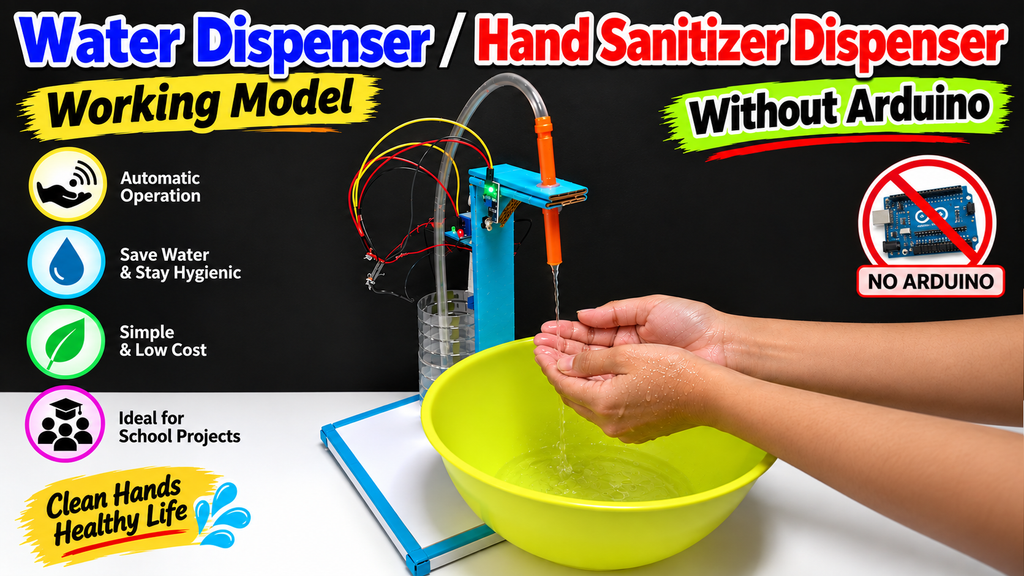
4. Smart Water Dispenser
- YouTube Reference: Watch Video
- Core Sensor: IR Proximity Sensor / Ultrasonic Sensor
- Overview: Touchless appliances reduce cross-contamination in public spaces. This smart water dispenser automates liquid pouring. When a glass or bottle is placed under the spout, an IR proximity sensor detects its presence and activates a water pump or solenoid valve. The flow stops automatically as soon as the container is removed.
- Why it wins awards: It provides a hygienic, practical solution for schools, offices, and public facilities while preventing accidental water spillage.
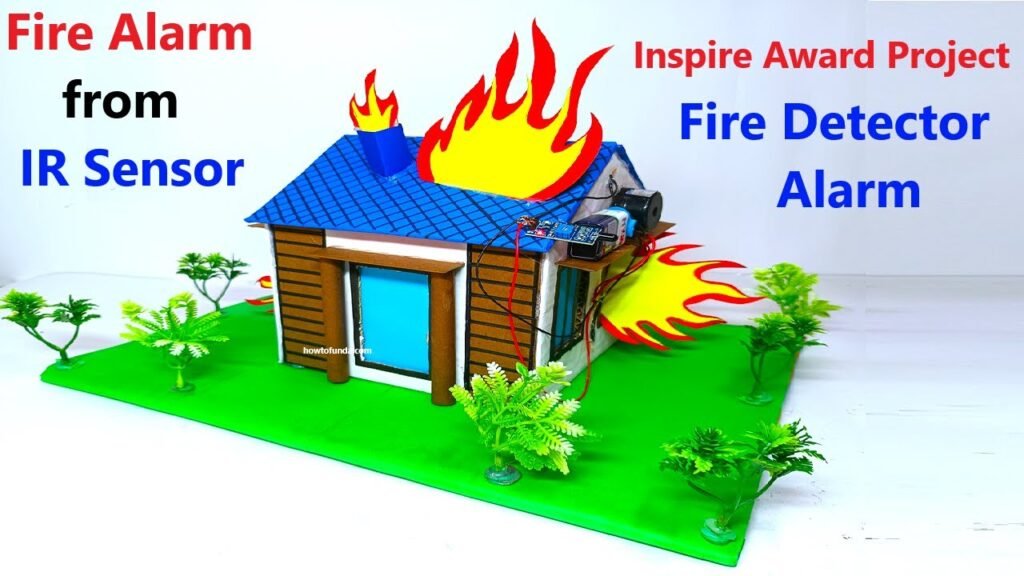
5. Smart Fire Alarm System
- YouTube Reference: Watch Video
- Core Sensors: MQ-2 Gas/Smoke Sensor, Temperature Sensor
- Overview: Early fire detection saves lives and property. This smart fire alarm monitors both ambient smoke/gas levels and rapid temperature changes. Upon detecting dangerous gas concentrations or heat spikes, the circuit triggers high-decibel buzzers, warning LEDs, and can be integrated with emergency shutoff valves or alert systems.
- Why it wins awards: Household and industrial safety projects are highly practical, cost-effective, and straightforward to demonstrate during live evaluations.
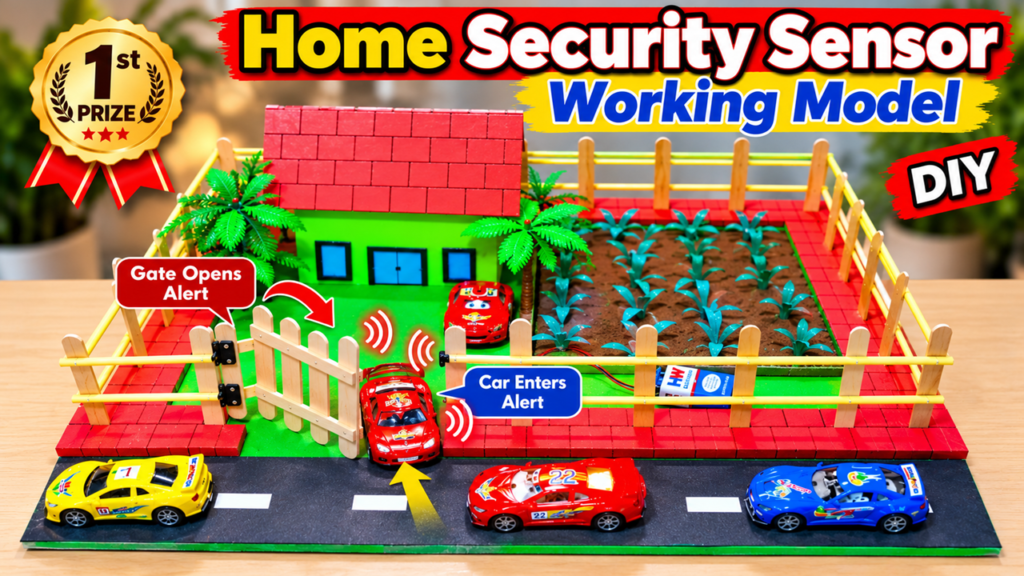
6. Smart Home Security Alarm
- YouTube Reference: Watch Video
- Core Sensor: PIR (Passive Infrared) Motion Sensor / Laser & LDR Pair
- Overview: Home security systems prevent unauthorized intrusion. Utilizing a PIR motion sensor, this system detects infrared heat radiation emitted by moving bodies within its range. Alternatively, an LDR line-laser system alerts homeowners when a boundary beam is broken. The system immediately trips an alarm and visual warnings upon intrusion detection.
- Why it wins awards: It directly addresses personal safety and smart home automation using reliable, low-cost components.
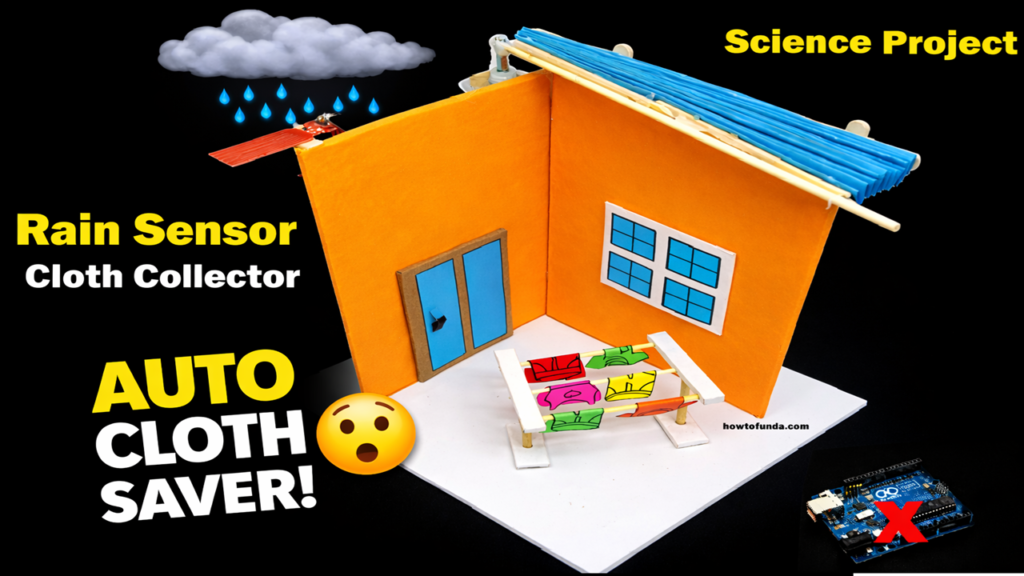
7. Smart Cloth Protector (Automatic Rain Cover)
- YouTube Reference: Watch Video
- Core Sensor: Rain Drops Sensor Module
- Overview: Sudden rain showers often ruin clothes hanging outside to dry. This model uses a rain sensor grid connected to a motor-driven retractable cover or sliding rack mechanism. When raindrops touch the conductive surface of the sensor, a motor deploys a protective roof or pulls the clothesline under a sheltered area.
- Why it wins awards: It solves a daily domestic problem using clever mechanical and electronic automation.
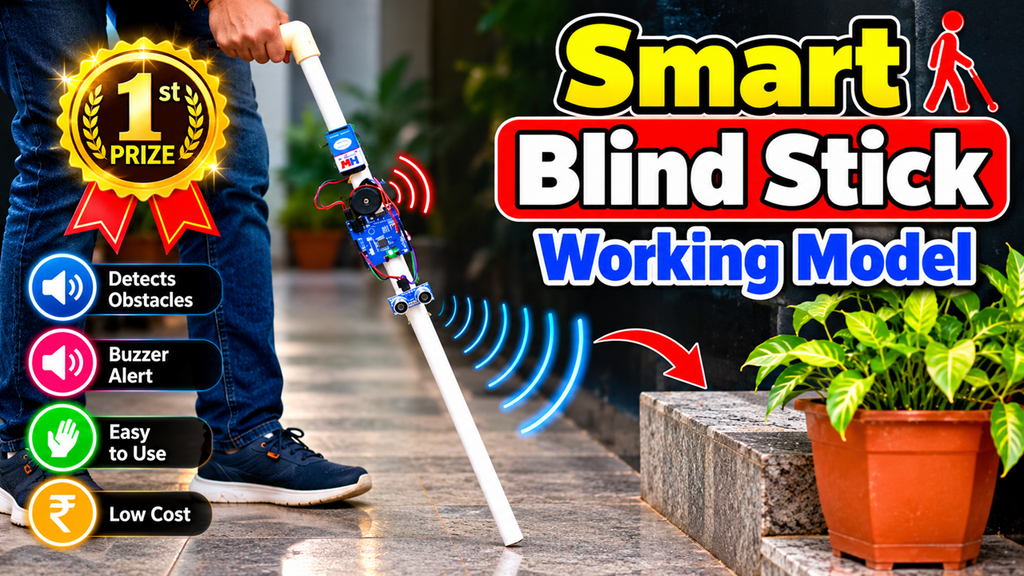
8. Smart Blind Stick
- YouTube Reference: Watch Video
- Core Sensors: Ultrasonic Sensor (HC-SR04), Water Level Sensor
- Overview: Designed to assist visually impaired individuals in navigating safely, this assistive technology device is built into a walking stick. An ultrasonic sensor detects obstacles in front of the user at knee or chest height, providing auditory or haptic feedback (buzzers/vibrations). A water sensor at the base warns the user of wet or slippery surfaces.
- Why it wins awards: Assistive devices for human welfare and accessibility carry immense social value, making them top contenders in innovation competitions like the INSPIRE Awards.
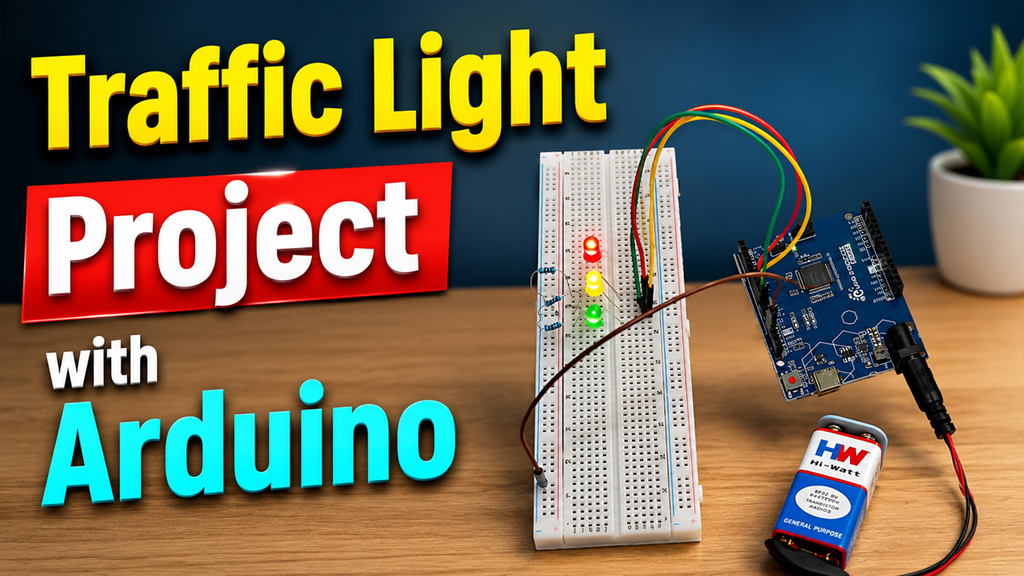
9. Smart Traffic LED Lights System
- YouTube Reference: Watch Video
- Core Sensor: IR Proximity Sensors
- Overview: Traditional fixed-timer traffic signals contribute to unnecessary traffic jams. This dynamic traffic control model measures vehicle density on individual lane approaches using IR sensors. Lanes with higher traffic density are prioritized, receiving longer green light durations to clear congestion smoothly.
- Why it wins awards: It showcases smart city infrastructure, urban planning solutions, and density-based traffic management.
10. Smart Water Tank Alarm

- YouTube Reference: Watch Video
- Core Sensor: Water Level Sensor / Contact Switches
- Overview: Overhead water tanks frequently overflow, leading to water wastage and potential structural damage. This project uses water contact probes placed at different levels inside the tank. When the water reaches the maximum capacity mark, the circuit completes, triggering a high-pitched alarm to signal the user to turn off the motor (or automatically switching off the pump relay).
- Why it wins awards: It is a simple, effective, energy-saving solution that addresses urban water management challenges.
Key Tips for Winning Science Exhibitions
- Focus on the Problem Statement: Clearly explain to judges what real-world issue your project addresses.
- Interactive Demonstration: Ensure all sensor connections, power sources, and actuators (pumps, motors, buzzers) are wired securely for reliable live testing.
- Keep Neat Circuitry: Use breadboards, properly soldered connections, and neat wire routing to present a clean working model.
These sensor projects by HowToFunda combine practical electronics with impactful real-world applications—providing the perfect foundation for building an award-winning science fair exhibit!
#top10 #sensorproject #scienceexhibition #diy #inspireawardproject #inspireaward #winningproject #howtofunda