
Science exhibitions and school fairs are incredible platforms for students and hobbyists to showcase their creativity, technical understanding, and problem-solving skills. Among the various types of electronic projects, sensor-based projects always stand out. Sensors act as the “eyes and ears” of modern technology—bridging the gap between the physical world and electronic circuits. They make projects responsive, intelligent, and interactive.
If you are preparing for an upcoming science fair or exhibition and looking for inspiration, DIY Pandit has curated a fantastic lineup of working models. Below is a comprehensive guide to the Top 10 Sensor Projects for Science Exhibitions, detailing how they work, the sensors they use, and their real-world applications.
1. Automatic Fire Extinguisher Project
- YouTube Reference: Watch Video
- Core Sensor: Flame Sensor / Temperature Sensor
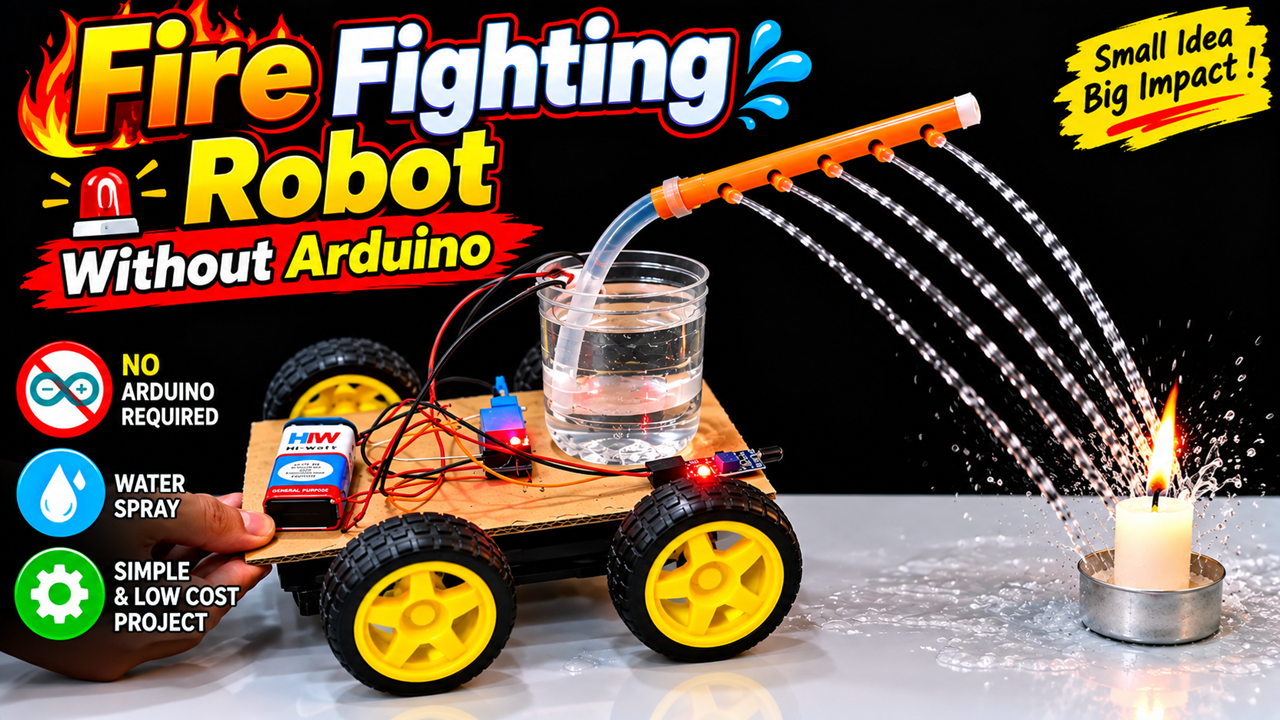
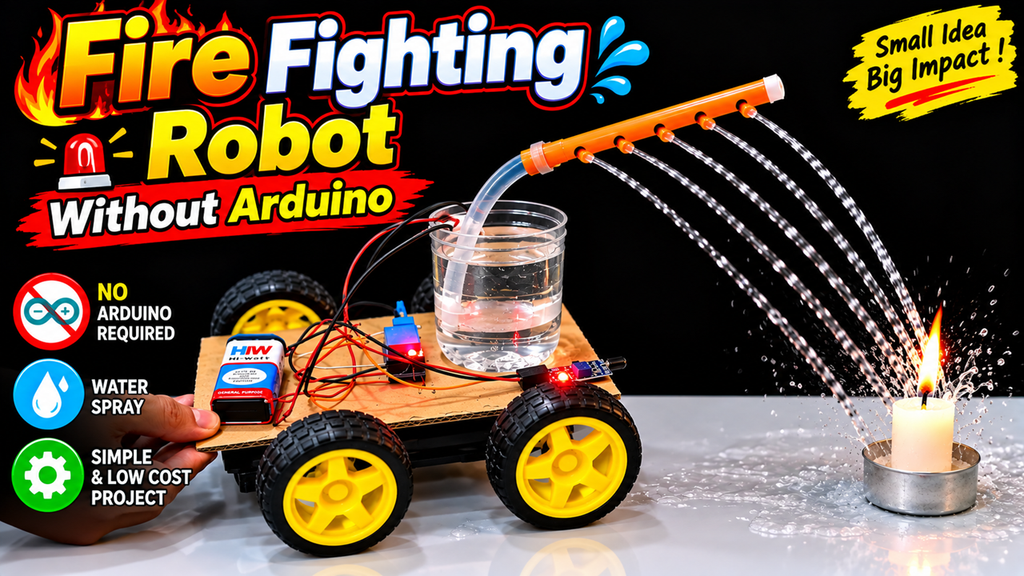
- Overview: Fire safety is a critical global concern. This project demonstrates an automated system that can detect the presence of a fire and immediately trigger a response without human intervention. The flame sensor detects infrared wavelengths emitted by a fire, sending a signal to a microcontroller or relay module. This activates a water pump or miniature sprinkler system to extinguish the flame instantly.
- Why it’s great for exhibitions: It features moving parts, real-time action (putting out a real or simulated flame), and addresses an important safety issue, making it a crowd-pleaser.
2. Automatic Car Parking Tollgate System
- YouTube Reference: Watch Video
- Core Sensor: IR Sensor / Ultrasonic Sensor
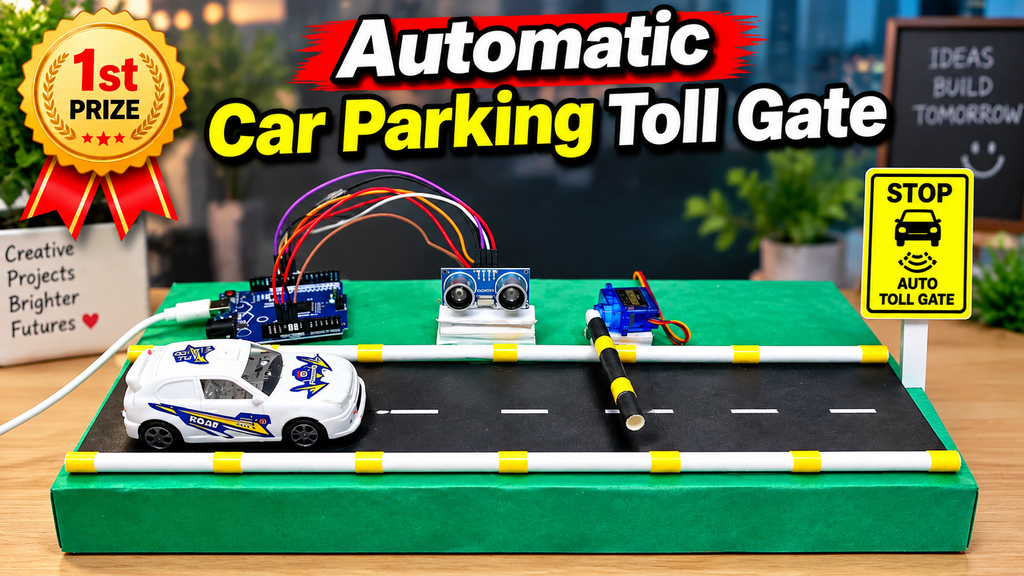
- Overview: Modern infrastructure relies heavily on automated toll plazas and parking lots to reduce traffic congestion. This project simulates an automated toll gate using proximity sensors. When a vehicle approaches the gate, the sensor detects it, signals a servo motor to lift the barrier arm, and lowers it automatically once the vehicle passes through.
- Why it’s great for exhibitions: It provides a miniature, real-life simulation of smart city infrastructure, showcasing automation and mechanics working in harmony.
3. Automatic Irrigation System
- YouTube Reference: Watch Video
- Core Sensor: Soil Moisture Sensor
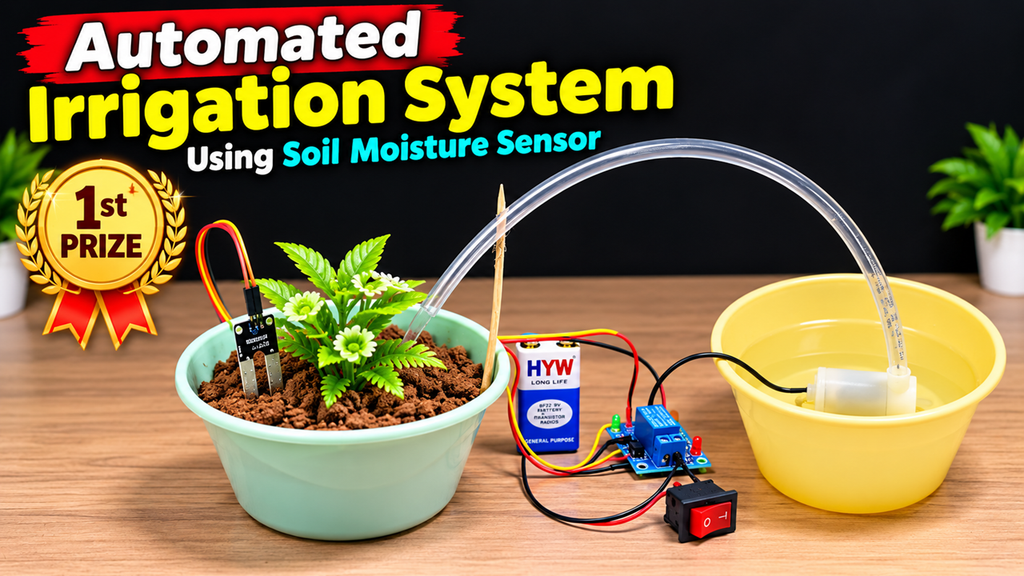
- Overview: Agriculture is the backbone of many economies, and smart farming (IoT/automation) is revolutionizing how water is managed. This project uses a soil moisture sensor inserted into the soil. When the soil becomes dry, the sensor detects the drop in moisture levels and triggers a water pump to water the plants. Once optimum moisture is achieved, the pump turns off automatically.
- Why it’s great for exhibitions: It highlights sustainability, water conservation, and agricultural technology—themes that judges and evaluators highly appreciate.
4. Automatic Street Lights
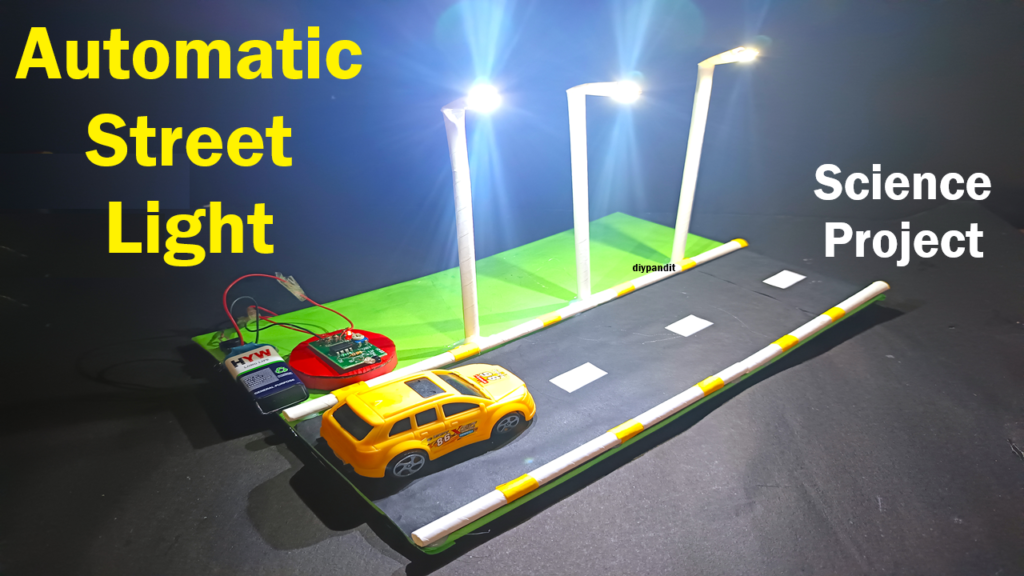
- YouTube Reference: Watch Video
- Core Sensor: LDR (Light Dependent Resistor)
- Overview: Energy conservation is essential for a sustainable future. This project demonstrates how streetlights can turn on and off automatically based on ambient lighting conditions. Using an LDR, the circuit senses daylight; during the day, the lights remain off, but as dusk falls and ambient light drops, the sensor triggers the LEDs or bulbs to turn on automatically.
- Why it’s great for exhibitions: It is simple yet immensely effective, demonstrating fundamental electronics principles and practical energy-saving solutions.
5. Car Parking (Reverse) Sensor
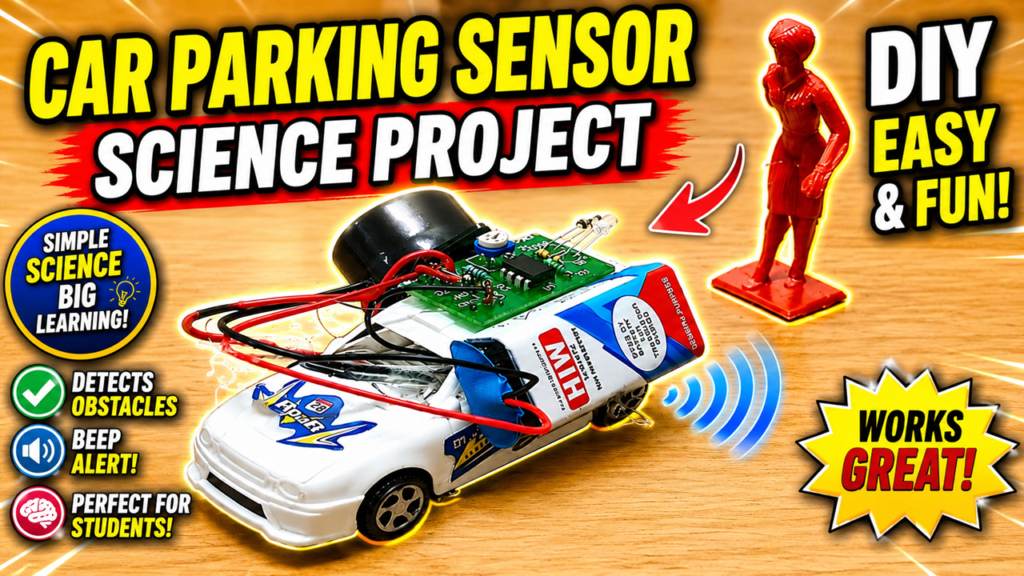
- YouTube Reference: Watch Video
- Core Sensor: Ultrasonic Sensor (HC-SR04)
- Overview: Reversing a vehicle safely can be challenging due to blind spots. This project replicates the modern automotive reverse parking sensor system. An ultrasonic sensor emits high-frequency sound waves and calculates the distance to an obstacle based on the echo return time. As the car gets closer to an obstacle, a buzzer beeps faster or LEDs light up sequentially.
- Why it’s great for exhibitions: It connects directly to the automotive industry and everyday driving safety, making it relatable to everyone.
6. Protect Farmers from Snakes

- YouTube Reference: Watch Video
- Core Sensor: Vibration Sensor / PIR Motion Sensor
- Overview: Snake bites are a serious occupational hazard for farmers in rural areas. This innovative project aims to protect agricultural workers by detecting snake movement in fields or around farms. By utilizing vibration sensors or passive infrared (PIR) sensors sensitive to movement and slithering vibrations, the system triggers an alarm or flashing lights to warn farmers and deter the reptile.
- Why it’s great for exhibitions: It targets a unique, socially impactful problem with a humanitarian approach, demonstrating how technology can save lives.
7. Fire Alarm System
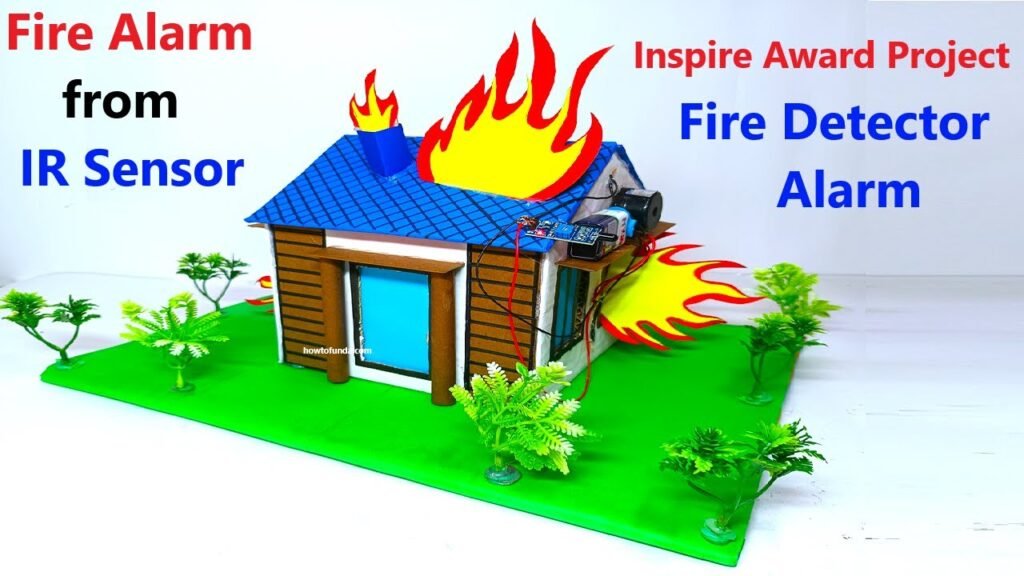
- YouTube Reference: Watch Video
- Core Sensor: Smoke Sensor (MQ-2) / Temperature Sensor
- Overview: Early detection of smoke or toxic gases can prevent catastrophic fires. This project uses an MQ-2 gas/smoke sensor to monitor air quality. In the presence of smoke, gas leaks, or excessive heat, the sensor registers a spike in concentration and instantly triggers an audio-visual alarm (buzzer and LEDs).
- Why it’s great for exhibitions: It is compact, cost-effective, easy to build, and highlights household safety.
8. Rain Alarm System
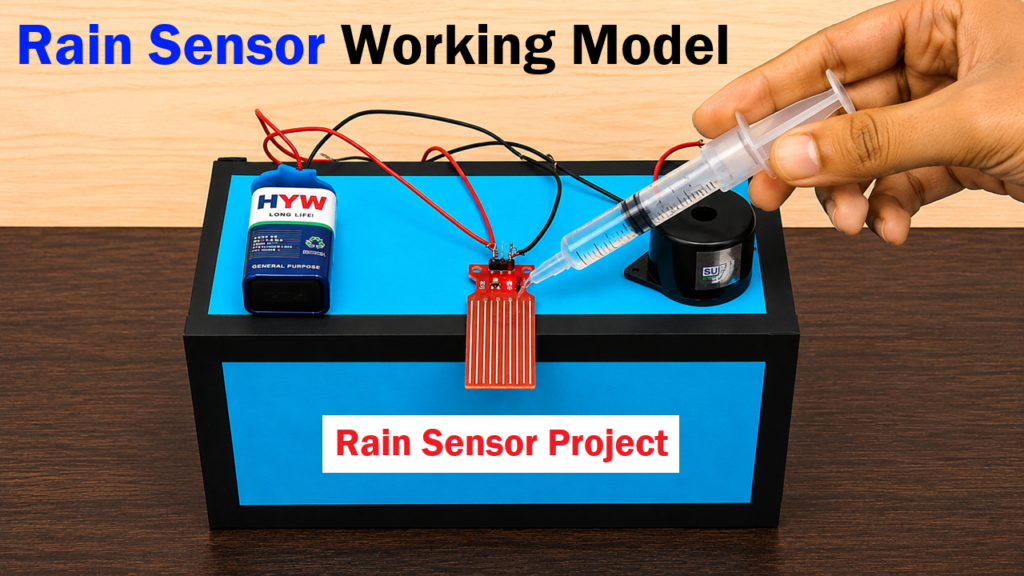
- YouTube Reference: Watch Video
- Core Sensor: Rain Sensor Module
- Overview: Leaving clothes outside to dry or open windows unprotected during sudden rain showers can be troublesome. This project features a rain sensor board with conductive tracks. When raindrops fall on the sensor, they complete an electrical circuit, triggering a buzzer to alert homeowners to bring in laundry or close windows.
- Why it’s great for exhibitions: It is a classic, highly reliable science project that clearly demonstrates electrical conductivity and practical home automation.
9. Smart Dustbin
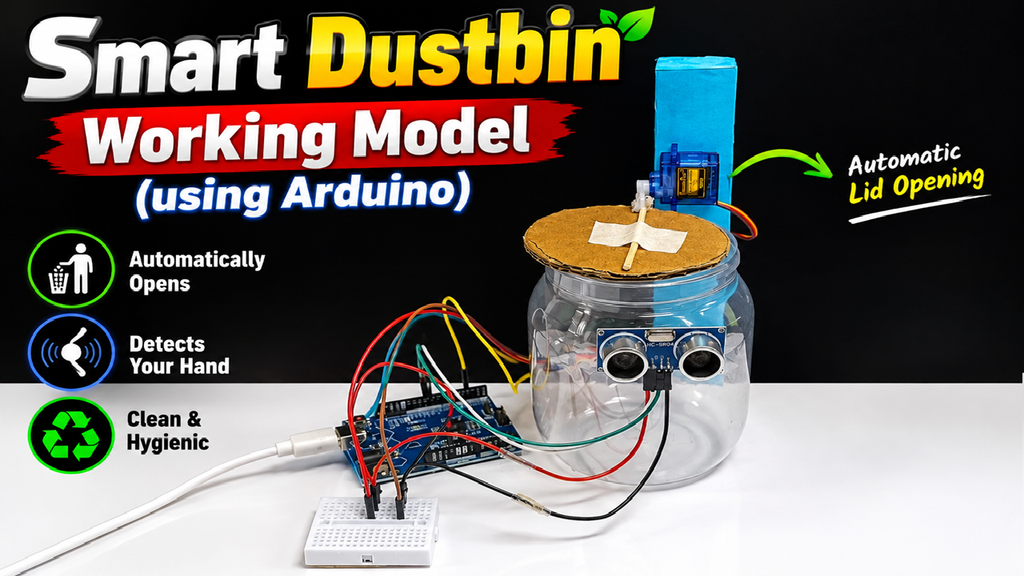
- YouTube Reference: Watch Video
- Core Sensor: Ultrasonic Sensor / IR Proximity Sensor
- Overview: Hygiene and touchless technology have become paramount in public spaces. This project showcases a smart dustbin that opens its lid automatically when a person approaches to throw away trash. An ultrasonic or IR sensor detects hand movement within a specified range and commands a servo motor to open the lid, closing it automatically after a few seconds.
- Why it’s great for exhibitions: It promotes cleanliness, public health, and contactless automation, making it extremely modern and relevant.
10. Smart Water Lifting from Underground Parking Lot

- YouTube Reference: Watch Video
- Core Sensor: Water Level Sensor / Float Sensor
- Overview: During heavy monsoons, underground parking lots and basements are prone to severe waterlogging, which can damage vehicles and property. This project demonstrates an automated drainage system. Water level sensors placed in the sump detect rising water levels and automatically activate a submersible water pump to evacuate the water before flooding occurs.
- Why it’s great for exhibitions: It solves a major urban engineering and disaster-management problem, showcasing advanced utility management.
Conclusion
Sensor-based projects bridge the gap between imagination and practical engineering. Whether you want to focus on agriculture, home automation, safety, or smart cities, these projects by DIY Pandit offer fantastic blueprints for success. Choose the one that excites you the most, gather your components, and get ready to impress your teachers, judges, and peers at your next science exhibition!
Don’t forget to check out the video links above for step-by-step tutorials, circuit diagrams, and component lists to help you build your project successfully!
#top10 #sensorproject #diypandit #scienceexhibition #workingmodel #workingproject #sciencefair #electronicprojects