
Introduction
A First Aid Box is a collection of basic medical supplies used to provide immediate care when someone gets a minor injury or suddenly becomes unwell.
It is useful at home, schools, workplaces, vehicles, and public places. First aid does not replace professional medical treatment, but it can help control bleeding, protect wounds, reduce the risk of infection, and provide temporary care until medical help is available.
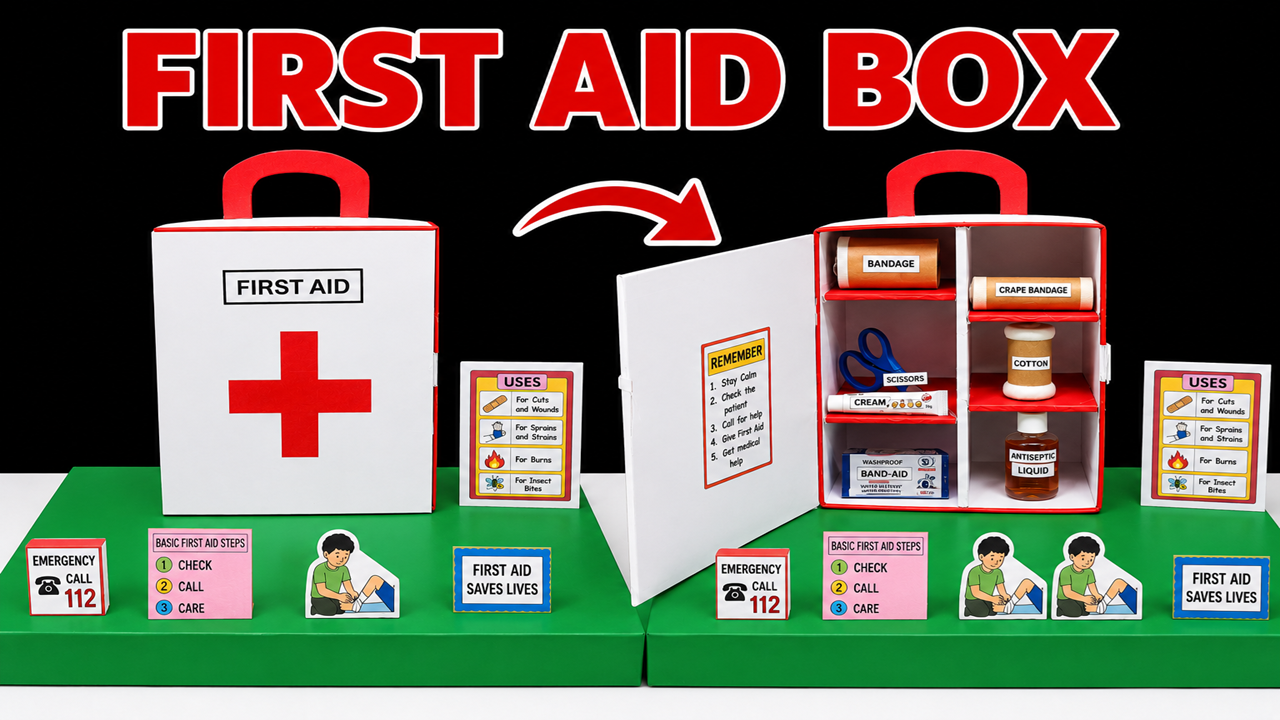
This project demonstrates a DIY First Aid Box made from cardboard and colored paper. The model includes common first-aid items such as bandages, cotton, scissors, antiseptic liquid, cream, and adhesive bandages. It also teaches the basic steps to follow during an emergency.
Main Concept of the Model
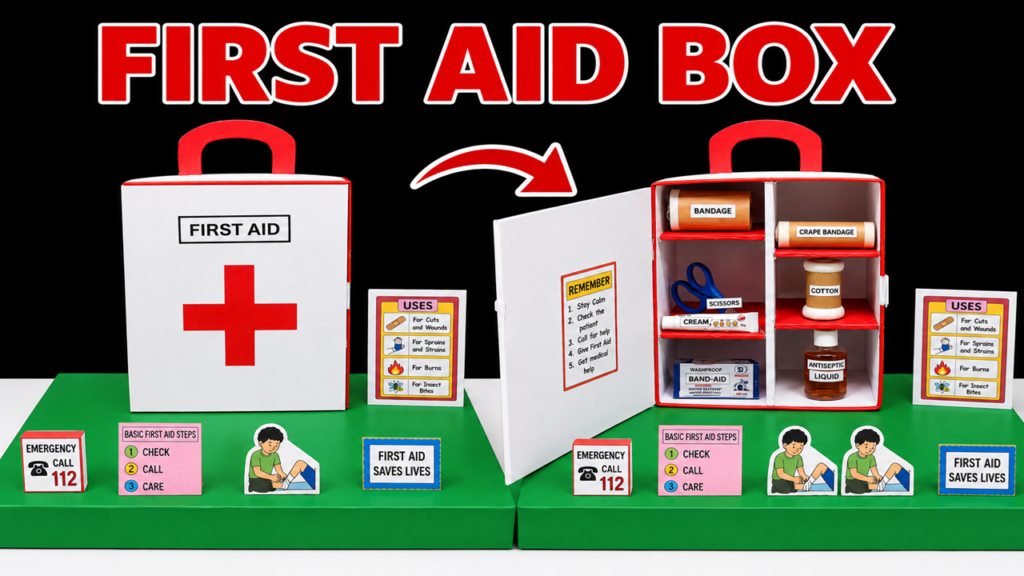
The model is designed as a small portable first-aid cabinet with compartments. The outside has a large red cross, making it easy to recognize as a first-aid kit. When the box is opened, different medical supplies can be seen in separate sections.
The model also displays basic first-aid instructions such as “Check, Call, Care.” First, check the situation and make sure the area is safe. Next, call an appropriate emergency service or seek professional medical assistance when necessary. Finally, provide suitable first aid within your knowledge and training.
The project also explains different uses of first-aid materials. Bandages can help cover minor wounds, cotton can be used as part of basic wound care, scissors can cut bandages or medical tape, and appropriate antiseptic products may be used according to their instructions. A first-aid kit should contain clean, safe, and unexpired supplies.
Materials Required
To make this model, you will need thick cardboard, white chart paper, red chart paper, colored paper, glue, scissors, a cutter, ruler, pencil, markers, and double-sided tape. For the miniature contents, you can use small empty boxes, bottle caps, paper rolls, small plastic containers, straws, foam sheets, and recycled packaging. You can also print or handwrite labels for each item.
How to Make the Model
First, cut a large rectangular piece of cardboard for the back and base of the box. Make the main box using cardboard panels and join them securely with glue. Cover the outside with white paper to create a clean appearance.
Next, cut a large red cross from red chart paper and paste it on the front of the box. Add a handle at the top using folded cardboard strips. Strengthen the handle with extra cardboard so that it does not easily bend.
For the inside, create several small compartments using narrow strips of cardboard. Divide the space into sections for items such as bandage, crepe bandage, scissors, cotton, cream, antiseptic liquid, and adhesive bandage. Cover the shelves with red or colored paper to make them attractive.
Make miniature first-aid supplies from recycled materials. For example, use small rolled paper pieces for bandages, a small bottle or container for antiseptic liquid, cotton wrapped around a cardboard tube for a cotton container, and a small cardboard shape for cream. Attach clear labels to every item.
Finally, create information cards beside the box. Add “Basic First Aid Steps – Check, Call, Care,” “First Aid Saves Lives,” and an emergency-call reminder. You can also add small illustrations showing treatment for cuts, burns, sprains, and minor wounds.
Conclusion
This First Aid Box project combines science, health education, and creative craftwork. It teaches students why first-aid supplies are important and how a well-organized kit can provide immediate assistance during minor emergencies. The model also demonstrates the importance of staying calm, assessing a situation, seeking professional help when needed, and using first-aid materials responsibly.
For safety, medicines and medical products should not be used simply because they are included in the model. Real first-aid treatment should follow appropriate instructions and, when necessary, guidance from a trained medical professional.