
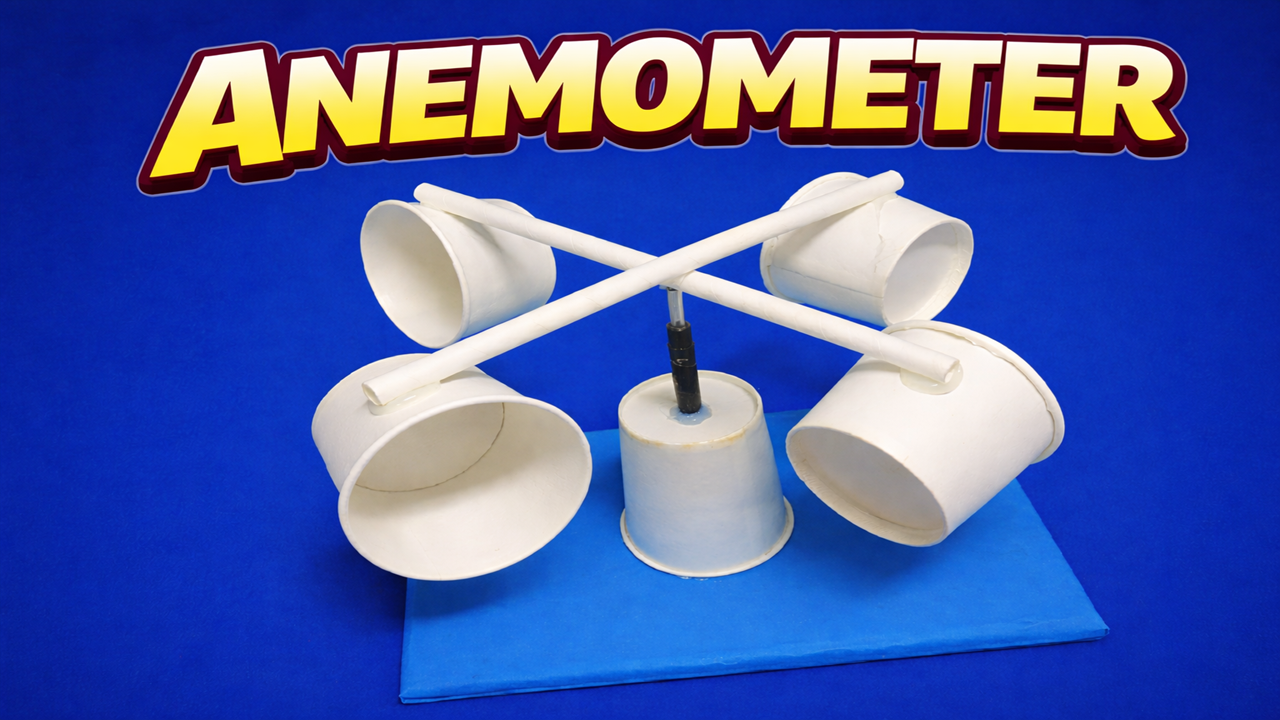
An anemometer is a scientific instrument used to measure wind speed. It is commonly used in weather stations, airports, ships, and environmental studies.
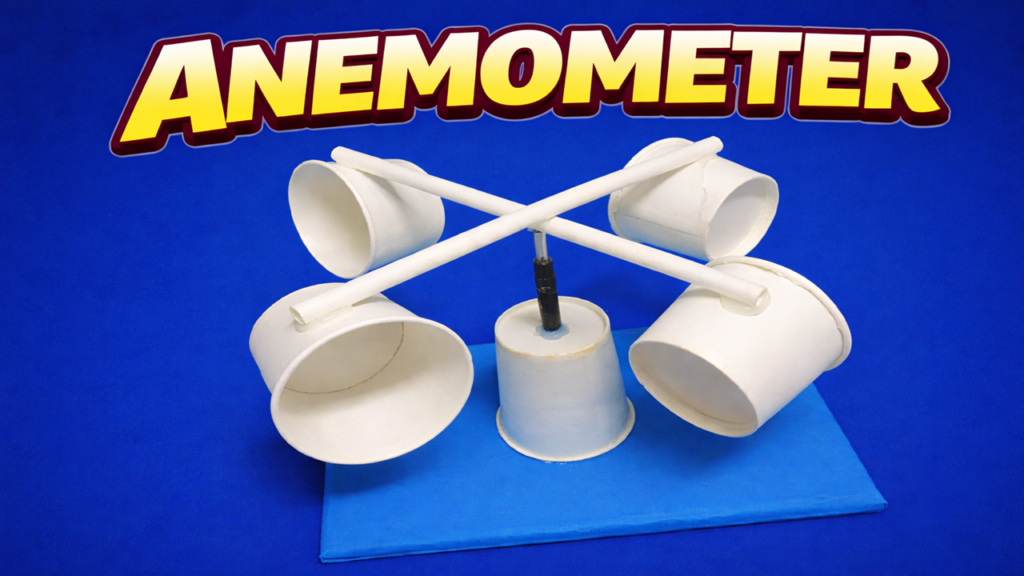
This anemometer working model is a simple DIY science project made using paper cups, straws, and cardboard. It is an excellent project for school science exhibitions because it demonstrates how wind energy can create motion and how scientists measure wind speed in the atmosphere.
Aim of the Project
The aim of this project is to create a simple anemometer model that demonstrates how wind speed can be measured using rotating cups.
Materials Required
- Four paper cups
- Two straws or sticks
- Cardboard base
- Pencil or pen refill
- Glue or tape
- Scissors
- Pin or needle
- Small paper cup or bottle cap for center support
- Colors and decorative paper
How to Make the Anemometer Model
Step 1: Prepare the Base
Take a thick cardboard sheet and cut it into a square shape. Cover it with colored paper to make the model attractive. This will act as the base of the anemometer.
Step 2: Make the Rotating Arms
Take two straws or lightweight sticks and arrange them in a cross shape. Fix them together at the center using glue or tape.
Step 3: Attach the Cups
Fix one paper cup at the end of each straw. All the cups should face in the same direction. This arrangement helps the wind push the cups and rotate the structure.
Step 4: Create the Stand
Take a small paper cup or bottle cap and fix it vertically at the center of the cardboard base. Insert a pencil, stick, or pen refill into the center to act as the rotating axis.
Step 5: Fix the Rotating System
Attach the crossed straws with cups onto the top of the axis using a pin or needle. Ensure the structure rotates freely without much friction.
Step 6: Test the Model
Blow air on the cups using your mouth, a fan, or natural wind. The cups will rotate quickly. Faster wind causes faster rotation, showing how an anemometer measures wind speed.
Working Principle
An anemometer works on the principle of wind force and rotational motion. When wind strikes the cups, it pushes them and causes the structure to rotate. The speed of rotation depends on the speed of the wind. Stronger wind makes the cups spin faster.
In real weather stations, electronic sensors count the number of rotations and convert them into wind speed measurements such as kilometers per hour or meters per second.
Advantages of the Model
- Easy and low-cost project
- Demonstrates wind energy clearly
- Improves creativity and practical learning
- Helps understand weather instruments
- Attractive for science exhibitions
Applications of Anemometer
- Weather forecasting stations
- Airports and aviation
- Ships and marine studies
- Wind energy plants
- Environmental monitoring
Conclusion
The Anemometer Working Model is a simple and educational science project that explains how wind speed is measured. It helps students understand weather instruments and the role of wind in nature. The project is easy to build using simple materials and is highly suitable for school science exhibitions. It also encourages students to learn more about weather science, renewable energy, and environmental studies.