
Introduction
Rain can often cause inconvenience when clothes are left outside to dry. Sudden rainfall can soak clothes, leading to repeated washing and time wastage.
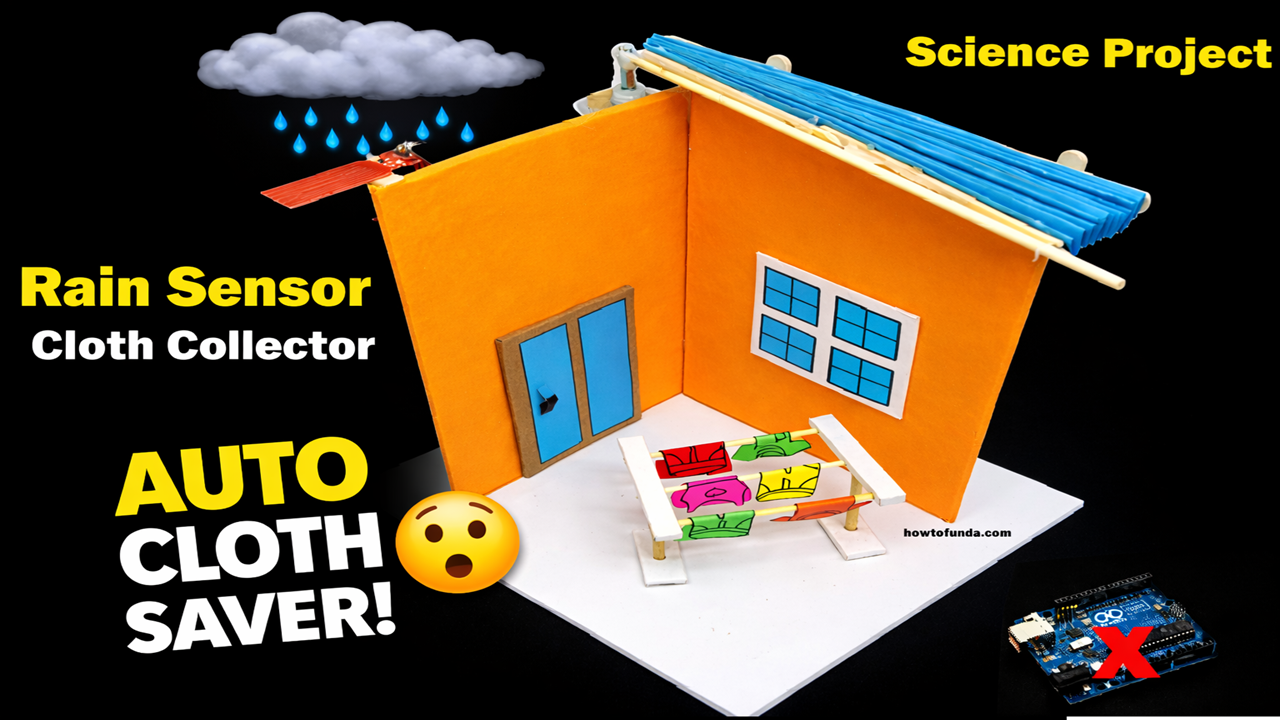
The Rain Sensor Cloth Collector is an innovative and practical solution to this problem. This project is designed to automatically detect rain and protect clothes using a simple mechanism. It is an ideal working model for school science exhibitions and Inspire Award projects, demonstrating real-life applications of science and technology.
Materials Required
The project can be built using easily available and low-cost materials:
- Water level sensor (rain sensor)
- DC motor
- Battery
- Connecting wires
- Switch
- Cardboard (for house model)
- Relay (optional)
- Cloth stand model
Working Principle
This project works on the basic concept of electrical conductivity of water. Water is a good conductor of electricity, and when rainwater touches the sensor, it completes the circuit.
- In dry conditions, the circuit remains open, and the motor does not operate.
- When rainwater falls on the sensor, it completes the circuit.
- This triggers the motor to activate the mechanism.
- The mechanism then moves or covers the clothes, protecting them from rain.
This automatic response helps prevent clothes from getting wet without human intervention.
Working Model Explanation
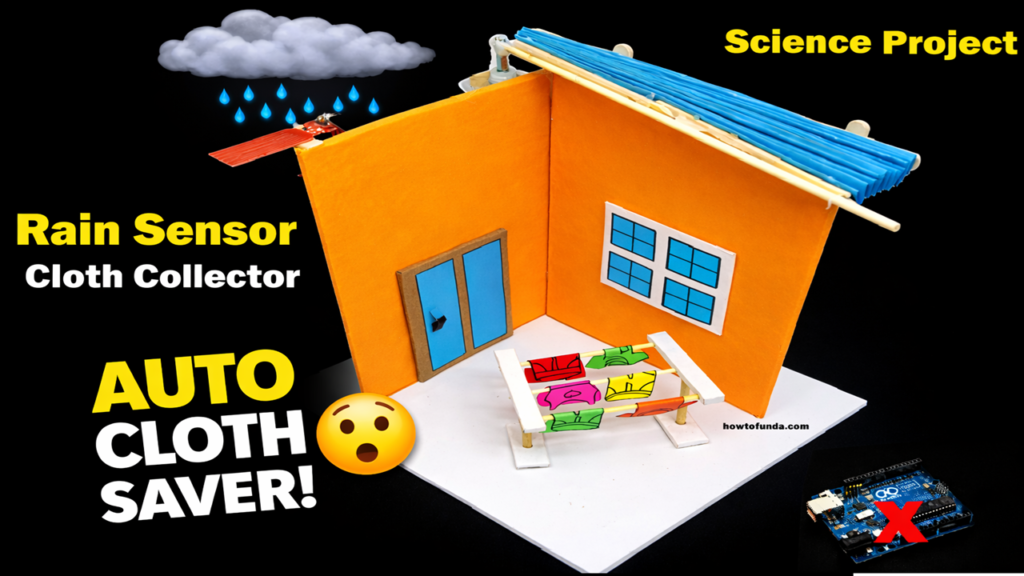
The model consists of a small house setup made of cardboard, with a clothesline placed in front. A water level sensor is fixed on the roof where it can easily detect rainwater.
When water droplets fall on the sensor:
- The sensor detects moisture and sends a signal through the circuit.
- The DC motor is activated instantly.
- The motor either pulls the clothes inside or closes a protective cover (roof).
- Once the rain stops and the sensor dries, the system can reset.
This creates an automatic and efficient system for protecting clothes.
Advantages
- Low-cost and eco-friendly
- Works without complex programming (no Arduino required)
- Easy to understand and demonstrate
- Useful for real-life home automation
- Ideal for school exhibitions and competitions
Educational Value
This project helps students learn important scientific concepts such as:
- Electrical circuits
- Conductivity of water
- Automation systems
- Practical problem-solving
It also enhances creativity and innovation skills among students.
Applications
- Smart homes for automatic cloth protection
- Rain detection alarm systems
- Agricultural rain monitoring
- Automation-based household devices
Limitations
- Depends on proper sensor placement
- Requires battery power
- May need maintenance in prolonged wet conditions
Conclusion
The Rain Sensor Cloth Collector is a simple yet powerful innovation that solves a common daily problem. It shows how basic science concepts can be applied to create useful and smart solutions. This project not only helps in understanding automation but also inspires students to think creatively and develop practical ideas for real-world challenges.