
Introduction
Industrial development plays a crucial role in economic growth, but it also leads to serious environmental challenges. One of the major problems caused by industries is air pollution, especially the emission of harmful gases such as carbon dioxide (CO₂), carbon monoxide (CO), and other pollutants released from factory chimneys. These gases contribute to environmental issues like global warming, climate change, and poor air quality.
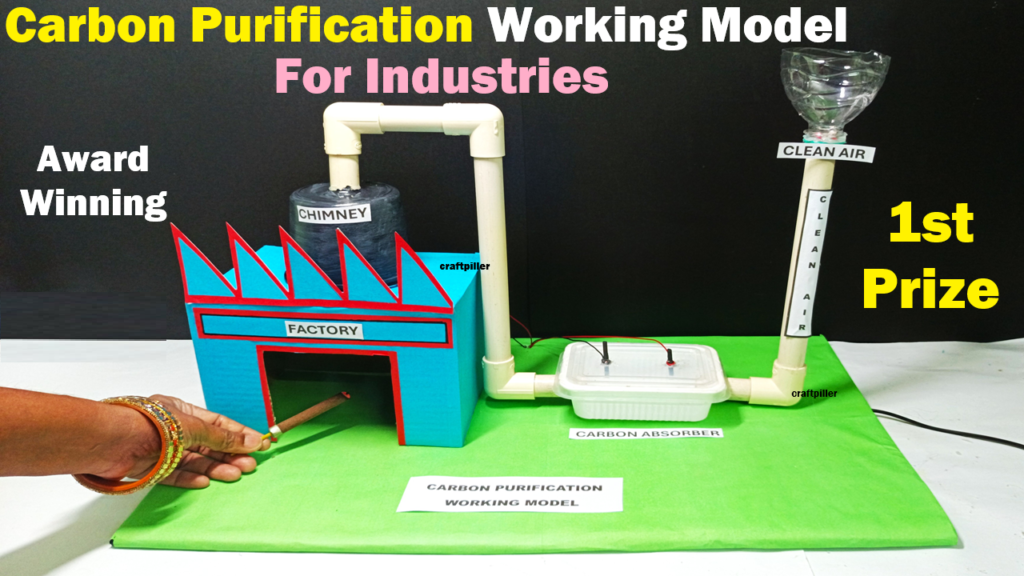
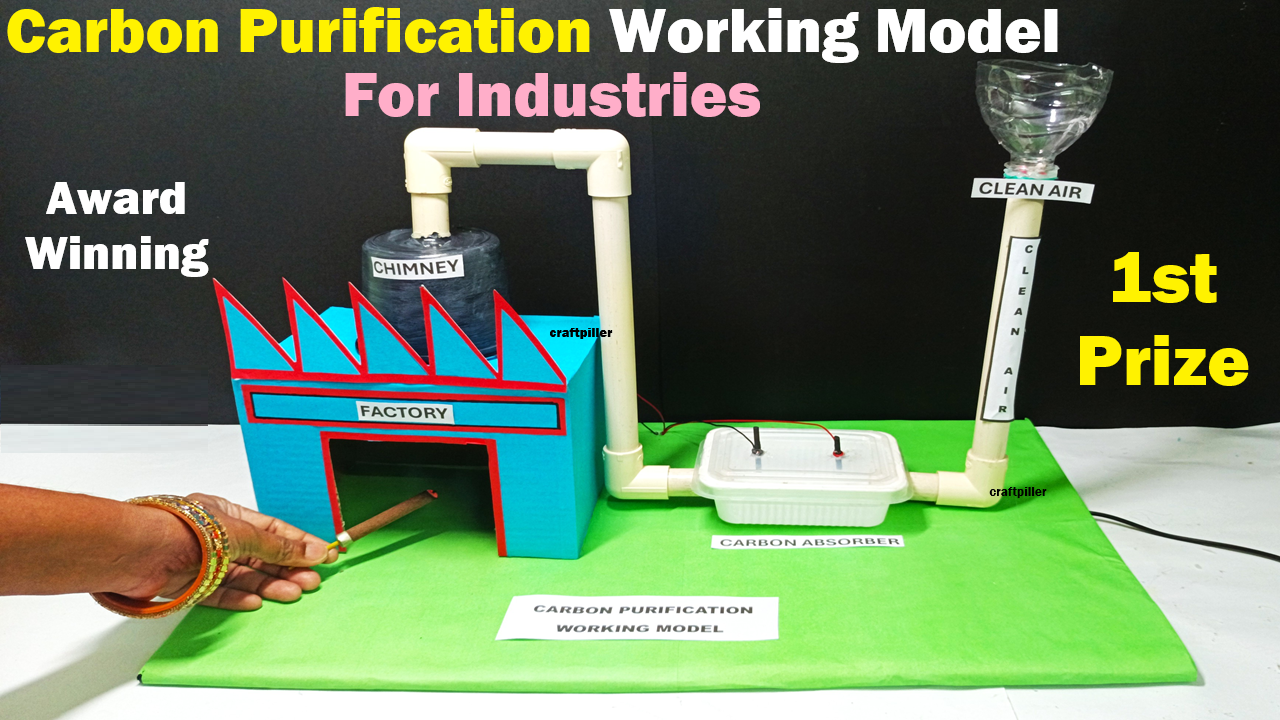
To reduce air pollution from industries, scientists and engineers have developed technologies that help filter and purify industrial emissions before they are released into the atmosphere. The working model shown in the image demonstrates a carbon purification system for industries. This project shows how polluted air coming from a factory chimney can pass through a carbon absorption unit, where harmful carbon particles are filtered, allowing cleaner air to be released.
This model is a simple demonstration of how industries can adopt pollution control systems to protect the environment.
Concept of Carbon Purification
Carbon purification systems work by capturing harmful carbon particles and pollutants from industrial smoke before they enter the atmosphere. This process usually involves filtration, absorption, or chemical reactions that remove harmful gases.
In this working model, smoke produced in the factory passes through a chimney pipe and then enters a carbon absorber unit. The absorber contains filtering materials such as activated carbon, charcoal, or other absorbing substances. These materials trap harmful carbon particles and pollutants.
After passing through the purification system, the cleaned air travels through an outlet pipe and is released as cleaner air into the environment.
Components of the Model
The model includes several important parts that represent a real industrial carbon purification system.
Factory Unit
The factory structure represents an industrial plant where smoke and gases are produced during manufacturing processes.
Chimney
The chimney is connected to the factory and acts as the pathway through which polluted gases move out of the factory.
Pipe System
PVC pipes connect the chimney to the carbon absorber unit. These pipes simulate the gas flow channel used in industrial purification systems.
Carbon Absorber
The carbon absorber is the main filtration unit. It contains materials that absorb or trap harmful carbon particles and pollutants from the smoke.
Clean Air Outlet
After filtration, the purified air passes through another pipe and exits through the outlet labeled “Clean Air”, showing that the pollution level has been reduced.
Materials Required
To build this carbon purification working model, the following materials can be used:
- Cardboard or thermocol sheet for the base
- Colored foam sheets or chart paper
- Small plastic pipes or PVC pipes
- Plastic container for the carbon absorber unit
- Activated charcoal or carbon pieces
- Glue gun or strong adhesive
- Cutter and scissors
- Decorative materials for the factory model
- Labels and markers
These materials help create a simple yet effective representation of the pollution control system.
Steps to Make the Carbon Purification Working Model
Step 1: Prepare the Base
Start by taking a cardboard or thermocol sheet as the base of the project. Cover it with colored paper or paint to create a neat presentation surface.
Step 2: Build the Factory Model
Create a small factory structure using cardboard or foam sheets. Paint it in bright colors and add labels such as “Factory” and “Chimney” to represent an industrial plant.
Step 3: Install the Chimney
Attach a cylindrical pipe on top of the factory to represent the chimney. This pipe will carry the smoke from the factory to the purification unit.
Step 4: Connect the Pipe System
Use PVC pipes to connect the chimney to the carbon absorber container. The pipes should guide the smoke flow from the factory toward the purification chamber.
Step 5: Build the Carbon Absorber
Take a plastic container and fill it with activated carbon or charcoal pieces. These materials act as filters that absorb harmful carbon particles from the smoke.
Install inlet and outlet pipes on the container to allow smoke to pass through the filtering materials.
Step 6: Create the Clean Air Outlet
Attach another pipe from the carbon absorber to a vertical outlet labeled “Clean Air”. This represents the release of purified air into the atmosphere.
You can also place a small transparent bottle or funnel at the top to visually demonstrate the air outlet.
Working Principle of the Model
When smoke is produced inside the factory model, it travels through the chimney and enters the pipe system. The smoke then passes into the carbon absorber chamber, where the activated carbon absorbs harmful pollutants and carbon particles.
As the smoke passes through the filtering material, many of the harmful substances are trapped. The remaining cleaner air exits through the outlet pipe labeled “Clean Air”. This demonstrates how industrial pollution control systems help reduce air pollution.
Advantages of Carbon Purification Systems
Carbon purification technology provides several benefits:
- Reduces industrial air pollution
- Helps control harmful greenhouse gases
- Improves air quality in surrounding areas
- Protects human health and the environment
- Supports sustainable industrial development
Such systems are widely used in industries to meet environmental safety standards.
Conclusion
The carbon purification working model for industries is an innovative science project that demonstrates how pollution control technologies can reduce harmful emissions from factories. It clearly shows the process of filtering polluted air using carbon absorption systems before releasing it into the atmosphere.
This project helps students understand environmental problems and the importance of sustainable industrial practices. By implementing carbon purification systems in real industries, we can reduce air pollution, protect ecosystems, and create a cleaner and healthier environment for future generations.