

Introduction
Energy is an essential requirement for the development of any country. With increasing population and industrial growth, the demand for electricity is rising rapidly. Most of the electricity today is produced using fossil fuels such as coal, oil, and natural gas. These sources are non-renewable and cause serious environmental problems like air pollution, global warming, and climate change.
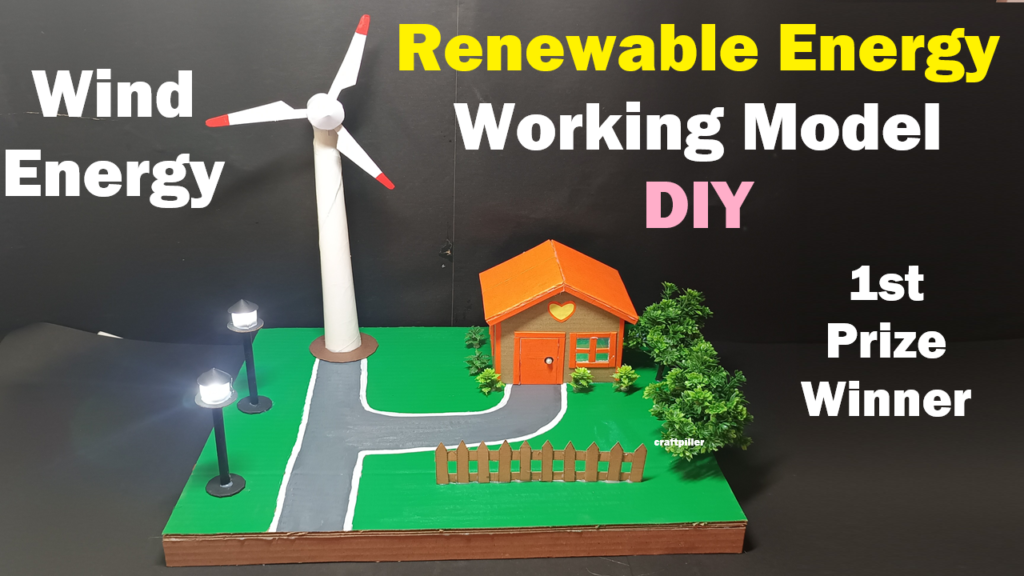
Wind energy is one of the most important renewable energy sources. It is clean, sustainable, and environmentally friendly. This Wind Energy Working Model is a DIY science exhibition project made using cardboard, a DC motor, wires, and street light LEDs. The model demonstrates how wind energy can be converted into electrical energy and used to light street lamps, promoting green and sustainable development.
Aim of the Project
The main aims of this project are:
- To understand the concept of wind energy
- To demonstrate electricity generation using wind power
- To create a low-cost renewable energy working model
- To show practical application of wind energy through street lighting
- To promote awareness about clean and sustainable energy
What is Wind Energy?
Wind energy is the energy obtained from moving air. When air moves due to differences in atmospheric pressure and temperature, it possesses kinetic energy. Wind turbines capture this kinetic energy and convert it into mechanical energy, which is then converted into electrical energy using a generator.
Wind energy is renewable because wind is naturally replenished by the sun’s heating of the Earth’s surface. It does not cause pollution and helps reduce dependence on fossil fuels.
Principle of the Wind Energy Model
The wind energy model works on the principle of energy conversion:
- Wind energy (kinetic energy of air)
- Mechanical energy (rotation of turbine blades)
- Electrical energy (produced by DC motor acting as generator)
When wind rotates the turbine blades, the connected DC motor rotates and generates electricity. This electricity is used to glow LED street lights.
Materials Used
The materials used for this DIY model are simple and easily available:
- Cardboard (base, tower, and wind turbine structure)
- DC motor (used as generator)
- LED lights (street lights)
- Wires
- Small fan or manual air blower
- Color paper
- Glue, tape
- Scissors and cutter
- Paint and paint brushes
Description of the Wind Energy Working Model
The model is built on a strong cardboard base. It is divided into different sections such as the wind turbine tower, rotating blades, generator unit, and street lighting system.
1. Wind Turbine Tower
The wind turbine tower is made using rolled cardboard to form a tall cylindrical structure. The height of the tower represents real wind turbines, which are built tall to capture stronger winds. The tower is fixed firmly to the base.
2. Wind Turbine Blades
The turbine blades are made using cardboard or plastic sheets. Usually, three blades are used as this design is most efficient. The blades are attached to a central hub connected to the DC motor shaft.
When air from a fan or natural wind hits the blades, they rotate smoothly.
3. DC Motor as Generator
A small DC motor is used as a generator in this model. When the turbine blades rotate, the motor shaft rotates and produces electrical energy. The generated electricity flows through wires connected to LED street lights.
This demonstrates the conversion of mechanical energy into electrical energy.
4. Street Light System
Mini street lights are made using cardboard poles and LED bulbs. These represent real-life street lighting powered by renewable energy. When the wind turbine rotates, the LEDs glow, showing that electricity is being generated using wind energy.
This section highlights how renewable energy can be used for public infrastructure such as street lighting.
Working of the Wind Energy Model
- Wind from a fan or manual blower strikes the turbine blades
- The blades start rotating due to wind force
- Rotation turns the DC motor shaft
- DC motor generates electrical energy
- Electricity flows to LED street lights
- Street lights glow, indicating power generation
This simple process clearly explains the working of wind energy conversion.
Advantages of Wind Energy
- Renewable and inexhaustible source
- No air or water pollution
- Reduces greenhouse gas emissions
- Low operating cost
- Suitable for rural and coastal areas
Limitations of Wind Energy
- Depends on wind speed
- Initial installation cost is high
- Requires large open areas
Environmental Importance
Wind energy plays a major role in protecting the environment. It helps reduce carbon emissions, slows down global warming, and conserves natural resources. Using wind power supports sustainable development and a cleaner future.
Educational Importance of the Model
- Helps students understand renewable energy concepts
- Demonstrates real-life application of wind power
- Encourages scientific thinking and innovation
- Ideal for science exhibitions and classroom teaching
Applications of Wind Energy
- Power generation in wind farms
- Street lighting
- Rural electrification
- Water pumping systems
- Hybrid renewable energy systems
Advantages of Using Cardboard for the Model
- Low-cost and easily available
- Eco-friendly and recyclable
- Easy to shape and assemble
- Safe for students
Conclusion
This Wind Energy Working Model successfully demonstrates how renewable energy can be generated using wind power. By using simple DIY materials such as cardboard and a DC motor, the model explains complex energy concepts in an easy and visual manner.
The glowing street lights clearly show the practical use of wind energy in daily life. This project spreads awareness about the importance of renewable energy and encourages the use of clean power sources.
Wind Energy is the Power of Nature – Clean, Green, and Sustainable.