
Introduction
Energy is the backbone of modern life. From lighting homes and running industries to powering schools, hospitals, and transportation, energy is required everywhere. Most of the energy used today comes from non-renewable sources such as coal, petroleum, and natural gas. These sources are limited in quantity and cause serious environmental problems like air pollution, global warming, and climate change.
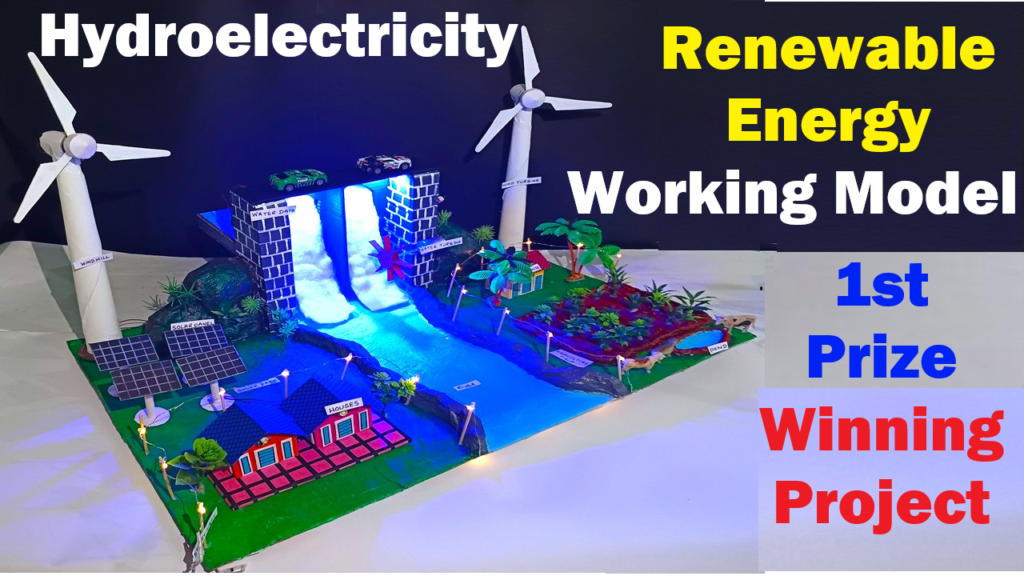
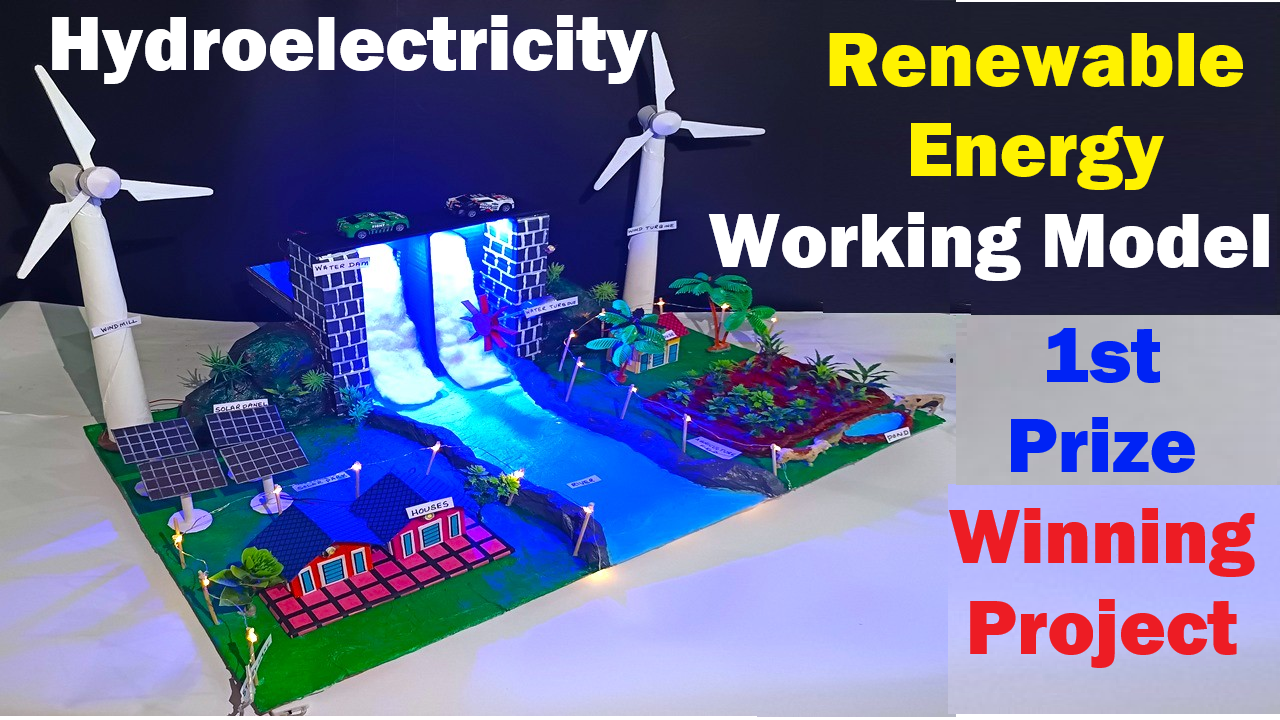
Renewable energy is the best solution to these problems. Renewable energy sources are naturally replenished and environmentally friendly. This working model demonstrates three major renewable energy sources: Hydroelectricity, Wind Energy, and Solar Energy. The model explains how clean and sustainable energy can be generated to meet future energy needs.
Aim of the Project
The main aims of this renewable energy working model are:
- To understand the importance of renewable energy sources
- To explain the working principles of hydroelectric, wind, and solar power
- To show electricity generation using natural resources
- To create awareness about sustainable and eco-friendly energy solutions
- To encourage the use of renewable energy for a better future
Concept of Renewable Energy
Renewable energy is energy obtained from natural sources that do not get exhausted when used repeatedly. Sunlight, wind, and water are freely available resources that can be converted into electricity with minimum environmental impact. Unlike fossil fuels, renewable energy reduces carbon emissions and helps protect the environment.
Description of the Working Model
The renewable energy model is mounted on a cardboard base and divided into three sections:
- Hydroelectric Power Plant
- Wind Energy System
- Solar Energy System
Each section is interconnected to show how different renewable sources together can supply electricity to homes, street lights, and industries.
1. Hydroelectricity Working Model
Hydroelectricity is one of the oldest and most reliable sources of renewable energy. It generates electricity using the energy of flowing or falling water.
Working Principle
In this model, a dam is created using cardboard. Water stored at a height flows through a pipe and strikes a turbine. The rotating turbine is connected to a generator or small DC motor. When the turbine rotates, electrical energy is produced.
Explanation
- Water stored in the dam has potential energy
- When released, it flows downward with kinetic energy
- This energy rotates the turbine
- The turbine drives the generator to produce electricity
Hydroelectric power is clean, renewable, and does not produce air pollution. It also helps in water storage, flood control, and irrigation.
2. Wind Energy Working Model
Wind energy uses the power of moving air to generate electricity. Windmills or wind turbines are commonly seen in coastal and hilly regions where wind speed is high.
Working Principle
In this model, a wind turbine is made using cardboard blades mounted on a small DC motor. When air blows on the blades, they rotate. The rotating blades turn the motor, which acts as a generator and produces electricity.
Explanation
- Wind energy is converted into mechanical energy
- Mechanical energy rotates the turbine blades
- The generator converts mechanical energy into electrical energy
Wind energy is renewable, non-polluting, and available in abundance. It reduces dependency on fossil fuels and helps fight climate change.
3. Solar Energy Working Model
Solar energy is the most abundant and widely available renewable energy source. It uses sunlight to generate electricity.
Working Principle
In this model, a solar panel is represented using a real mini solar panel or a symbolic cardboard panel connected to LEDs. When sunlight falls on the solar panel, it generates electricity that lights up the LEDs.
Explanation
- Solar panels absorb sunlight
- Sunlight is converted into electrical energy
- Electricity is used to power lights or small devices
Solar energy is clean, silent, and suitable for both urban and rural areas. It can be installed on rooftops, open lands, and solar parks.
Integration of Renewable Energy Sources
The model shows how hydro, wind, and solar energy systems can work together to supply electricity continuously. When sunlight is low, wind or hydro power can support energy needs. This integrated approach ensures energy reliability and sustainability.
Environmental Benefits
- Reduces greenhouse gas emissions
- Decreases air and water pollution
- Conserves fossil fuel resources
- Protects ecosystems and biodiversity
- Promotes sustainable development
Importance for Sustainable Development
Renewable energy is essential for sustainable development. It meets present energy needs without compromising the ability of future generations. Using renewable energy helps achieve energy security, economic growth, and environmental protection.
Educational Importance of the Model
- Enhances understanding of renewable energy concepts
- Encourages scientific thinking and innovation
- Suitable for science exhibitions and classrooms
- Promotes awareness about clean energy
Conclusion
This Renewable Energy Working Model effectively demonstrates how hydroelectricity, wind energy, and solar energy can be used to generate clean and sustainable electricity. The project highlights the importance of shifting from non-renewable to renewable energy sources.
By adopting renewable energy, we can reduce pollution, conserve natural resources, and protect the planet. This model delivers a strong message: Use Renewable Energy Today for a Greener Tomorrow.