
Introduction
Water is one of the most precious natural resources on Earth, yet it is being rapidly depleted due to population growth, urbanization, climate change, and inefficient water management. Many cities today face severe water scarcity during summer and flooding during monsoon, highlighting poor planning and wastage of rainwater. Rainwater harvesting is a simple, cost-effective, and sustainable solution to address both problems.
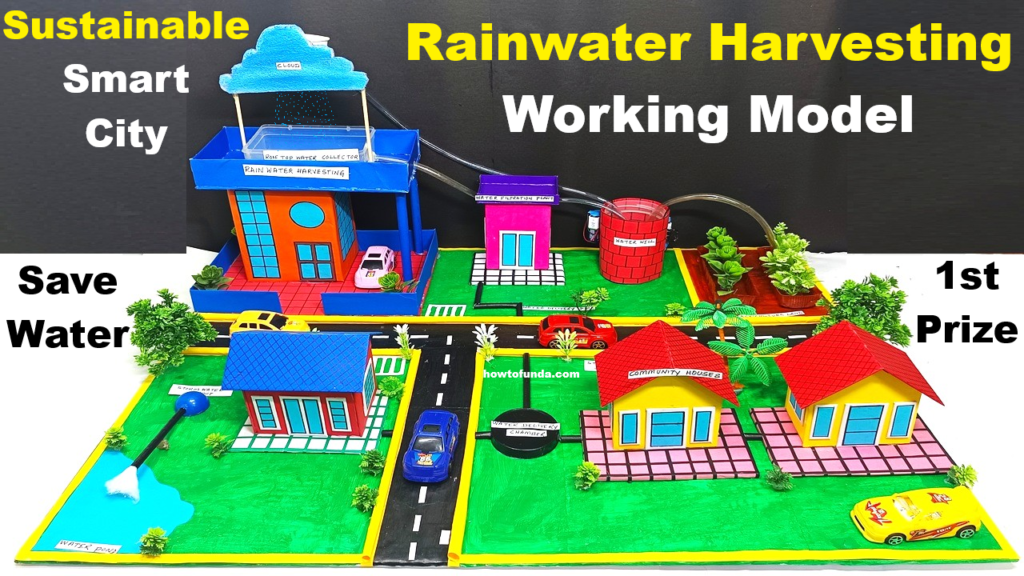
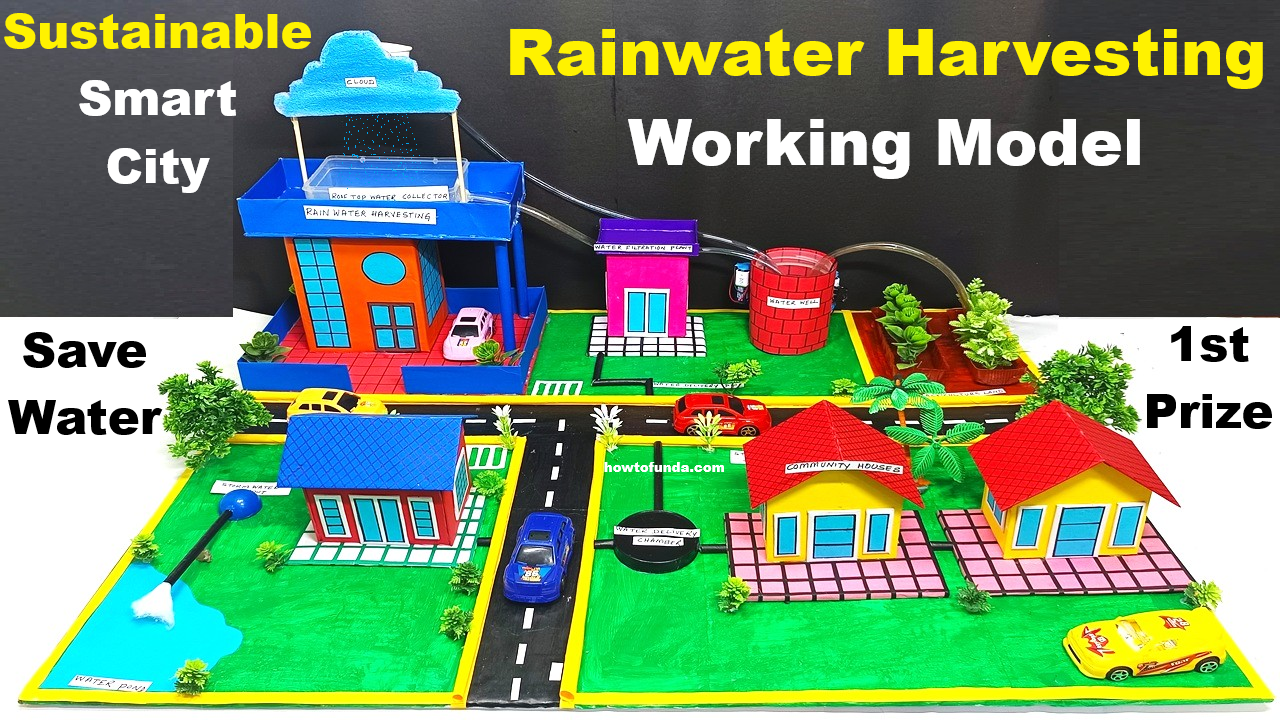
This working model demonstrates an integrated rainwater harvesting system designed for a Sustainable Smart City, focusing on saving water, protecting the environment, improving groundwater levels, and supporting agriculture. The model shows how rainwater collected from house rooftops and flooded roads can be stored, filtered, reused for agriculture, and recharged into wells, ponds, and borewells to raise the groundwater table.
Aim of the Project
The main aim of this project is to explain how rainwater harvesting can be implemented in urban and semi-urban areas to:
- Save rainwater instead of wasting it as runoff
- Reduce urban flooding during heavy rainfall
- Recharge groundwater and increase the water table
- Provide water for agriculture and daily needs
- Promote sustainable development in smart cities
Concept of Rainwater Harvesting
Rainwater harvesting is the technique of collecting, storing, filtering, and using rainwater for beneficial purposes instead of allowing it to flow away as surface runoff. Rainwater is clean, free from chemicals, and suitable for many uses when properly filtered. Traditionally, India followed rainwater harvesting through step wells, tanks, and ponds, but modernization has reduced these practices. Reviving and modernizing rainwater harvesting is essential for water security.
Description of the Working Model
The model represents a Sustainable Smart City layout that includes houses, roads, agricultural fields, drainage systems, a pond, a well, and a borewell. The entire system is interconnected to show efficient water management.
1. Rooftop Rainwater Collection System
In this model, houses are designed with sloping rooftops. During rainfall, water falling on the rooftops is collected using gutters and pipes. Instead of letting this water fall onto roads or drains, it is directed through downpipes into a filtration unit.
The filtration unit removes dust, leaves, and other impurities using layers of gravel, sand, and charcoal. After filtration, the clean rainwater is stored in an underground well or storage tank. This stored water can be used later for domestic purposes such as washing, cleaning, gardening, and flushing.
2. Storage of Collected Water in a Well
The filtered rooftop rainwater is guided into a well or recharge pit. This well acts as a storage and recharge structure. Over time, the water slowly seeps into the ground, replenishing underground aquifers. This process increases the groundwater level and ensures water availability during dry seasons.
By storing water in wells instead of surface tanks, evaporation losses are minimized, and natural filtration through soil further improves water quality.
3. Use of Stored Water for Agriculture
From the well, water is supplied to nearby agricultural fields through channels or pipes. This demonstrates how harvested rainwater can be reused for irrigation. Crops such as vegetables, grains, and fruits require regular water supply, and rainwater harvesting reduces dependence on borewell and river water.
Using harvested rainwater for agriculture supports sustainable farming, reduces electricity consumption for pumping groundwater, and ensures food security. It also helps farmers during drought conditions when rainfall is irregular.
4. Road Flood Water Collection and Drainage System
Urban areas often experience road flooding during heavy rains due to blocked or inadequate drainage systems. In this model, roads are slightly sloped, and side drains are provided to collect excess rainwater.
Instead of allowing floodwater to mix with sewage and flow away, the road runoff is directed into a separate drainage channel. This channel carries the water to a large pond after basic filtration to remove debris and solid waste.
This system helps prevent waterlogging, traffic disruption, and damage to roads while efficiently capturing rainwater.
5. Pond for Water Storage and Groundwater Recharge
The pond acts as a major rainwater storage and recharge structure in the smart city. Water collected from roads and open areas is stored in the pond. Over time, this water infiltrates into the ground, recharging the surrounding groundwater.
The pond also supports biodiversity by providing water for birds, animals, and plants. It helps maintain the local ecosystem and improves the microclimate by reducing heat.
6. Raising the Water Table and Borewell Recharge
As water from wells and ponds continuously percolates into the soil, the groundwater table rises. This directly benefits borewells in the area. Borewells that previously dried up due to over-extraction can start yielding water again.
This demonstrates how rainwater harvesting ensures long-term water sustainability by balancing groundwater extraction with recharge.
Environmental and Social Benefits
This rainwater harvesting model highlights several environmental and social advantages:
- Conservation of freshwater resources
- Reduction in urban flooding and soil erosion
- Increased groundwater levels and water security
- Reduced pressure on rivers, dams, and borewells
- Support for agriculture and green spaces
- Promotion of eco-friendly and sustainable lifestyles
Importance for a Sustainable Smart City
A smart city is not just about technology but also about sustainable resource management. Integrating rainwater harvesting into urban planning makes cities resilient to climate change, droughts, and floods. This model encourages community participation, awareness, and responsibility toward water conservation.
Conclusion
The rainwater harvesting working model clearly demonstrates how simple techniques can transform rainwater from a wasted resource into a valuable asset. By collecting rooftop rainwater, managing road floodwater, storing water in wells and ponds, recharging groundwater, and using water for agriculture, a sustainable smart city can be achieved.
This model delivers a strong message: Save Water, Save Environment, Save Future. If implemented on a large scale, rainwater harvesting can solve water scarcity problems and ensure a secure and sustainable future for coming generations.