
Tired of watching your water bill skyrocket while your urban garden thirsts for more?
Imagine a garden that practically waters itself, saving you money and the planet. This video reveals a simple DIY system that recycles household water, making your urban garden thrive without the constant tap of high costs.
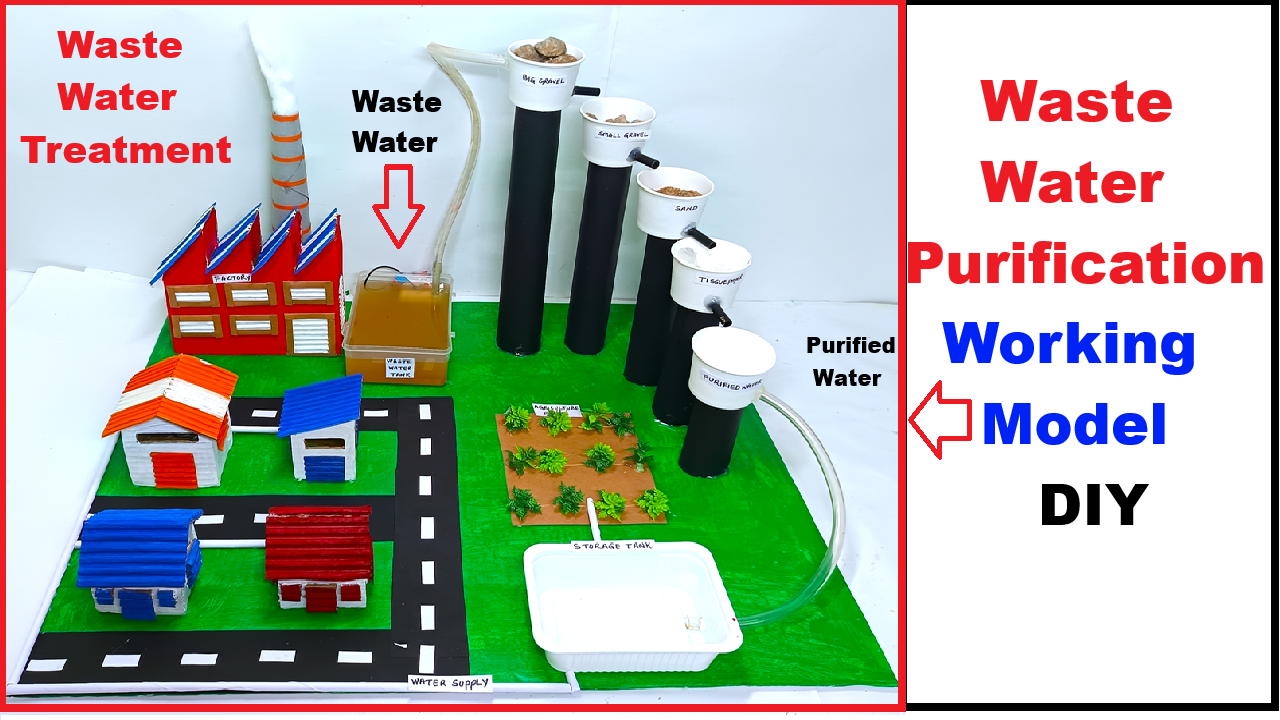
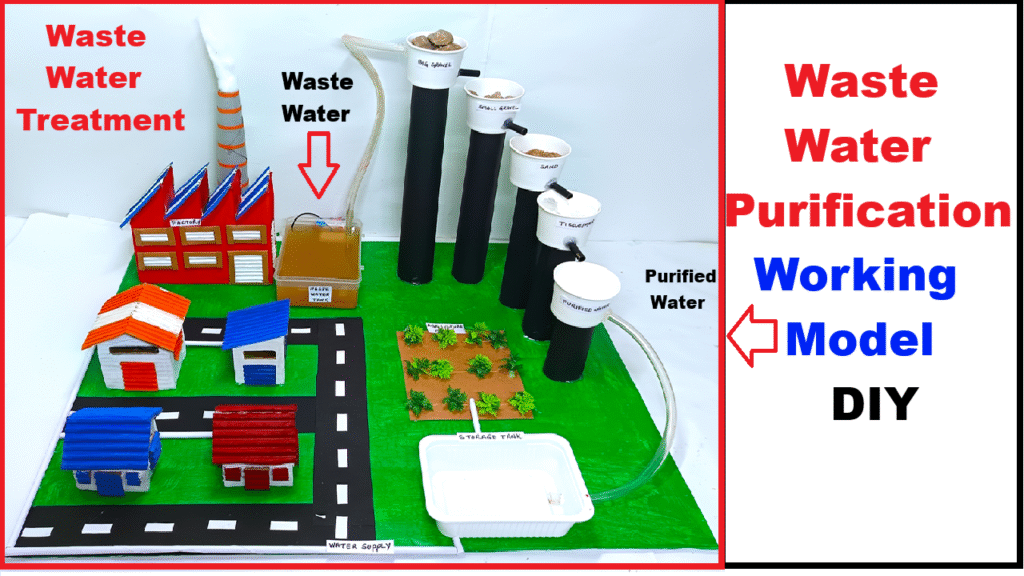
This model shows how wastewater from a factory can be collected, treated, and purified through multiple stages — just like in real treatment plants — using sedimentation, filtration, and disinfection processes powered by a small motor pump.
Materials Required:
Base Setup:
- Cardboard / Thermocol board (for mounting everything)
- Mini water pump (DC 3V–12V motor pump or aquarium pump)
- Plastic pipe/tube (to connect water flow between cups)
- Small factory model (made from cardboard or paper box, with cotton smoke for realism)
- 4–6 paper cups or plastic glasses (for each treatment stage)
- Dirty water (mix of mud, detergent, small pieces of paper, and oil)
Purification Materials:
- Gravel (large pebbles)
- Sand (medium and fine layers)
- Activated charcoal (for removing color and odor)
- Cotton or filter paper (for fine filtration)
- Chlorine tablet or a drop of diluted bleach (optional, for disinfection demo)
Decoration:
- Paint, markers, labels for each stage
- Chart paper, glue gun, scissors, tape
- Small LED light (optional for “factory effect”)
Step-by-Step Construction:
Step 1: Prepare the Base
- Take a large cardboard base.
- Mark out the layout — place the factory model on one corner and line up 5–6 paper cups next to it to represent treatment stages.
- Label each stage: Screening → Sedimentation → Filtration → Disinfection → Clean Water.
Step 2: Create the Factory Model
- Make a small rectangular “factory building” from cardboard.
- Add a small chimney using a rolled paper tube with cotton on top (for smoke).
- Cut a hole at the bottom of the factory to attach a pipe — this will act as the wastewater outlet.
- Connect the outlet pipe from the factory to the first paper cup (Screening Chamber).
Step 3: Setup the Paper Cups (Treatment Stages)
- Line up 5 paper cups on the base slightly inclined, so water flows from one to the next through small connecting pipes.
- Connect each cup with small straws or flexible tubing near the top rim to allow overflow to the next stage.
Step 4: Stage 1 – Screening
- Place a small piece of wire mesh or plastic net inside the first cup.
- This removes large particles like leaves, paper, or debris when water passes through.
- Label it “Screening Chamber.”
Step 5: Stage 2 – Sedimentation Tank
- In the second cup, pour the dirty water from Stage 1.
- Allow it to settle so heavier particles sink to the bottom.
- You can add a divider (half-cut cardboard) to make it look like a tank.
- Label it “Sedimentation Tank.”
Step 6: Stage 3 – Filtration Unit
Use 2 or 3 paper cups stacked vertically or connected with tubes to form a multi-layer filter:
Cup 1 (Bottom):
- Fine gravel and small stones.
Cup 2 (Middle):
- Coarse sand → fine sand layer.
Cup 3 (Top):
- Activated charcoal → cotton or filter paper.
As the pump moves water upward, it will pass through each layer, getting cleaner at every stage.
Label this section as “Filtration Unit.”
Step 7: Stage 4 – Disinfection Unit
- The filtered water flows into another cup (Disinfection Stage).
- Add one drop of diluted chlorine solution (for display only — don’t drink).
- Or use a small UV LED light to demonstrate modern purification.
- Label this “Disinfection Chamber.”
Step 8: Stage 5 – Clean Water Collection
- The last cup collects the purified water.
- Label it “Clean Water Outlet.”
- Show the difference by placing this clean cup beside the dirty water sample from the start.
Step 9: Water Circulation Using Pump
- Connect the mini water pump at the last stage to recirculate the clean water back to the factory inlet (creating a full water loop).
- Use transparent tubing for visual clarity.
- Power the pump with a 9V battery or USB adapter for safe demonstration.
- When switched on, the dirty water from the factory flows through each stage and returns clean — creating a working model with continuous flow!